JUSTSUSS AI-powered press divergence analysis
Headline news 2026.10.14 03:04 created · 10.15 11:21 updated
← Card Feed
Reference video

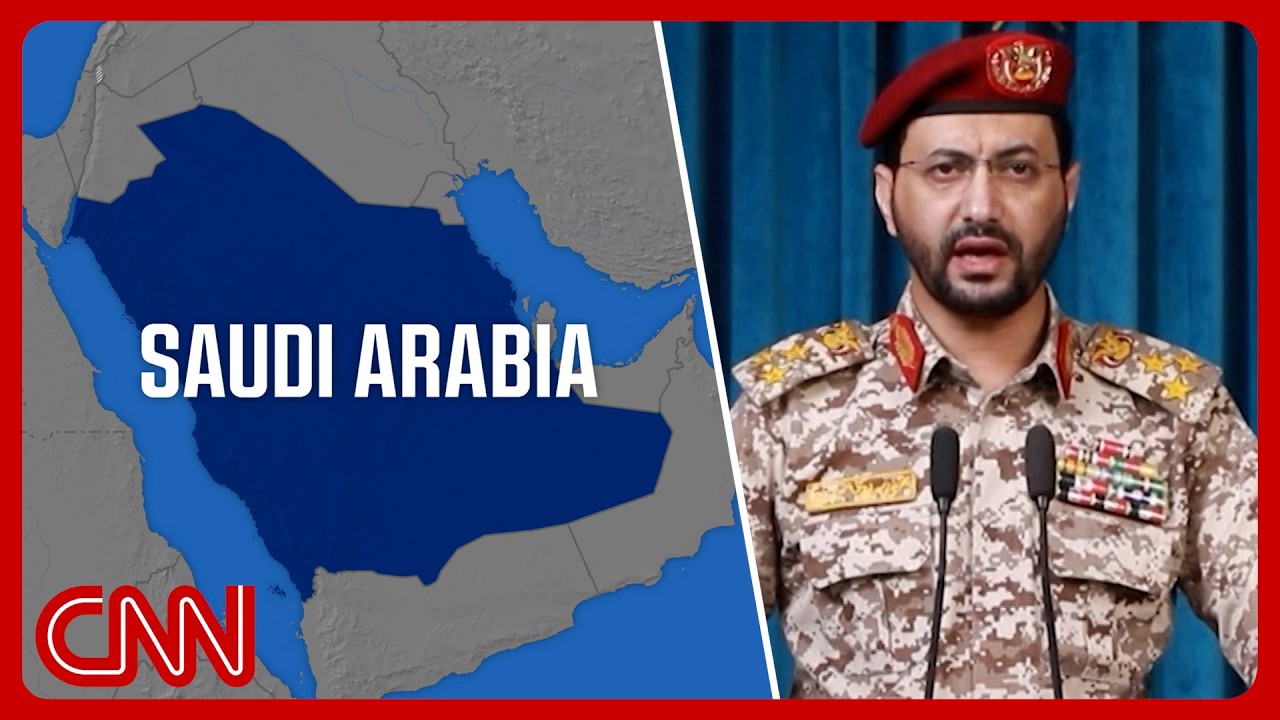
Houthi Missile Attack on Saudi Aramco Headquarters

Attack targets critical global energy infrastructure.

Event Overview

On Tuesday, Houthi militants launched a missile attack targeting an administrative building at the Saudi Aramco headquarters in Dhahran, eastern Saudi Arabia. The strike caused a fire in a section of the complex, which was subsequently extinguished.

The attack was part of a broader series of strikes that included missiles launched at Riyadh. These actions were framed by the Houthis as reprisals following a Saudi-led coalition strike on an oil facility in Sanaa, which the coalition claimed was used for drone and missile arsenals.

Source facts (5)
1.

The attack occurred on Tuesday.

gnews_world
2.

The target was an Aramco administrative building in Dhahran, eastern Saudi Arabia.

gnews_world
3.

The missile strike caused a fire in a section of the complex that was later extinguished.

gnews_world
4.

The Houthis also launched missiles at Riyadh.

Fox News
5.

The attacks followed a Saudi-led coalition strike on an oil facility in Sanaa.

gnews_world

Message Distribution

Editor's Analysis

A cycle of infrastructure strikes and the logic of reprisal

The strike on the administrative building at the Saudi Aramco headquarters is framed by the Houthis as a response to a coalition attack on an oil facility in Sanaa. The coalition asserts that the Sanaa site served as an arsenal for drones and missiles, while the Houthis justify their actions as reprisals. This creates a loop where energy and administrative infrastructure become primary targets to signal vulnerability.

Whether this is a calculated escalation or a reactive strike depends on the intent behind the target selection. A strike on a corporate headquarters differs from a strike on a military depot. If the goal is to disrupt the economy, the target choice is strategic. If it is merely a response to a specific loss, it remains a tactical exchange. The outcome depends on whether the opposing side views such strikes as a reason to intensify military pressure or a signal to seek a diplomatic exit.

This structure mirrors the Tanker War, where commercial vessels and energy facilities were targeted to exert economic pressure during a prolonged conflict. That period ended only when the cost of protecting shipping and infrastructure outweighed the perceived gains of the attacks.

Between geopolitical framing and the specifics of the strike

Coverage is split between the immediate physical event and the broader political theater. Bloomberg focuses on the technical uncertainty of the strike, noting it is unclear if the fire resulted from a direct hit or intercepted debris. This precision provides the necessary factual baseline regarding the actual damage to the facility.

Al Jazeera connects the event to the wider humanitarian crisis and the tit-for-tat nature of the war, highlighting the impact on civilian displacement and air travel. In contrast, Fox News shifts the focus away from the strike itself to frame the event as a testament to the need for assertive leadership and a specific foreign policy approach to deter aggression.

While the reporting covers the 'who' and 'where,' it largely ignores the structural relationship between energy infrastructure and political leverage. Most outlets treat the attack as an isolated incident or a symptom of a leader's policy rather than analyzing how the targeting of economic hubs changes the cost-benefit analysis for the warring parties.

Updates

Oct 16 · Houthi strikes on Aramco and airport infrastructure Updated 11:21

The focus of the discourse has shifted from the tactical details of the Aramco strike to the perceived failure of U.S. regional strategy. The Nation argues that the instability in the Persian Gulf is a direct consequence of President Trump's military campaign against Iran, framing the Houthi attacks as evidence that American supremacy has been punctured [1].

This perspective moves the conversation away from the specific strategic logic of the Houthi target selection—such as the hit on oil-supply planning—and toward a broader critique of U.S. foreign policy. While previous reports debated whether the strikes were tactical reprisals or strategic shifts, The Nation treats them as symptoms of a larger geopolitical collapse [1].

Most coverage continues to overlook the structural relationship between energy infrastructure and political leverage, instead choosing to frame the events either as a failure of specific leadership or as a component of a wider proxy conflict.

Oct 15 · Saudi military intercepts projectiles targeting Dhahran, Riyadh, and Prince Sultan Air Base Updated 05:05

The Saudi Ministry of Energy described the fire in the Aramco administrative building as limited, while the Associated Press reported that the fire engulfed three floors and caused significant damage, including to the offices of the company's CEO. According to the Wall Street Journal, the targeted building houses the oil-supply planning and scheduling department and the missile strike caused a partial roof collapse. Breitbart reported that the attack targeted the top floors, including an operations center, leading some employees to work from home. The Saudi military intercepted projectiles targeting Dhahran, Riyadh, and Prince Sultan Air Base, and the Saudi-led coalition reported intercepting multiple drones and missiles targeting Riyadh and Al-Kharj, with some debris causing injuries. The escalation has resulted in thousands of canceled flights in Saudi Arabia, and the U.S. mission to Saudi Arabia issued travel warnings for government employees and citizens due to airport disruptions. President Donald Trump stated on Truth Social that the attacks were due to Iranian influence and an attempt to manipulate oil prices. The Houthi group is described as Iran-backed. A Houthi official indicated openness to mediation from Oman, Russia, and China for a comprehensive ceasefire, and Houthi officials stated they are open to a comprehensive ceasefire mediated by Oman if Saudi forces withdraw from Yemen.

The discrepancy between the Saudi Ministry of Energy's report of a limited fire and the Associated Press's account of three floors of damage suggests a gap in official transparency.

Targeting the CEO's office and the oil-supply planning and scheduling department elevates the strike from a general attack on infrastructure to a direct hit on the company's leadership and operational core [1]. This detail strengthens the possibility that the attack is a strategic shift rather than a tactical exchange. By striking the administrative heart of the kingdom's primary economic engine, the Houthis are signaling an ability to penetrate high-security zones and disrupt the command structure of Saudi energy.

WSJ provided critical factual depth by identifying the specific functions of the targeted building, moving the analysis beyond general damage to the actual operational impact on oil supply planning [1]. PBS engaged with the structural implications by noting that these high-profile strikes expose the limitations of Saudi defense systems and the shortage of interceptors.

In contrast, Breitbart focused on the attacks as Iranian-driven provocations to justify a hardline military approach. This framing prioritizes geopolitical attribution over the strategic logic of the target selection.

The Houthi expression of openness to mediation from Oman, Russia, and China introduces a diplomatic variable. Whether this is a genuine attempt at a ceasefire or a tactical move to lower military pressure while maintaining economic leverage remains an open question.

Source facts (13)

The Saudi Ministry of Energy described the fire in the administrative building as limited.

Washington Examiner

The Associated Press reported that the fire engulfed three floors and caused significant damage, including to the offices of the company's CEO.

Washington Examiner

The Houthi group is described as Iran-backed.

Washington Examiner

The Saudi-led coalition reported intercepting multiple drones and missiles targeting Riyadh and Al-Kharj, with some debris causing injuries.

PBS

The escalation has resulted in thousands of canceled flights in Saudi Arabia.

PBS

A Houthi official indicated openness to mediation from Oman, Russia, and China for a comprehensive ceasefire.

PBS

The attack on the Aramco headquarters targeted the top floors, including an operations center, leading some employees to work from home.

Breitbart

The Saudi military intercepted projectiles targeting Dhahran, Riyadh, and Prince Sultan Air Base.

Breitbart

Houthi officials stated they are open to a comprehensive ceasefire mediated by Oman if Saudi forces withdraw from Yemen.

Breitbart

The U.S. mission to Saudi Arabia issued travel warnings for government employees and citizens due to airport disruptions.

Breitbart

President Donald Trump stated on Truth Social that the attacks were due to Iranian influence and an attempt to manipulate oil prices.

Breitbart

The targeted building at the Saudi Aramco headquarters houses the oil-supply planning and scheduling department.

WSJ

The missile strike caused a partial roof collapse of the building.

WSJ

Oct 14 · Saudi officials report no injuries in Aramco building attack Updated 10:02

Saudi officials reported that no injuries occurred during the attack on the Aramco administrative building. Houthi strikes included attacks on Riyadh's King Khalid International Airport, which remains closed.

The closure of King Khalid International Airport suggests the Houthi strikes are moving beyond symbolic corporate targets to disrupt critical national infrastructure. This expansion of targets complicates the distinction between a tactical reprisal and a strategic attempt to paralyze Saudi mobility and commerce [1].

CNBC failed to analyze whether these broader strikes represent a shift in regional strategy. Instead, the coverage links the Houthi actions to Iranian threats against U.S. warships and domestic U.S. election timelines [1]. This choice frames the event as a component of a larger geopolitical standoff rather than an isolated cycle of retaliation between the Houthis and the Saudi-led coalition.

Source facts (2)

Saudi officials reported that no injuries occurred during the attack on the Aramco administrative building.

CNBC

Houthi strikes included attacks on Riyadh's King Khalid International Airport, which remains closed.

CNBC

Coverage flow

Coverage volume

10/13 · 3
10/14 · 5
10/15 · 1

Focus shift

10/13
Houthis
1
Houthi militants
1
Donald Trump
1
10/14
Iran
2
10/15
Donald Trump
1

Recommended Reads

News Story

Story: Saudi Arabia launches strikes on Yemen after Houthi missile attacks

Card 4 of 6 in this story

Saudi Arabia launches strikes on Yemen after Houthi missile attacks
Sep 9 · 1 outlets · ⇄ Story: US-Iran Conflict and Economic Impacts
Where it started
Houthi Insurgents Attack Saudi Arabian Targets
Sep 14 · 13 outlets · ⇄ Story: Houthi Attacks on Saudi Arabian Airports
Houthi attacks on Saudi Arabian international airport
Oct 12 · 2 outlets · ⇄ Story: US-Iran Conflict and Economic Impacts
↳ Follows “Saudi Arabia launches strikes on Yemen after Houthi missile attacks”
Houthi Missile Attack on Saudi Aramco Headquarters
Oct 13 · 7 outlets · Viewing now
↳ Follows “Saudi Arabia launches strikes on Yemen after Houthi missile attacks”
Houthi Attacks on Saudi Arabia and Aden
Oct 24 · 3 outlets · ⇄ Story: Houthi Attacks on Saudi Arabian Airports
↳ Follows “Houthi Missile Attack on Saudi Aramco Headquarters”
Houthi Attack on Saudi Aramco Offices in Riyadh
Nov 8 · 5 outlets · ⇄ Story: Republican Mid-Decade Congressional Redistricting +1 more
↳ Follows “Houthi Missile Attack on Saudi Aramco Headquarters”

News Story

Story: US-Iran Conflict and Economic Impacts

Card 4 of 6 in this story

US-Iran Conflict and Economic Impacts
Sep 7 · 23 outlets · ⇄ Story: Diesel Prices Reach Record Highs Amid Iran Conflict +2 more
Where it started
Saudi Arabia launches strikes on Yemen after Houthi missile attacks
Sep 9 · 1 outlets · ⇄ Story: Saudi Arabia launches strikes on Yemen after Houthi missile attacks
↳ Follows “US-Iran Conflict and Economic Impacts”
Houthi attacks on Saudi Arabian international airport
Oct 12 · 2 outlets · ⇄ Story: Saudi Arabia launches strikes on Yemen after Houthi missile attacks
↳ Follows “Saudi Arabia launches strikes on Yemen after Houthi missile attacks”
Houthi Missile Attack on Saudi Aramco Headquarters
Oct 13 · 7 outlets · Viewing now
↳ Follows “Saudi Arabia launches strikes on Yemen after Houthi missile attacks”
Houthi Missile and Drone Attacks on Saudi Arabia
Oct 18 · 3 outlets · ⇄ Story: Houthi Attacks on Saudi Arabian Airports
↳ Follows “Houthi Missile Attack on Saudi Aramco Headquarters”
Houthi Attack on Saudi Aramco Offices in Riyadh
Nov 8 · 5 outlets · ⇄ Story: Republican Mid-Decade Congressional Redistricting +1 more
↳ Follows “Houthi Missile Attack on Saudi Aramco Headquarters”

🌏 Global Comparison

How Korean and US outlets report the same event differently, and propagation delay

🇰🇷 Korea Card
후티 반군의 사우디 아람코 행정 건물 공격
예멘 후티 반군이 사우디아라비아 다란에 위치한 **아람코 소유 행정 건물을 공격**하여 소규모 화재가 발생했습니다. 후티 반군은 아람코 시설과 리야드 국제공항 등에 대규모 공격을 가했다고 성명을 냈습니다. 이번 공격은 사우디 연합군과 후티 반군 간의 교전이 격화되는 상황에서 발생했으며, 이로 인해 **WTI 유가가 3주 만에 최고치**를 기록하는 등 국제유가 상승 압력이 가중되었습니다.
5 outlets · View →
🇺🇸 US Card
Houthi Missile Attack on Saudi Aramco Headquarters
On **Tuesday**, Houthi militants launched a missile attack targeting an administrative building at the **Saudi Aramco headquarters** in Dhahran, eastern Saudi Arabia. The strike caused a fire in a section of the complex, which was subsequently extinguished. The attack was part of a broader series o
6 outlets · View →
Propagation delay
17.5h
(63014s)
Reporting divergence
1.00
closer to 0 = more similar

Loading comments...