The tension between labor protection and corporate reliance on foreign talent
The core issue is whether the government can effectively curb the replacement of domestic workers by restricting the pathways to permanent residency for foreign professionals. The administration argues that the Permanent Labor Certification program has been abused to lower wages and displace citizens. This creates a conflict between a state's desire to protect its own workforce and the operational needs of high-tech industries that rely on a global talent pool.
Labor certification systems typically function by requiring employers to prove that no qualified domestic worker is available for a specific role. When this process is bypassed or manipulated, it undermines the structural intent of the visa system. The resolution of such disputes usually depends on whether the government can provide concrete evidence of fraud or if the restrictions are viewed as an overreach that harms national competitiveness.
Focus on political signaling and the contradiction of immigrant success
Most outlets focused on the administration's intent to prioritize American workers over foreign labor. CNBC and PBS highlighted a specific contradiction: the government is penalizing corporations for their hiring practices while simultaneously honoring immigrant tech CEOs with national awards. This suggests a distinction being made between high-value entrepreneurs and the general foreign workforce.
Business Insider and PBS expanded the scope beyond corporate entities to include elite universities and J-1 visa fraud, providing a broader view of the administration's crackdown on the immigration system. However, the coverage largely remains at the level of reporting official statements. None of the outlets investigated the specific evidence behind the federal investigations into Microsoft and Adobe, leaving the reader to rely on the administration's claims of fraud without independent verification.
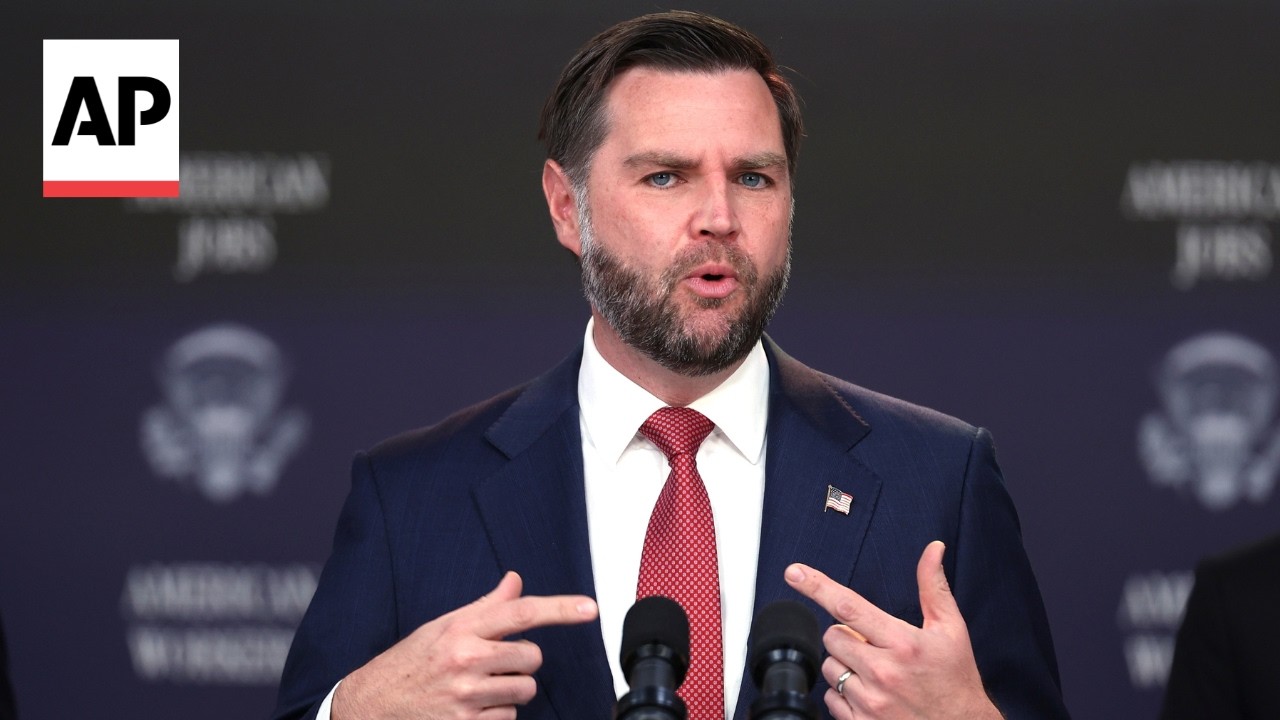
JD Vance cites Microsoft's H-1B filings as evidence of American worker replacement
New coverage from 2 outlets
These reports provide the first concrete figures in the dispute. Fox Business detailed the administration's specific claim that Microsoft replaced 6,000 laid-off Americans with 6,300 H-1B visas. This moves the conversation from general policy intent to a quantifiable accusation of fraud.
BBC and Fox Business both engaged with the essential question by presenting the companies' counter-evidence. They highlighted Microsoft's assertion that 80% of its recent H-1B filings were for existing employees rather than new replacements. BBC further noted the company's claim of a $155,000 median salary for H-1B workers to challenge the narrative of wage depression.
Despite these details, the coverage remains a relay of opposing claims. No outlet has independently verified the government's figures or the company's internal hiring data, leaving the validity of the replacement claim unproven.
JD Vance alleges Microsoft replaced laid-off Americans with foreign workers at a 1.5 to 1 ratio
New coverage from 3 outlets
These reports deepen the dispute by introducing a specific metric for the alleged fraud. ABC News [★ 독자적 사실] and Breitbart detailed the administration's claim that Microsoft replaced every laid-off American worker with 1.5 foreign workers. This transforms the debate from a general policy disagreement into a precise accusation of systemic replacement.
Breitbart expanded the scope of the crackdown by naming several Indian staffing firms, such as Cognizant and Infosys, as targets of the PERM program suspension. This indicates the administration is targeting the entire outsourcing pipeline rather than just the end-user corporations.
Business Insider missed the essential question of whether the visa restrictions are a genuine correction of fraud. Instead, it focused on the contradictory treatment of Satya Nadella, framing the event as a psychological tactic used by the administration to keep business leaders in a precarious position.
While ABC News and Breitbart engaged with the core issue by detailing the administration's mathematical claims and the companies' denials, the coverage remains a relay of official statements. No outlet has independently audited the hiring data to verify if the 1.5 replacement ratio is a factual reality or a political calculation.
Business Insider raises questions on the legal authority of PERM suspensions
New coverage from 2 outlets
Daily Caller deepened the accusation of replacement by including testimonials from unemployed American tech workers who claim they were displaced by foreign nationals. This moves the evidence beyond government figures to include direct accounts from the affected workforce.
Business Insider shifted the focus toward the legal and human consequences of the policy. It highlighted the precarious status of foreign workers who may face removal and questioned whether the Labor Department's suspension exceeds its legal authority. By interviewing immigration attorneys, Business Insider engaged with the essential question of whether these measures are a genuine correction of fraud or an overreach likely to trigger litigation.
While Daily Caller focused on justifying the administration's actions through worker testimonials, the coverage overall continues to rely on opposing claims. No report has yet provided a legal analysis of the PERM program's statutes to verify if the administration possesses the authority to suspend specific companies without a prior court finding of fraud.
Business Insider reports on the risk of increased offshoring and worker dependency
New coverage from 2 outlets
Business Insider engaged with the essential question by analyzing the structural paradox of the PERM suspension. It highlighted the argument that blocking green card pathways increases worker dependency on employers, effectively creating a status of indentured servitude that contradicts the administration's goal of empowering American labor.
This report also introduced a new economic risk: the possibility that these restrictions will encourage companies to outsource more work to India rather than hiring domestically. This suggests that the policy intended to protect the domestic workforce could inadvertently accelerate the flight of high-tech roles overseas.
DW missed the essential question by repeating official statements and the contradiction regarding Satya Nadella's award. It provided no new analysis of whether the suspensions are a genuine correction of fraud or a political signal, remaining at the level of a summary of previous claims.
Al Jazeera reports India's condemnation of the administration's indentured servants terminology
New coverage from 2 outlets
These reports bring the diplomatic consequences of the crackdown into view. Al Jazeera engaged with the essential question by highlighting the reaction of India's Ministry of External Affairs, which condemned the administration's use of the term indentured servants as offensive given colonial history. This adds a geopolitical dimension to the dispute, suggesting the policy is viewed not just as a labor correction but as a diplomatic provocation.
The Federalist returned the focus to the replacement of American workers, arguing that Microsoft's defense regarding visa extensions does not erase the fact that thousands of citizens were laid off while foreign workers were retained. By specifically naming the 'WITCHes'—Wipro, Infosys, Tata Consultancy Services, Cognizant, and HCL Tech—The Federalist reinforced the administration's strategy of targeting the entire outsourcing pipeline.
While both outlets detailed the administration's rationale, they diverged on the interpretation of the H-1B system. The Federalist framed the PERM suspension as a necessary correction to stop temporary visas from being used as a backdoor to permanent residency. Al Jazeera focused on the precarious legal status of the thousands of skilled professionals caught in the resulting green card backlog.
CNBC uses USCIS data to challenge the administration's claim that Microsoft replaced laid-off workers with H-1B visas
New coverage from 1 outlets
CNBC engaged with the essential question by using USCIS data to test the validity of the replacement claim. The report found that two-thirds of Microsoft's H-1B approvals were for existing employees, contradicting the administration's narrative that these visas were used to displace 6,000 laid-off Americans. This provides the first piece of independent data to challenge the government's figures, moving the coverage beyond a relay of opposing official statements.
CNBC also highlighted a discrepancy in the administration's enforcement pattern. It noted that Amazon and Meta were the largest H-1B sponsors in fiscal 2025 but were excluded from the suspension list. By contrasting the targeting of Microsoft with the immunity of other tech giants, the coverage suggests the crackdown may be inconsistently applied rather than a systematic correction of industry-wide fraud.