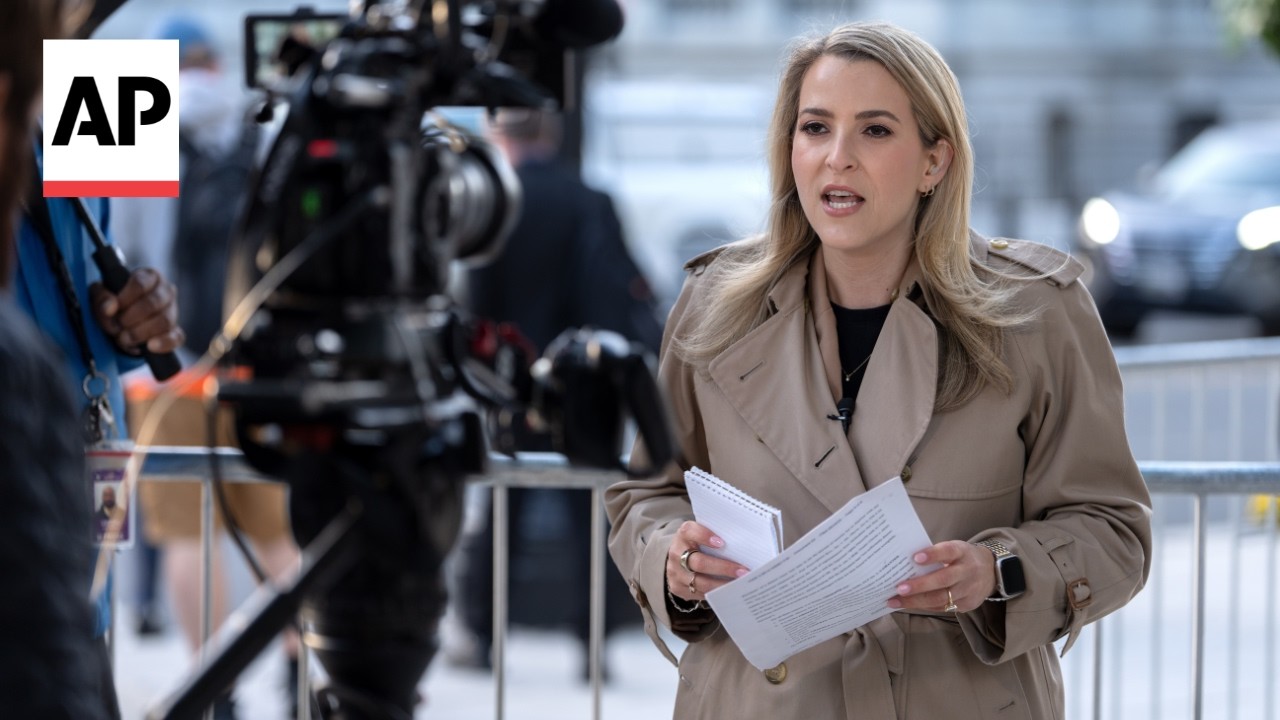
The Fine Line Between Office Management and Censorship
The core of this clash is whether a government building's entry pass is a professional privilege or a constitutional right. When the state decides who gets to ask questions based on the 'tone' of their previous reporting, it transforms a transparency mechanism into a reward system for loyalty.
In these types of power struggles, the administration usually frames the move as a simple matter of workspace security or efficiency. However, the structural danger lies in the precedent. Once the door is locked for one group based on subjective labels, the lock remains on the door for whoever follows, regardless of their political leanings. It turns the press gallery into a VIP lounge where the only requirement for entry is a flattering pen.
Between Legal Battles and Existential Crises
The coverage splits between those treating this as a legal violation and those seeing it as a systemic failure. NBC News and The Guardian focus on the First Amendment and the immediate retaliation against critical reporting. Meanwhile, The Nation takes a more cynical route, suggesting that the whole briefing ritual is just a piece of theater and that journalists should simply stop playing the part.
Interestingly, the internal anxiety of the right is captured by Mediaite, where even friendly faces worry that today's weapon will become tomorrow's noose. While most outlets focus on the 'who' and 'how' of the ban, they largely ignore the structural reality that the press corps often accepts a subservient role in exchange for proximity to power. They are fighting for the right to stand in a room where they are mostly ignored anyway.
Is it a tragedy to be kicked out of a room where you're only allowed to ask pre-approved questions?
Justice Department cites national security to justify White House media ban
New coverage from 6 outlets
The conflict has moved from a theoretical debate over rights to a concrete legal battle over security. These reports highlight the Justice Department's attempt to rebrand a political purge as a necessity for national security, specifically citing reporting on the White House ballroom construction as a threat.
Coverage now splits between the technicalities of the DOJ's legal filings and the visceral nature of the President's social media attacks on individual reporters. Some outlets focus on the legal strategy of framing access as a privilege, while others track the personal insults hurled at journalists to illustrate a pattern of hostility.
This shift reflects a common press habit of pivoting to the 'paper trail' once a court case begins, while simultaneously leaning into the drama of personal vendettas to maintain reader engagement. For the reader, the core question is no longer just about the law, but whether 'national security' has become a convenient blanket for any reporting the administration finds distasteful.
Factcheck.org compares Trump's outlet bans to Obama and Biden's press restrictions
New coverage from 1 outlets
The conversation has moved from the immediate legal fight to a historical audit of presidential power. By comparing current bans to the Obama and Biden eras, these reports attempt to strip away the administration's claim that this is standard operating procedure.
Factcheck.org highlights a critical distinction: while previous administrations fought with specific reporters or tightened credential criteria, indefinite bans of entire organizations based on critical coverage are an unprecedented escalation. The coverage now pivots toward verifying these precedents to see if the current lockout is a routine administrative tweak or a systemic break from tradition.
This shift reflects a press habit of seeking historical cover when a legal battle feels too abstract. By framing the issue as a deviation from a historical norm, the reporting moves the goalposts from 'is this legal' to 'has this ever happened before.' For the reader, the focus is no longer on the DOJ's paperwork, but on whether the rules of the game have been fundamentally rewritten.
Federal judge orders restoration of White House access for banned outlets
New coverage from 12 outlets
The conflict has shifted from a debate over historical norms to a direct confrontation between the executive and the judiciary. These reports focus on a federal judge's order to restore access for CNN, MS NOW, and Politico, effectively stripping the administration of its 'national security' shield by ruling the ban likely unconstitutional.
Coverage now centers on the friction of implementation, noting that reporters were still being turned away at the gates even after the ruling. PBS points out a telling detail: the government only pivoted to the national security argument after the lawsuit was filed, contradicting the President's initial 'fake news' justification.
This pivot reflects a press habit of abandoning systemic analysis the moment a court provides a concrete victory. The narrative has moved from 'is this a dangerous precedent' to 'did the judge win,' turning a constitutional crisis into a scoreboard of legal wins and losses. For the reader, the focus is no longer on the erosion of press freedom, but on whether the administration will actually obey a court order.
White House TV pool resumes operations following court order to lift press ban
New coverage from 2 outlets
The conflict has shifted from a legal standoff to the logistics of returning to work. These reports focus on the resumption of the TV pool and the brief blackout that occurred when major networks paused operations in solidarity with the banned outlets.
Coverage now highlights the awkward timing of the ban, noting the irony of restricting American journalists while hosting a leader from a repressive regime. This pivot reflects a press habit of trading systemic legal analysis for moral contrast and situational irony once the immediate crisis is resolved.
For the reader, the story is no longer about whether the law was broken, but about the optics of a government that treats its own press as a security threat while rolling out the red carpet for foreign autocrats.
The Bulwark critiques sixteen justifications for the press ban and links it to broader authoritarianism
New coverage from 1 outlets
The conversation has pivoted from the relief of restored access back to the structural danger of the ban's justification. These reports move beyond the immediate legal victory to dismantle the specific excuses used by the administration, such as the claim that using anonymous sources—even when the source is a high-ranking official—constitutes a security threat.
Coverage is now focusing on the role of political enablers who provide the intellectual cover for these restrictions. By listing the various contradictions in the administration's logic, the reporting attempts to show that the lockout was never about security, but about punishing specific narratives.
This shift reflects a press habit of returning to ideological warfare once the tactical battle is won. Instead of treating the court order as a resolution, the narrative now frames the event as a diagnostic test for authoritarianism. For the reader, the story is no longer about who gets into the room, but about who is helping the administration build the wall.
Attorney General Blanche defends press bans as a privilege while reports reveal a shift in pool control to pro-Trump journalists
New coverage from 2 outlets
The conflict has evolved from a debate over the logic of censorship to a direct challenge over the definition of press access. These reports highlight the administration's explicit argument that entry is a privilege to be revoked for 'inaccurate' reporting, effectively attempting to codify a loyalty test as a standard administrative rule.
Coverage now pivots toward the tactical machinery of this exclusion, specifically the move to strip the White House Correspondents’ Association of its role in managing press pools to make room for partisan allies. This shift reveals that the goal isn't just to keep critics out, but to actively curate a friendly audience under the guise of professional standards.
This pattern reflects a press habit of focusing on the 'rules of engagement' once the administration provides a formal spokesperson to defend the policy. For the reader, the story is no longer about whether the ban is wrong, but about the administration's effort to normalize the idea that the First Amendment stops at the White House door.
Reason analyzes spatial distinctions of press access while Todd Blanche defends restrictions as accuracy measures
New coverage from 2 outlets
These reports refine the debate over access by distinguishing between the legal status of different White House locations. Reason engages with the essential question of constitutional rights by noting that while viewpoint-based exclusion is prohibited in the press briefing room, the president maintains greater discretion over the Oval Office. This distinction moves the conversation from a general fight over the First Amendment to a technical analysis of where exactly the government's power to exclude begins and ends.
Simultaneously, the administration's defense has moved from internal policy to public justification. Daily Caller highlights Todd Blanche's argument that restricting access is a tool to ensure the public receives accurate news, framing the ban as a duty to protect national security rather than a political penalty.
This shift reflects a press habit of retreating into spatial and technical legalities once the broader constitutional argument reaches a stalemate. For the reader, the core issue is no longer just whether the ban is legal, but whether the physical location of a reporter determines their constitutional protection.
TIME reports CNN's pool duties remain unstable despite court order
New coverage from 2 outlets
The conversation has shifted from the theoretical boundaries of the Oval Office back to the instability of daily operations. While a court order restored grounds access, TIME reveals that specific pool duties, such as traveling on Air Force One, are still decided on a day-by-day basis. This detail exposes a gap between a legal victory on paper and the actual exercise of journalistic functions.
TIME engages with the essential question of constitutional rights by highlighting how the administration uses the 'fake news' label to justify these lingering restrictions. In contrast, PBS focuses on the operational resumption of the TV pool, treating the return to work as the primary narrative. This divergence shows a press habit of splitting between those tracking the residual power of the executive and those reporting on the mere restoration of routine.
For the reader, the core issue is no longer just where the law applies, but whether a court order is sufficient to stop an administration from selectively handicapping a reporter's ability to function.