JUSTSUSS AI-powered press divergence analysis
Headline news 2026.10.14 03:05 created · 10.15 14:44 updated
← Card Feed
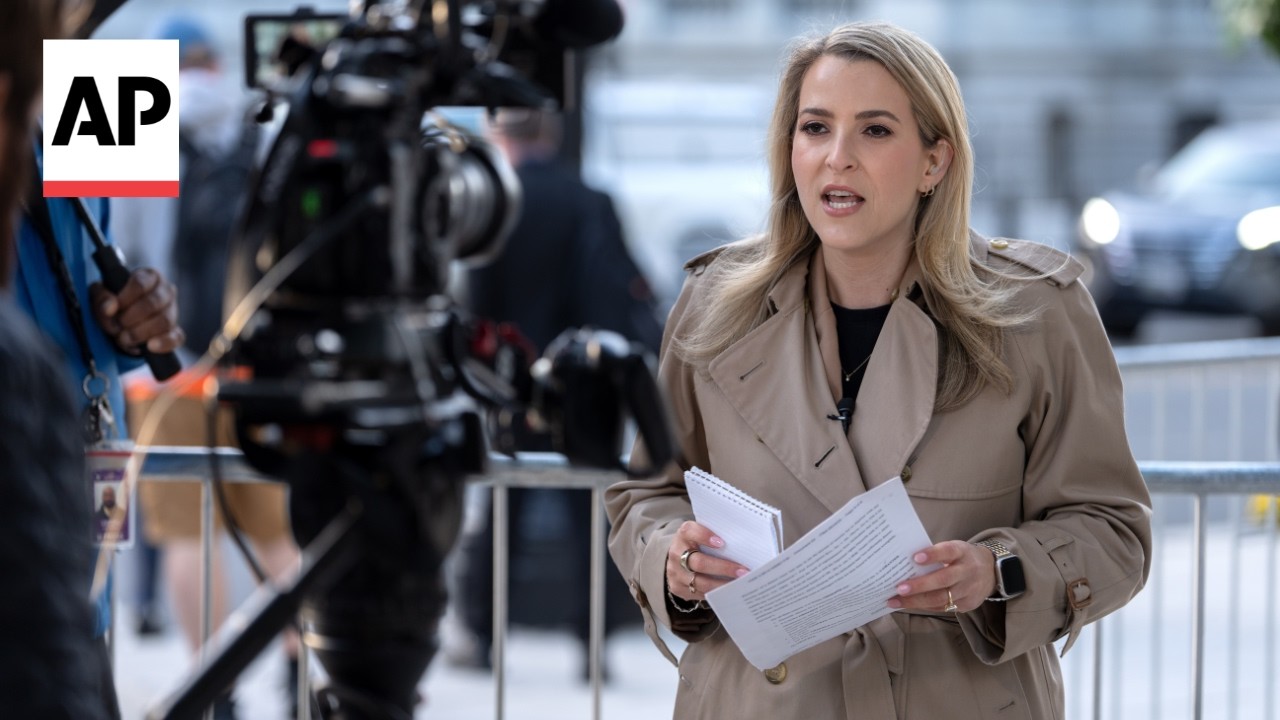
Reference video

Judge Timothy Kelly blocks White House media ban

A federal judge ruled a press ban violated constitutional rights.

Event Overview

U.S. District Judge Timothy Kelly issued a preliminary injunction blocking the Trump administration from banning reporters from CNN, MS NOW, and Politico from the White House complex. The judge ruled that the revocation of press passes likely violated the First and Fifth Amendment rights of the journalists.

In a 26-page judicial opinion, Judge Kelly found that the ban was likely based on viewpoint discrimination and the president's dislike of certain reporting rather than legitimate national security concerns.
Source facts (5)
1.

Judge Timothy Kelly is a Trump appointee.

Newsweek
2.

The judicial opinion consists of 26 pages.

NBC News
3.

The ban targeted journalists from CNN, MS NOW, and Politico.

CBS News
4.

The court found no evidence in the record to support the administration's claim that the ban was based on national security concerns.

NBC News
5.

The judge analyzed discrepancies between Justice Department court filings and Trump's Truth Social posts.

CBS News

Message Distribution

Editor's Analysis

The tension between executive privilege and constitutional press freedom

A federal judge has ruled that blocking specific news organizations from the White House likely violates the First and Fifth Amendments. The court found the administration's claims of national security and professionalism lacked evidence, suggesting the ban was instead a response to reporting the president disliked.

The administration maintains that access to the executive complex is a privilege rather than a right, and that the government may restrict it to maintain order or security. The court's decision hinges on whether the restriction was based on the content of the reporting. If the government can produce concrete evidence of a security threat that outweighs the constitutional right to report, the legal standing of the injunction could change.

This conflict mirrors the structure of the Pentagon Papers case, where the government attempted to block publication on national security grounds but the court prioritized the freedom of the press. In that instance, the government failed to prove that publication would cause an immediate and irreparable harm to the nation.

Focusing on the legal victory while missing the broader administrative friction

The coverage across CBS News, NBC News, and Newsweek consistently focuses on the legal clash between viewpoint discrimination and national security. All three outlets highlight the judge's rejection of the administration's arguments, framing the ruling as a validation of constitutional protections over executive preference.

CBS News provides the most comprehensive context by reporting on a separate dispute regarding the naming of the Gulf of America, showing a broader pattern of friction between the administration and the press. NBC News adds a layer of institutional conflict by noting the Justice Department's antitrust investigation into networks that responded to the ban.

While the legal outcome is clear, the coverage largely ignores the structural tension where an executive branch attempts to redefine professional standards as a means of controlling access. The outlets report the symptoms of the legal battle but leave the deeper question of how press access is institutionalized in a polarized environment largely unexamined.

Updates

Oct 16 · CNN Chairman Mark Thompson pledges continued fight for First Amendment rights Updated 14:43

During an appearance on CNN, CNN Chairman and Editor-in-Chief Mark Thompson pledged a continued fight for First Amendment rights. Thompson described the ruling as a vote of confidence in free speech and stated that such government actions are dangerous for democracy. He emphasized that the press must stand together regardless of the government's political affiliation.

The focus has shifted from the courtroom to the public sphere. Mark Thompson's statements frame the legal victory not as a technical win over press pass procedures, but as a defense of democratic stability.

The Daily Beast reports these remarks as a call for press unity, suggesting that the administration's actions are a systemic threat rather than a dispute with three specific outlets [1]. This expands the narrative from a legal question of viewpoint discrimination to a broader ideological struggle over the role of the press in a democracy.

Readers should now watch if other banned outlets join this unified front or if the administration responds to this public framing by introducing new, non-pass-related restrictions to limit access.

Source facts (3)

CNN Chairman and Editor-in-Chief Mark Thompson pledged a continued fight for First Amendment rights during an appearance on CNN.

The Daily Beast

Mark Thompson described the ruling as a vote of confidence in free speech and stated that such government actions are dangerous for democracy.

The Daily Beast

Mark Thompson emphasized that the press must stand together regardless of the government's political affiliation.

The Daily Beast

Oct 15 · Court finds causal link between journalists' speech and presidential action Updated 16:27

The Trump administration argues that White House access is a privilege and that presidents have historically chosen which reporters to allow, according to HuffPost. Reason reports that the court found a clear causal link between the journalists' protected speech and the adverse action taken by the President. Caitlin Vogus of the Freedom of the Press Foundation described the decision as a vindication of the First Amendment, according to Reason.

HuffPost engages with the core conflict by presenting the administration's argument that White House access is a privilege rather than a right. This framing shifts the debate from whether the ban was discriminatory to whether the president possesses the inherent authority to curate the press pool based on historical precedent.

While the court has questioned the national security justification, the administration is now attempting to bypass the need for a security excuse entirely. By arguing that access is a discretionary privilege, they suggest that viewpoint discrimination is irrelevant if the president has the absolute right to choose who enters the complex.

Reason provides the legal counterweight by reporting the court's finding of a clear causal link between protected speech and the adverse action. This confirms that the court is treating the ban as a retaliatory act rather than a routine exercise of administrative discretion.

Readers should watch if the administration provides specific historical examples of previous presidents restricting access to support its claim. Such evidence would challenge the court's application of the First and Fifth Amendments.

Source facts (3)

The Trump administration argues that White House access is a privilege and that presidents have historically chosen which reporters to allow.

HuffPost

The court found a clear causal link between the journalists' protected speech and the adverse action taken by the President.

Reason

Caitlin Vogus of the Freedom of the Press Foundation described the decision as a vindication of the First Amendment.

Reason

Oct 14 · Judge Timothy Kelly rules press passes were revoked without due process Updated 09:58

President Trump banned certain outlets on September 18, 2026, by revoking their 'hard passes'. President Trump claimed the outlets purposely wrote negative and 'fake news' to diminish the Republican administration, while the administration cited the publication of classified information as a national security justification for the ban. Judge Timothy J. Kelly ruled that the press passes were revoked without due process and that the national security justifications were post-hoc attempts to cover up retaliation for protected speech. Judge Kelly noted that Trump's public statements indicated the ban was intended to pressure outlets into more favorable reporting. The ruling does not resolve the administration's periodic refusal to allow CNN into smaller spaces such as Air Force One.

The court's ruling directly addresses whether the ban was a security measure or viewpoint discrimination by labeling the national security claims as post-hoc cover-ups. Reason provides critical detail by confirming the ban specifically targeted 'hard passes' and was triggered on September 18, 2026, grounding the legal dispute in a concrete timeline and administrative action.

Both Reason and NPR engage with the core conflict by contrasting the administration's claims of 'fake news' and classified leaks against the judge's finding that the ban aimed to coerce favorable reporting. Washington Examiner focuses on the procedural failure, noting the passes were revoked without due process.

NPR expands the scope by noting that the ruling is a temporary measure and does not resolve access disputes for smaller spaces like Air Force One. This suggests the administration may still find ways to restrict press movement despite the injunction.

Readers should now watch whether the administration attempts to produce the concrete security evidence mentioned in the initial analysis or if it pivots to using non-pass-related restrictions to maintain control over the press.

Source facts (8)

Judge Timothy J. Kelly noted that Trump's public statements indicated the ban was intended to pressure outlets into more favorable reporting.

NPR

The ruling does not resolve the administration's periodic refusal to allow CNN into smaller spaces such as Air Force One.

NPR

President Trump banned the outlets on September 18, 2026.

Reason

President Trump claimed the outlets purposely wrote negative and 'fake news' to diminish the Republican administration.

Reason

The ban involved the revocation of 'hard passes'.

Reason

The administration justified the ban on national security grounds by citing the publication of classified information.

Reason

Judge Kelly ruled that the national security justifications were post-hoc attempts to cover up retaliation for protected speech.

Reason

Judge Timothy Kelly ruled that the press passes were revoked without due process.

Washington Examiner

Coverage flow

Coverage volume

10/13 · 3
10/14 · 6

Focus shift

10/13
Donald Trump
3
10/14
Donald Trump
5
Trump administration
1

Recommended Reads

News Story

Story: Trump Administration Bans Specific News Outlets from White House

Card 5 of 8 in this story

Show 1 earlier
Trump Administration Bans Specific News Outlets from White House
Sep 22 · 20 outlets
Where it started
Judge Orders White House to Restore Press Access
Sep 24 · 4 outlets
Federal Judge Blocks Trump's White House Media Ban
Sep 24 · 10 outlets
Judge Kelly Extends Block on Trump White House Press Ban
Oct 8 · 12 outlets
↳ Follows “Trump Administration Bans Specific News Outlets from White House”
Judge Timothy Kelly blocks White House media ban
Oct 13 · 8 outlets · Viewing now
↳ Follows “Judge Kelly Extends Block on Trump White House Press Ban”
Judge Timothy Kelly Blocks White House Press Ban
Oct 14 · 2 outlets
↳ Follows “Judge Timothy Kelly blocks White House media ban”
Jacqui Heinrich Condemns Trump Administration Access Restrictions
Oct 21 · 3 outlets
↳ Follows “Judge Timothy Kelly Blocks White House Press Ban”
Six citizens sue Trump over media bans
Oct 26 · 4 outlets
↳ Follows “Federal Judge Blocks Trump's White House Media Ban”

Loading comments...