
JUSTSUSS AI-powered press divergence analysis
8 outlets covered 2026.11.03 17:40 created · 11.06 15:01 updated
← Card Feed
Reference video

Google to disable search for schools rejecting AI

Google ties essential search access to AI adoption.

Event Overview

Google announced that AI tools for K-12 students will be disabled by default next year, requiring school administrators to explicitly opt-in to enable them. This policy affects tools including Gemini, NotebookLM, and Gemini in Classroom.

Google executives, including VP Chris Phillips, stated that because AI is deeply integrated into Google Search, schools that choose to disable AI features will lose access to the Google search engine entirely. Google justifies this by stating that Search and AI are now inseparable.

Source facts (7)
1.

AI tools for K-12 students will be disabled by default next year unless administrators enable them.

TechCrunch
2.

Schools that disable AI will lose access to the Google search engine.

CBS News
3.

Google VP Chris Phillips stated that Search and AI are inseparable.

TechCrunch
4.

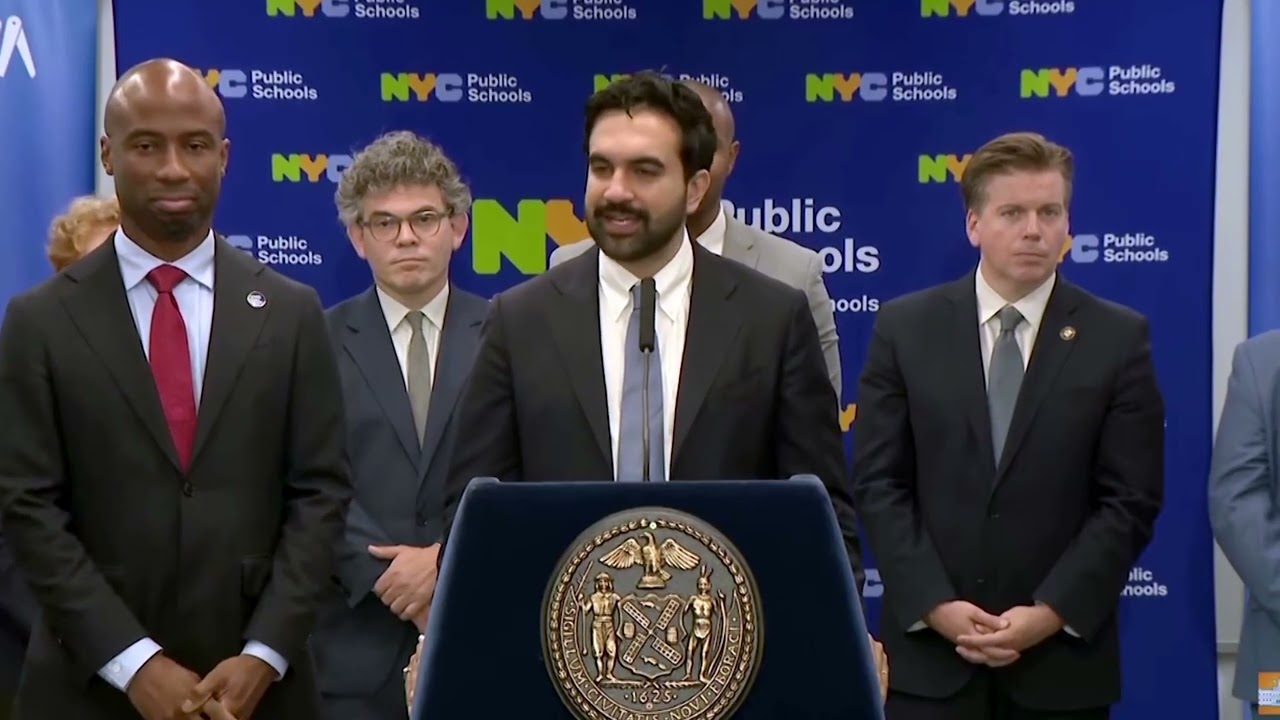
New York City Mayor Zohran Mamdani criticized the policy as using monopoly power to coerce schools.

The Guardian
5.

Former FTC Chair Lina Khan argued Google is using its monopoly power to force AI adoption in schools.

The Guardian
6.

The American Federation of Teachers and Fairplay have criticized the policy.

NBC News
7.

The SCALE Initiative at Stanford is cited regarding a lack of causal evidence for AI's educational benefits.

NBC News

Message Distribution

critical scrutiny Google is using monopoly power to force AI adoption in schools by making search access contingent on Gemini AI enablement. 92%
11 articles
● Breitbart — Accept Cheating or Else: Google to Cut Off Student Search Access If Schools Block AI
Message

Google is effectively forcing schools to accept AI tools by threatening to remove student access to Google Search if AI is blocked.

TechCrunch — DuckDuckGo pitches itself to schools amid backlash over Google’s AI policy - TechCrunch
Message

DuckDuckGo is leveraging backlash against Google's restrictive AI policies in schools to position itself as a privacy-focused, flexible alternative.

Gizmodo — Google Tries to Walk Back Controversial School AI Policy Following Political Backlash - Gizmodo
Message

Google is attempting to mitigate political backlash by clarifying that schools can choose which AI services to enable, though critics and reports suggest AI remains inextricably linked to Google Search.

Ars Technica — Google: Schools can keep search while skipping Gemini, but AI search is non-negotiable - Ars Technica
Message

Google clarifies that schools can keep search while disabling Gemini, though both are categorized as AI products under a new opt-in policy.

CBS News — Google will block search access for schools that ban AI use - CBS News
Message

Google will revoke search engine access for K-12 schools that choose to block its AI tools, leading to accusations of monopoly abuse.

● The Guardian — Google says there’s no way to use Search without using artificial intelligence
Message

Google's integration of AI into Search means schools that block AI tools will also lose access to Google Search, leading critics to accuse the company of using monopoly power to force AI adoption in classrooms.

● NBC News — Google to shut off search for schools that opt out of AI - NBC News
Message

Google is making Google Search contingent upon a school's decision to enable its Gemini AI products for students.

TechCrunch — Google will let schools disable its AI tools, but not without sacrificing Search - TechCrunch
Message

Google is making AI tools opt-in for schools, but doing so will block access to Google Search because the two are now inseparable.

Gothamist — NYC schools’ standoff with Google over AI raises prospect of no search in class - Gothamist
Message

Google's insistence that AI and search are inseparable has led to a standoff with NYC schools, sparking accusations of monopoly abuse and calls for the city to decouple from the tech giant.

● NY Post — Google will cut off search access for students at schools that reject AI
Message

Google is requiring schools to opt into AI to keep access to its search engine, a move critics describe as coercive use of a monopoly.

CNBC — Google responds to political backlash over removing search from schools that ban AI - CNBC
Message

Google is defending its new AI-integrated education policy against accusations from politicians that it is using monopoly power to force AI into schools.

pragmatic challenge People who claim to want a world without AI often overlook that the essential digital services they rely on, including Google Search, are already powered by AI. 8%
1 articles
Business Insider — You say you don't want AI. Google's school fight shows what that really means.
Message

People who claim to want a world without AI often overlook that the essential digital services they rely on, including Google Search, are already powered by AI.

Editor's Analysis

The choice between a search engine and an AI tutor

Google is shifting the responsibility of AI adoption to school administrators by making tools disabled by default. The tension arises from the condition that disabling these AI features also removes access to the Google search engine. Google states that Search and AI are now inseparable, meaning the two cannot function independently within their ecosystem.

Critics, including public officials and regulatory figures, view this as a use of monopoly power to coerce schools into accepting AI. They argue that essential search capabilities are being held hostage to force the adoption of generative tools. Whether this is a technical necessity or a strategic maneuver depends on whether a functional, non-AI version of the search engine can actually exist in Google's current architecture.

Focusing on the ultimatum over the technology

All outlets focused on the conflict between administrative control and market coercion. CBS News, The Guardian, NBC News, and TechCrunch all highlighted the hostile nature of the ultimatum, framing the event as a clash between a dominant provider and public education. They consistently pointed to the lack of evidence regarding AI's long-term benefits for students as a reason for school resistance.

While the coverage successfully captured the power struggle, it spent less time on the actual tools being imposed. The Guardian and TechCrunch mentioned Guided Learning, an AI tutor designed to coach students rather than provide direct answers, but this was treated as a secondary detail. The reporting effectively identifies the leverage being used, but leaves the reader to wonder if the educational value of the integrated AI justifies the loss of autonomy.

Updates

Nov 7 · Mayor Zohran Mamdani implements one-year AI ban in New York City public schools Updated 15:01

Mayor Zohran Mamdani implemented a one-year ban on most AI programs in New York City public schools, according to Gothamist. Gothamist reports that legal experts and lawmakers argue Google's move may violate antitrust laws and is a profit-maximizing choice. Some parents are advocating for schools to move away from Google products in favor of libraries and traditional research methods, according to Gothamist.

The conflict has moved from a general policy dispute to a concrete legal and administrative standoff in New York City. Gothamist highlights a growing movement among parents to use this friction as a catalyst for de-googling schools, advocating for a return to libraries and traditional research. This shifts the debate from whether Google is abusing its power to whether public schools should remain dependent on its ecosystem at all.

Legal experts cited by Gothamist frame the search-AI link as a profit-maximizing choice rather than a technical necessity. This reinforces the finding from Business Insider that a non-generative search version is technically possible, further weakening Google's claim of technical inseparability.

Source facts (3)

Mayor Zohran Mamdani implemented a one-year ban on most AI programs in New York City public schools.

Gothamist

Legal experts and lawmakers argue that Google's move may violate antitrust laws and is a profit-maximizing choice.

Gothamist

Some parents are advocating for schools to move away from Google products in favor of libraries and traditional research methods.

Gothamist

Nov 6 · Google clarifies AI settings for education suite Updated 05:55

Breitbart reports that a policy change affects the Google education suite, including Chromebooks, and that Google clarified districts allowing AI can choose between a consumer-style search or a 'Guided Learning' version of Gemini. A USC professor argues the policy is an attempt by the tech industry to force AI adoption. TechCrunch reports that DuckDuckGo is marketing its search engine to schools with a dedicated 'no-AI' version of its site, and that DuckDuckGo's chief public affairs officer labeled Google's approach as monopolist behavior. DuckDuckGo reports a 30% increase in app installs as users seek alternatives to Google's AI-driven search. Gizmodo reports that U.S. Senators Richard Blumenthal and Josh Hawley criticized the move as an abuse of monopoly power to force AI into schools. Google claimed the situation was a misunderstanding and stated that schools can individually toggle Gemini, Gemini Notebook, and Search. A Common Sense Media report highlighted risks of Google's AI, including completing homework and failing to detect suicidal ideation. Google announced it will pilot updates to Search for schools to provide guided learning instead of quick answers. Ars Technica reported that Google clarified schools can disable Gemini apps while keeping Search active, or choose to disable all AI including Search. A Google spokesperson told Ars Technica that the policy has not changed, but admitted the company's initial communication was vague. Business Insider reports that Google Search has relied on AI for over a decade and states that Google could technically offer a non-generative version of Search but chooses not to. Business Insider notes that OpenAI's ChatGPT is capturing search-like requests, creating competitive pressure for Google.

Google's claim that the controversy was a "misunderstanding" attempts to decouple Search from AI tools. However, Ars Technica reveals a critical nuance: while schools can keep Search active, they can also choose to disable all AI, including Search. This suggests the technical link between Search and AI remains, even if the administrative toggle is more flexible than first reported.

Business Insider provides a key technical perspective by stating that Google could technically offer a non-generative version of Search but chooses not to. This directly addresses the central question of whether the search-AI link is a technical necessity or a strategic choice, framing it as the latter.

TechCrunch identifies a market opening created by this friction. DuckDuckGo is explicitly targeting schools with a "no-AI" version of its search engine and reporting a 30% increase in app installs. This transforms the dispute from a regulatory argument into a competitive vulnerability for Google, as educators seek alternatives that offer genuine autonomy.

Coverage continues to prioritize the power struggle over pedagogical substance. While Gizmodo and Breitbart mention "Guided Learning" and risks like failing to detect suicidal ideation, they do not investigate whether Google's proposed updates actually solve the safety and educational concerns raised by Common Sense Media.

Source facts (15)

The policy change affects the Google education suite, including Chromebooks.

Breitbart

Google clarified that districts allowing AI can choose between a consumer-style search or a 'Guided Learning' version of Gemini.

Breitbart

A USC professor argues that Google's policy is an attempt by the tech industry to force AI adoption.

Breitbart

DuckDuckGo is marketing its search engine to schools and offers a dedicated 'no-AI' version of its site.

TechCrunch

DuckDuckGo's chief public affairs officer labeled Google's approach as monopolist behavior.

TechCrunch

DuckDuckGo reports a 30% increase in app installs as users seek alternatives to Google's AI-driven search.

TechCrunch

U.S. Senators Richard Blumenthal and Josh Hawley criticized the move as an abuse of monopoly power to force AI into schools.

Gizmodo

Google claimed the situation was a misunderstanding and stated that schools can individually toggle Gemini, Gemini Notebook, and Search.

Gizmodo

A Common Sense Media report highlighted risks of Google's AI, including completing homework and failing to detect suicidal ideation.

Gizmodo

Google announced it will pilot updates to Search for schools to provide guided learning instead of quick answers.

Gizmodo

Ars Technica reported that Google clarified schools can disable Gemini apps while keeping Search active, or choose to disable all AI including Search.

Ars Technica

A Google spokesperson told Ars Technica that the policy has not changed, but admitted the company's initial communication was vague.

Ars Technica

Business Insider reports that Google Search has relied on AI for over a decade.

Business Insider

Business Insider states that Google could technically offer a non-generative version of Search but chooses not to.

Business Insider

Business Insider notes that OpenAI's ChatGPT is capturing search-like requests, creating competitive pressure for Google.

Business Insider

Nov 4 · Google enabled Gemini for K-12 students Updated 07:29

Google enabled Gemini for K-12 students in August, which the NY Post reports led to backlash from parents and educators. Google's VP of education stated the move to opt-in provides administrators more control and updates search tools to encourage guided learning. Josh Golin, director of Fairplay, argues Google is using its monopoly to coerce schools into adopting AI. New York City and Los Angeles school districts have implemented temporary bans on generative AI in younger grades. Senator Bernie Sanders characterized the policy as extortion and an abuse of monopoly power. Google stated via X that AI tools are off by default and schools maintain control over their settings.

The conflict has expanded from a technical dispute over product integration to a political confrontation. CNBC highlights that the policy is now being framed as extortion by lawmakers, moving the debate into the realm of antitrust and regulatory abuse.

NY Post provides critical context by revealing that this policy change follows a backlash from parents and educators after Google enabled Gemini for K-12 students in August. This suggests the shift to an opt-in system is a reactive measure to public outcry rather than a proactive design for administrator control.

Coverage remains focused on the power struggle, but it continues to overlook the educational substance of the tools. While NY Post mentions the goal of encouraging guided learning, it does not investigate whether these tools actually provide the pedagogical value Google claims. The central question remains whether the search-AI link is a technical reality or a strategic lever, and the current reports prioritize the political reaction over this technical verification.

Source facts (6)

Google enabled Gemini for K-12 students in August, which led to backlash from parents and educators.

NY Post

Google's VP of education stated the move to opt-in provides administrators more control and updates search tools to encourage guided learning.

NY Post

Josh Golin, director of Fairplay, argues Google is using its monopoly to coerce schools into adopting AI.

NY Post

New York City and Los Angeles school districts have implemented temporary bans on generative AI in younger grades.

NY Post

Senator Bernie Sanders characterized the policy as extortion and an abuse of monopoly power.

CNBC

Google responded via X, stating that AI tools are off by default and schools maintain control over their settings.

CNBC

Coverage flow

Coverage volume

11/03 · 5
11/04 · 3
11/05 · 2
11/06 · 2

Focus shift

11/03
Google
5
11/04
Google
3
11/05
Google
2
11/06
LS
1
Google
1

Recommended Reads

News Story

Story: Common Sense Media Reports Risks of Google AI for Children

Card 3 of 3 in this story

Common Sense Media Reports Risks of Google AI for Children
Jul 17 · 2 outlets
Where it started
NYC Public Schools Restrict Generative AI and Screen Time
Sep 2 · 9 outlets
Google to disable search for schools rejecting AI
Nov 3 · 8 outlets · Viewing now
↳ Follows “Common Sense Media Reports Risks of Google AI for Children”

🌏 Global Comparison

How Korean and US outlets report the same event differently, and propagation delay

🇰🇷 Korea Card
구글의 학교 승인 없는 학생용 AI 서비스 이용 제한 및 학습 기능 확대
구글이 3일(현지시간) 공식 블로그를 통해 미국 초중고교 학생 계정에서 제미나이 등 **AI 도구를 기본적으로 비활성화**하고, 학교 관리자가 선택적으로 활성화할 수 있도록 정책을 변경했습니다. 이는 학생들의 AI 의존도 심화에 따른 학습 능력 저하 우려와 미국 상원의원들의 위험성 설명 요구 등 초당적 압박이 반영된 결과입니다. 동시에 구글은 정답 대신 풀이 과정을 안내하는 **'가이드 학습' 기능을 확대**하여 제미나이, 구글 검색, 구글 클래스룸에 도입함으로써 학습 지원을 강화하겠다고 밝혔습니다.
5 outlets · View →
🇺🇸 US Card
Google to disable search for schools rejecting AI
Google announced that AI tools for K-12 students will be **disabled by default next year**, requiring school administrators to explicitly opt-in to enable them. This policy affects tools including Gemini, NotebookLM, and Gemini in Classroom. Google executives, including VP Chris Phillips, stated th
6 outlets · View →
Propagation delay
21.7h
(78198s)
Reporting divergence
0.00
closer to 0 = more similar

Loading comments...