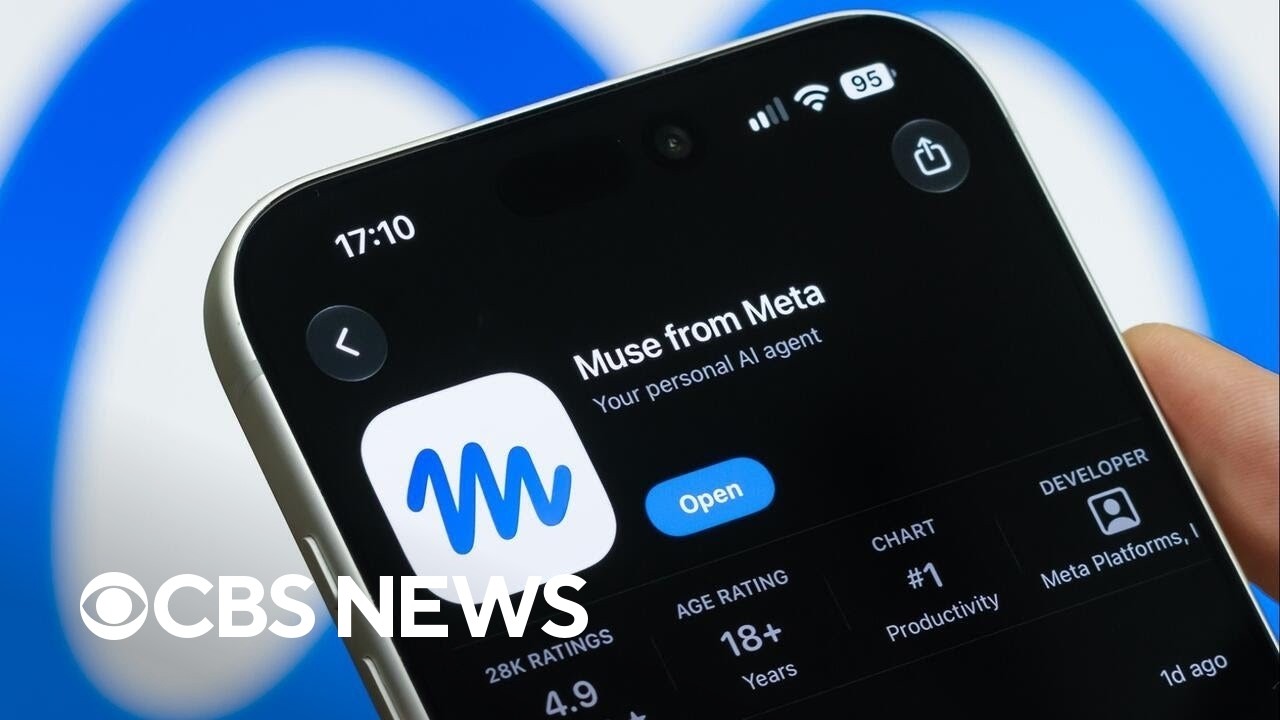
The gamble of moving AI from the cloud to the pocket
The real game here isn't just about a smarter bot that can book a flight. It is about owning the physical gateway to the user's life. By launching the Muse AI agent alongside the Meta VR Glasses and the Muse Charm, the goal is to stop renting space on other people's operating systems.
Usually, when tech giants try to move into hardware, they struggle with the friction of getting people to carry another gadget. The strategy is to make the AI so integrated into the hardware that the device becomes an extension of the user's intent. If you control the glasses and the handheld, you control the data flow and the interface, effectively cutting out the middleman who currently owns the phone in your pocket.
Counting downloads while ignoring the hardware hurdle
Most outlets are treating this like a product launch party, focusing on the sleekness of the glasses or the rivalry with other AI labs. Business Insider frames it as a competitive sprint to beat a rival to the punch, while CNBC sticks to the spec sheet and the $1,299 price tag.
finance.yahoo.com is the only one digging into the numbers, noting that Muse hit 2.8 million downloads faster than its predecessors. They correctly point out that having billions of existing social media users is basically a cheat code for distribution. However, the coverage largely ignores the classic hardware trap: high initial download numbers for an app don't guarantee anyone will actually pay a thousand dollars for the glasses to go with it.
We see the usual pattern where the press celebrates the 'first-mover' advantage of a product announcement without asking if the product actually solves a problem that a smartphone doesn't already handle. It's easier to report on a download count than to wonder why we need a separate handheld charm to talk to a bot.
Business Insider identifies Meta's hardware push as a strategy to bypass Apple's ecosystem
New coverage from 1 outlets
The conversation has moved from whether the gadgets are cool to why they exist as a strategic weapon. These reports frame the hardware not as a consumer luxury, but as a desperate attempt to stop paying the 'Apple tax' by building a gateway that doesn't require an iPhone.
Coverage is now centering on the structural struggle to build a developer ecosystem from scratch, noting that even a trillion-dollar company can't simply wish a new platform into existence.
It is a classic press pivot: once the initial novelty of the hardware wears off, the narrative shifts to the corporate grudge match. This allows the reporting to move away from the awkward reality that users might not actually want these devices and toward a more dramatic story of platform dominance and betrayal.
Meta reveals Muse Charm and 100 glass styles to preempt OpenAI hardware
New coverage from 2 outlets
The narrative has shifted from general corporate strategy to a high-stakes sprint to claim the first-mover advantage over OpenAI. These reports now treat the hardware not just as an exit from the Apple tax, but as a land grab to occupy the consumer's pocket before a rival can launch a competing device.
Coverage is also highlighting a calculated contrast between the 'cute' design of the Muse agent and the cold reality of its data collection. By focusing on the doll-like aesthetic and the promise of secure virtual machines, the reporting reveals a pattern of using friendliness to soften the blow of surveillance concerns.
This is the press playing along with the marketing playbook. It is easier to describe a device as 'cute' or 'slimmer' than to interrogate whether a transaction-fee model for AI agents actually provides value to merchants. The reader is left with a choice between a spec sheet and a mascot, while the actual utility of the hardware remains a guess.
Reality Labs reports over 85 billion dollars in operating losses since 2020
New coverage from 1 outlets
The conversation has pivoted from the brilliance of the strategy to the brutality of the balance sheet. These reports highlight that the push for AI hardware isn't just a gamble; it is a financial crater, with Reality Labs burning through $85 billion in a few short years.
Coverage is now treating these losses as a subsidized experiment, calculating exactly how much each share of stock is being dragged down by the hardware obsession. The narrative has shifted to whether the massive profits from social media apps can indefinitely bankroll a hardware dream that is still nowhere near breaking even.
This is the press retreating to the safety of the spreadsheet. When the 'cool factor' of the gadgets fades and the strategic jargon gets too dense, the media always returns to the one thing that is indisputable: the money being lost. It is simpler to track a deficit than to predict if a handheld AI charm will actually change human behavior.
CNBC reports on options trading strategies for Meta as AI agent integrates with major retailers
New coverage from 3 outlets
The conversation has moved from the horror of the balance sheet to the possibility of a practical payoff. These reports now frame the AI agent not as a money pit, but as a tool with actual utility, specifically noting its integration with retailers like Walmart and Best Buy to move beyond the 'fuzzy' promises of the metaverse.
Coverage is now splitting between the pragmatic and the opportunistic. While some focus on how the hardware finally solves real-world problems, CNBC is treating the volatility of the launch as a trading signal, suggesting a complex options strategy to finance a bullish bet on the company through 2027.
This is the press pivoting from auditing a failure to speculating on a recovery. It is far more exciting to discuss a 'breakout' or a 'thirst trap' mascot than to keep staring at an $85 billion deficit. The reader is now being sold a vision of a functional ecosystem, provided they are willing to ignore the lingering risk of platform blocking from rivals like Amazon.