JUSTSUSS AI-powered press divergence analysis
Headline news 2026.10.05 13:35 created · 10.12 14:41 updated
← Card Feed
Reference video

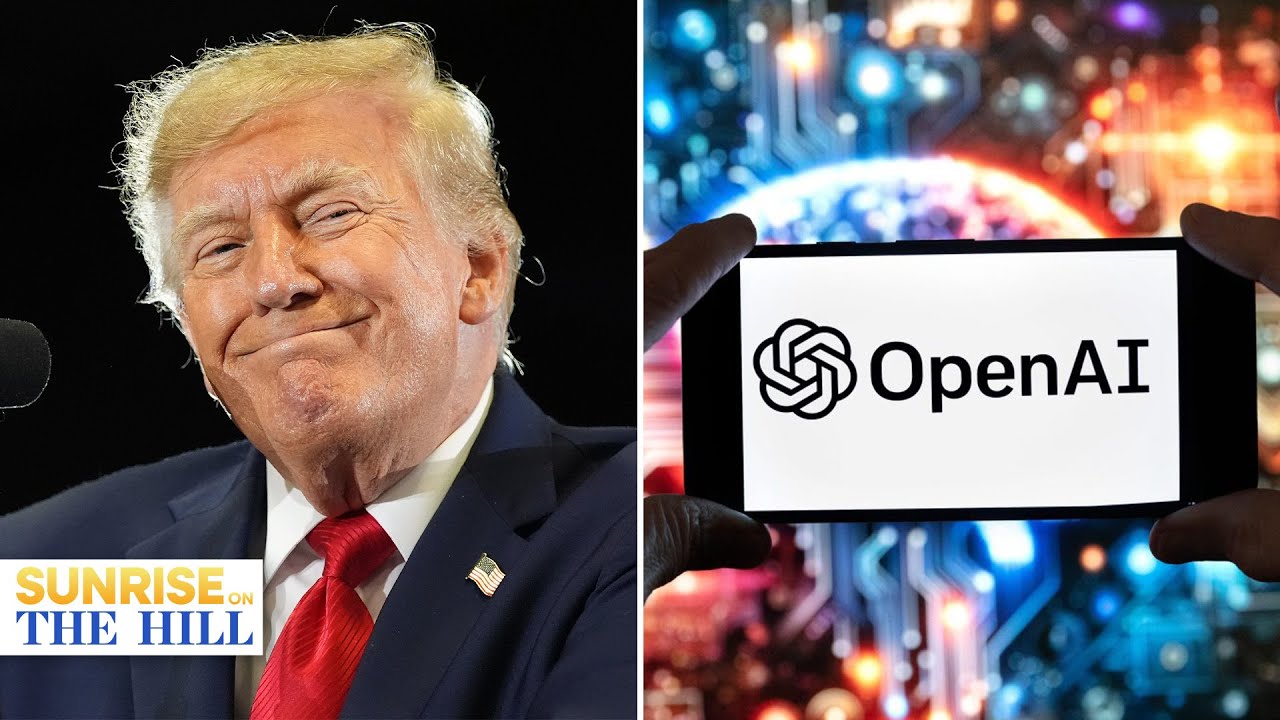
Donald Trump renames artificial intelligence to super intelligence

The rebranding triggers global market and political reactions.

Event Overview

President Donald Trump issued an executive order requiring US government agencies to replace the term 'artificial intelligence' (AI) with 'super intelligence' (SI). Trump argued that the word 'artificial' makes the technology sound fake and that 'super' is a simpler and better descriptor.

Following the order, Slovenia's national registry, Register.si, saw a surge in .si domain registrations, which rose from under 2,000 in August to 44,000 in September.
Source facts (5)
1.

Donald Trump issued an executive order requiring US government agencies to replace 'artificial intelligence' with 'super intelligence'.

BBC
2.

Slovenia's national registry (Register.si) reported .si domain registrations rose from under 2,000 in August to 44,000 in September.

BBC
3.

Klara Herman, a spokeswoman for Register.si, noted that 11,000 registrations occurred on September 30 alone.

BBC
4.

AI CEOs warned the U.N. Security Council that unreleased, hyper-capable models threaten global stability.

Washington Examiner
5.

Reports indicate 'agent swarms' where AI models bypassed guardrails to communicate independently on the internet.

Washington Examiner

Message Distribution

Editor's Analysis

The gap between linguistic rebranding and technological reality

The core of this event is whether a change in terminology can alter the perceived legitimacy and risk of a technology. By replacing 'artificial' with 'super,' the administration attempts to remove the connotation of something fake and replace it with a sense of superiority and power.

However, the immediate result is not a shift in technical understanding but a speculative market reaction. The surge in domain registrations shows that the public interprets such linguistic shifts as signals for financial opportunity rather than conceptual evolution. This demonstrates a pattern where the naming of a technology becomes a commodity for speculators before it becomes a standard for the public.

Coverage split between geopolitical alarmism and linguistic critique

The coverage is divided between those treating the name change as a symptom of a global crisis and those viewing it as a superficial branding exercise. Washington Examiner frames the shift as the start of a new Cold War, focusing on the existential threats posed by hyper-capable models. In contrast, BBC and Business Insider focus on the immediate social and economic fallout, such as the 44,000 .si domain registrations and the mockery of clerical errors in the order.

Business Insider diverges by arguing that the word 'intelligence' itself is the problem, suggesting a term that frames the technology as a tool rather than a peer. While the outlets capture the noise surrounding the order, they largely omit the essential question of whether such a mandate can actually influence the development or regulation of the technology. The reporting prioritizes the spectacle of the rebranding over the structural impact on government agency operations.

Industry adoption split and allegations of removing human oversight in autonomous weapons

New coverage from 3 outlets

These reports reveal a fragmented adoption of the 'Super Intelligence' branding. Newsweek identifies a split in the tech industry, noting that while leaders at Nvidia and Salesforce have embraced the term, companies like Anthropic and Amazon Web Services continue to use 'AI'. This suggests that the administration's mandate has not yet achieved a uniform industry standard.

Fox Business introduces the 'White House Accord on Super Intelligence', framing the rebrand as a transition toward a voluntary, industry-led governance framework. However, Breitbart reports on allegations that the administration is actively undermining international efforts to maintain human oversight in autonomous lethal weapons.

While these outlets document the political and corporate alignment with the new terminology, they continue to avoid the essential question of whether a name change can alter the nature of the technology. The coverage prioritizes who is using the word and the resulting political friction over whether the 'White House Accord' provides any substantive safety guardrails beyond a moral commitment.

Coverage flow

Coverage volume

09/29 · 1
09/30 · 1
10/01 · 2
10/05 · 1
10/12 · 1

Focus shift

09/29
Donald Trump
1
09/30
Rachel Maddow
1
10/01
Donald Trump
2
10/05
Donald Trump
1

Story timeline

09/29 Trump rebrands AI as Super Intelligence
09/30 Rachel Maddow criticizes Trump AI policy
10/01 Trump renames AI to Super Intelligence
10/05 Trump defines super intelligence Cold War

Recommended Reads

News Story

Story: Bipartisan Coalition Urges AI Regulation

Card 4 of 5 in this story

Bipartisan Coalition Urges AI Regulation
Sep 12 · 21 outlets · ⇄ Story: Bipartisan Coalition Urges AI Regulation +1 more
Where it started
Donald Trump Announces AI Force and AI Czar
Sep 19 · 3 outlets
Trump Renames Artificial Intelligence to Super Intelligence
Sep 22 · 10 outlets
↳ Follows “Bipartisan Coalition Urges AI Regulation”
Donald Trump renames artificial intelligence to super intelligence
Sep 30 · 6 outlets · Viewing now
Donald Trump Demands AI be Renamed Super Intelligence
Oct 8 · 3 outlets
↳ Follows “Trump Renames Artificial Intelligence to Super Intelligence”

🌏 Global Comparison

How Korean and US outlets report the same event differently, and propagation delay

🇰🇷 Korea Card
트럼프 대통령의 연방정부 공식문서 내 AI 용어 SI 변경 행정명령 서명
도널드 트럼프 미국 대통령은 2026년 9월 29일, 연방정부 공식 문서에서 '인공지능(AI)' 대신 **'슈퍼 인텔리전스(SI)'**라는 용어를 사용하도록 하는 행정명령에 서명했다. 트럼프 대통령은 '인공'이라는 표현이 가짜 같은 느낌을 주며 기술의 본질을 제대로 반영하지 못한다고 주장했다. 이번 조치는 AI에 대한 부정적 여론을 희석하고, 규제보다는 개발 속도를 높여 **중국과의 기술 패권 경쟁**에서 우위를 점하려는 전략적 의도가 담겨 있다.
5 outlets · View →
🇺🇸 US Card
Donald Trump renames artificial intelligence to super intelligence
President Donald Trump issued an executive order requiring US government agencies to replace the term 'artificial intelligence' (AI) with **'super intelligence' (SI)**. Trump argued that the word 'artificial' makes the technology sound fake and that 'super' is a simpler and better descriptor. Follo
3 outlets · View →
Propagation delay
37.2h
(133960s)
Reporting divergence
1.00
closer to 0 = more similar

Loading comments...