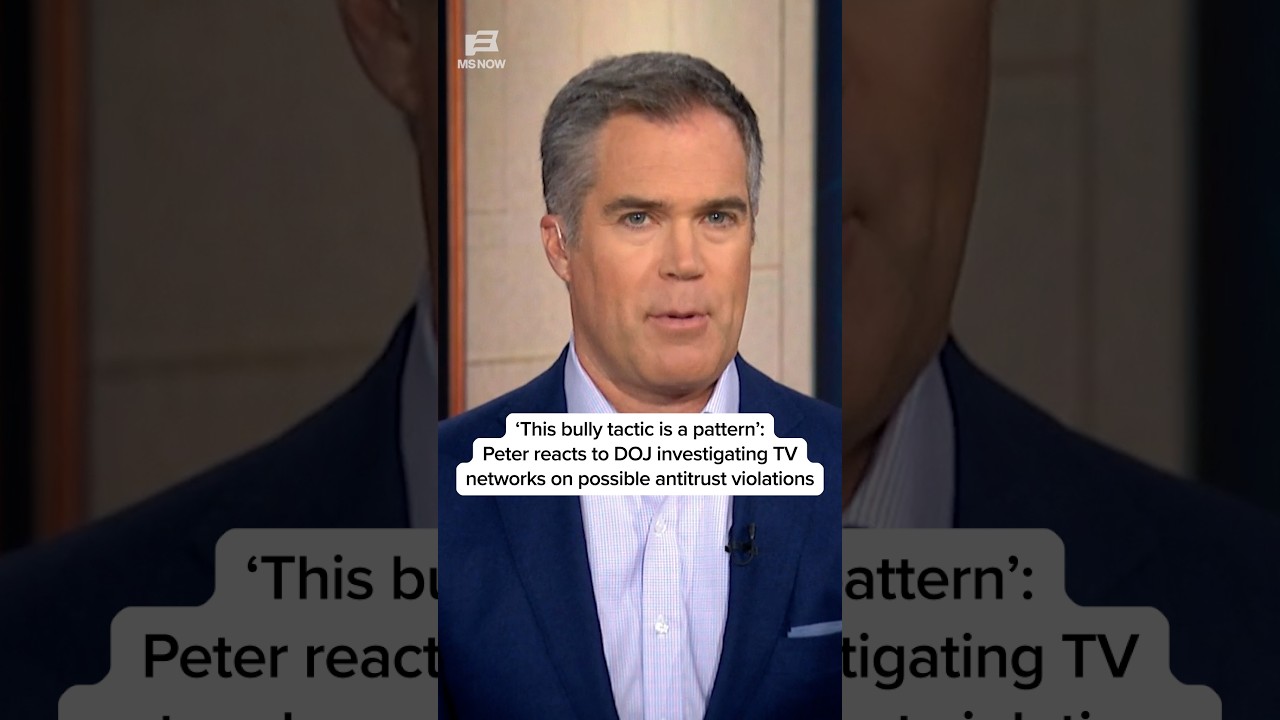
The conflict between antitrust law and press solidarity
The core issue is whether the Sherman Antitrust Act can be applied to a collective action by news organizations intended to protest government censorship. The Department of Justice views the four-day suspension of footage distribution as a group boycott among commercial competitors. The networks argue the action was a necessary stand for independent information after the administration banned specific outlets.
Antitrust laws typically target agreements that restrict competition to inflate prices or exclude rivals from a market. In this case, the tension lies in whether the shared goal of protecting press access overrides the prohibition against coordinated commercial behavior.
Focus on political retaliation over legal merit
Most outlets frame the investigation as a political tool rather than a legal inquiry. Newsweek, Mediaite, and Variety explicitly describe the probe as an escalation of a campaign to punish critical coverage. Deadline and Mediaite highlight the investigation as a pretext to intimidate journalists.
While the coverage focuses on the administration's motives, it largely omits a detailed legal analysis of how the Sherman Act applies to non-price-fixing coordination in a news environment. Variety notes that networks have coordinated pool coverage for decades without challenge, but the outlets do not explore the specific legal distinction between routine coordination and a protest-driven boycott.
Deadline provides the most specific context by mentioning a previous antitrust investigation involving advertiser boycotts, though it does not explain how that case informs the current legal standing of the news networks.
NPR and CNBC report on expanded government pressure including FCC license probes and individual lawsuits
New coverage from 2 outlets
These reports deepen the narrative of political retaliation by linking the antitrust probe to other regulatory pressures. NPR notes that the Justice Department's investigation coincides with FCC probes into broadcast licenses for most major networks and individual lawsuits filed by the president against other news organizations. CNBC adds that the administration has previously attempted to cut funding for public broadcasters.
Both NPR and CNBC fail to engage with the essential legal question of whether the coordinated suspension of coverage constitutes an illegal restraint of trade. Instead, they frame the investigation as part of a systemic effort to weaponize government agencies to punish critical media. By focusing on the breadth of the administration's actions, the coverage shifts from a legal analysis of the Sherman Act to a broader critique of executive pressure on the press.
Reason reports on the absence of commercial motive in the networks' press pool boycott
New coverage from 1 outlets
Reason engages with the essential legal question by examining whether the networks' actions meet the criteria for an antitrust violation. It notes that legal experts argue the networks lacked the commercial motive required for a Sherman Act violation, as the suspension of coverage was driven by political and constitutional concerns.
This adds a necessary legal dimension to the discourse, moving beyond the previous pattern of framing the probe solely as political retaliation. By contrasting the DOJ's position on group boycotts with the specific intent of the networks, the report highlights the tension between commercial behavior and protected speech.
Deadline cites legal experts arguing the news boycott was protected First Amendment expression
New coverage from 1 outlets
Deadline engages with the essential legal question by providing specific arguments from antitrust professors and former regulators. These experts argue that the DOJ's case is unlikely to succeed because the networks' actions were a form of First Amendment expression rather than a commercial effort to stifle competition.
By citing legal precedents that distinguish non-commercial political boycotts from illegal price-fixing, the report moves the discourse from a general claim of political retaliation to a concrete legal defense. This provides a necessary counterpoint to the DOJ's position that any group boycott among commercial competitors violates the Sherman Act, regardless of the motive.