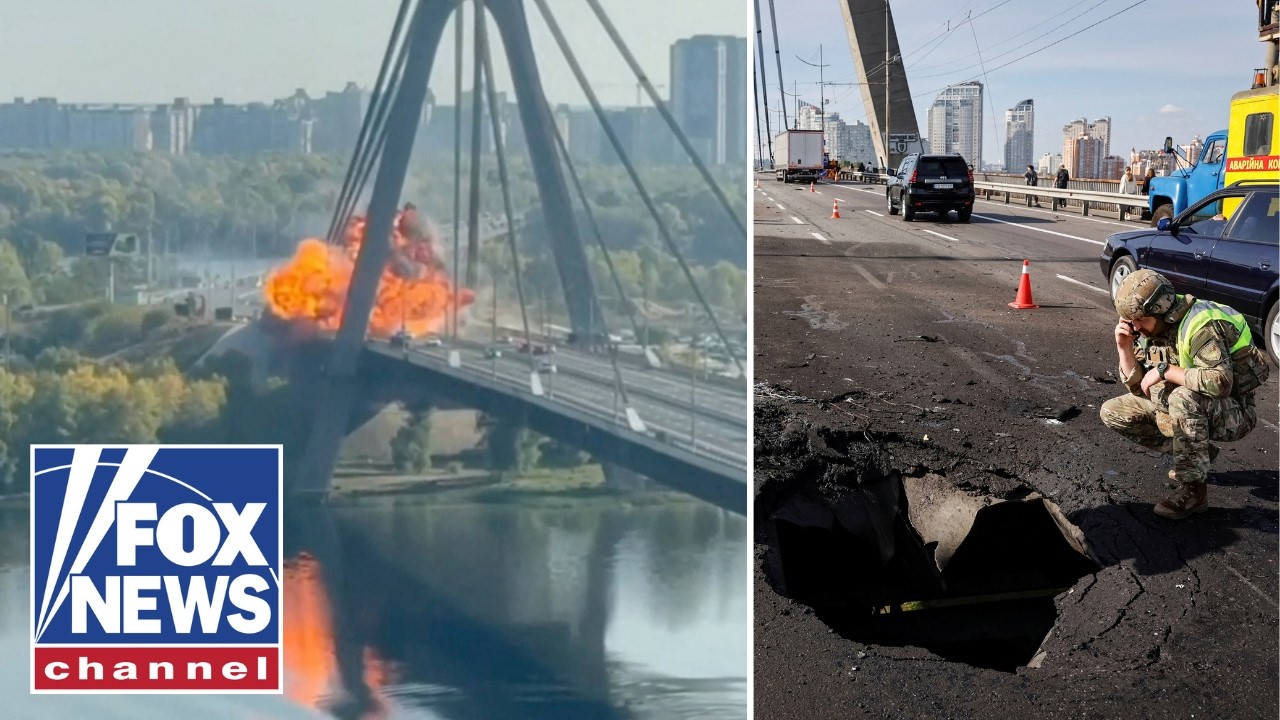
Strategic shift toward civilian destabilization
The objective is to break the psychological resilience of the population and destabilize the state by creating a humanitarian crisis. By targeting School No. 12 and the Pivdennyi bridge, the attacks aim to disrupt the basic functions of urban life and force a mass exodus from the capital.
This strategy relies on the deployment of specialized jet-powered drones designed to penetrate air defenses and destroy reinforced structures. The focus on energy and transport links before winter is intended to degrade the city's capacity to sustain its residents, turning the urban environment into a site of systemic instability.
Focus on technical escalation and humanitarian law
Most outlets agree that Russia has entered a more dangerous phase of its campaign. The Guardian and BBC [★ 독자적 사실] provide critical context by identifying the use of jet-powered drones and the resulting shortage of interceptors, moving beyond simple damage reports to explain the technical shift in the conflict.
While kyivpost.com focuses on the violation of international humanitarian law regarding educational facilities, NY Post and kyivindependent.com emphasize the broader goal of breaking civilian morale. However, the coverage largely focuses on the immediate terror of the strikes. There is a lack of analysis on how the internal decision-making processes of the attacking force have evolved to prioritize these specific civilian targets over military objectives.
France 24 reports strikes on Northern Bridge and Russian warnings for foreigners to evacuate Kyiv
New coverage from 1 outlets
France 24 reports that Russia has expanded its targets to include the Northern Bridge, following strikes on the Southern Bridge. These attacks have caused severe traffic congestion and the closure of key crossings, effectively severing the connection between the eastern and western banks of the city.
This coverage engages with the essential question of destabilization by documenting the transition from symbolic terror to the actual physical disruption of urban functionality. France 24 highlights a specific tactical escalation: the Russian foreign ministry is now explicitly urging diplomats and foreigners to leave the city. This suggests the strikes are not merely retaliatory but are intended to clear the city of international presence before further escalation.
Al Jazeera and Breitbart report reciprocal long-range strikes amidst frontline deadlock
New coverage from 2 outlets
Al Jazeera and Breitbart frame the recent strikes on Kyiv's bridges not as isolated tactical escalations, but as part of a cycle of reciprocal long-range strikes. This coverage moves the narrative from the specific goal of urban paralysis to a broader strategic deadlock, where both sides target deep-territory infrastructure to offset stagnation on the front lines.
Al Jazeera engages with the essential question of destabilization by linking the attacks on civilian infrastructure to the broader objective of offsetting battlefield gains. In contrast, Breitbart focuses on the Russian Defense Ministry's claim that the bridge was a military logistics target. By highlighting this official denial, Breitbart omits the systemic pattern of civilian destabilization, treating the event as a dispute over target classification rather than a coordinated campaign of terror.
The Guardian reports Putin ordered the removal of constraints on air campaigns against Kyiv
New coverage from 1 outlets
The Guardian identifies a specific catalyst for the intensified strikes: an order from Vladimir Putin to remove constraints on air campaigns. This detail moves the narrative beyond a general cycle of reciprocal strikes to a deliberate policy shift in the Russian command structure.
By linking the bridge attacks to this directive, The Guardian engages with the essential question of destabilization. It frames the current chaos not as a tactical adjustment, but as a systematic effort to plunge the capital into darkness and disorder. This provides the missing link between the technical use of drones and the strategic goal of breaking civilian resilience.
CNN reports Germany's billion-euro military aid package amid repeated strikes on Kyiv's river crossings
New coverage from 1 outlets
CNN frames the repeated attacks on Kyiv's river crossings as a catalyst for strengthening Western defense partnerships. By reporting on German Chancellor Friedrich Merz's visit and the commitment of €1 billion in military aid, the coverage shifts from the internal mechanics of Russian destabilization to the external diplomatic and financial response.
CNN engages with the essential question of destabilization by linking the physical destruction of the Northern Bridge to the urgent need for drone and missile production partnerships. However, the report also introduces a new tension: the conflict between Ukraine's strategy of targeting Russian oil refineries and the US request to avoid such targets to stabilize global oil prices. This moves the narrative beyond the immediate terror of the strikes toward a complex calculation of global economic stability and military sustainability.
CNBC reports US proposal for trilateral peace talks amid Russian pledges to intensify infrastructure strikes
New coverage from 2 outlets
CNBC reports that the Russian Defense Ministry has pledged to intensify attacks on Kyiv, specifically targeting data centers and energy facilities. This confirms a broadening of the target list beyond transport links to include the digital and power infrastructure essential for urban governance.
By linking these threats to the US administration's proposal for trilateral peace talks by late October, CNBC engages with the essential question of destabilization. The coverage highlights a structural contradiction: Russia is escalating the physical campaign to break civilian resilience while the US seeks a diplomatic pivot to stabilize global fuel supplies and diesel prices. This moves the narrative from a bilateral military conflict to a trilateral negotiation where global economic stability is used as leverage to curb attacks on Russian refineries.
NBC News reports Russian strikes during German Chancellor's visit as a signal of shadow war against Europe
New coverage from 2 outlets
NBC News reports that Russia has abandoned the previous pattern of pausing air strikes during high-level diplomatic visits. By targeting Kyiv during German Chancellor Friedrich Merz's visit, the attacks are framed not as isolated strikes, but as part of a shadow war against European democracies.
This coverage engages with the essential question of destabilization by identifying a shift in the target's psychological impact. The strikes now aim to signal that no diplomatic presence provides immunity, moving the goal from urban paralysis to the intimidation of Western leadership.
While NBC News documents the Russian government's claim that these are retaliatory strikes on military logistics, it emphasizes the warning from Germany's foreign intelligence chief. This shifts the narrative from a bilateral conflict over infrastructure to a broader security crisis involving the European continent.