JUSTSUSS AI-powered press divergence analysis
9 outlets covered 2026.10.01 01:33 created · 10.01 23:54 updated
← Card Feed
Reference video

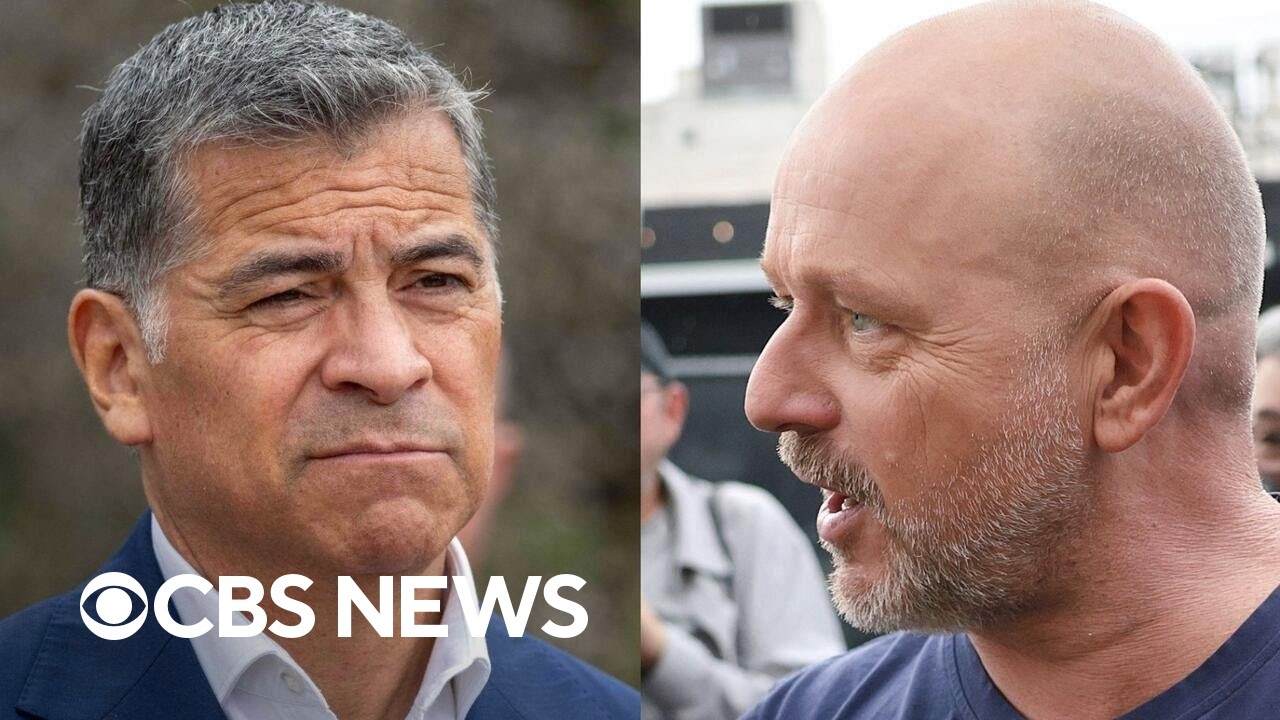
Xavier Becerra and Steve Hilton Debate for California Governor

Candidates clash over California's leadership and policy.

Event Overview

Democratic candidate Xavier Becerra and Republican candidate Steve Hilton participated in a 60-minute televised debate on CNN in Burbank for the California governor's race. The encounter focused on the state's issues with homelessness, taxes, and the cost of living.

Becerra emphasized his government experience and attempted to link Hilton to President Donald Trump. Hilton framed himself as a change agent, blaming 16 years of Democratic leadership for the state's current problems.

Source facts (7)
1.

The debate was broadcast on CNN and took place in Burbank.

Deadline
2.

The debate lasted 60 minutes.

LA Times
3.

Steve Hilton proposed capping new home fees at $50,000.

CNN
4.

Steve Hilton proposed a 20% tax credit for film production.

CNN
5.

Both candidates agreed on the necessity of tax incentives to prevent job losses in the Hollywood production industry.

Deadline
6.

Steve Hilton expressed support for voter ID, which Xavier Becerra opposed.

CNN
7.

The debate covered topics including immigration, AI, affordability, and education.

CNN

Message Distribution

ideological clash Race framed as an ideological clash between Trumpism and the Democratic establishment 36%
4 articles
neutral reporting Neutral reporting on political events and economic context 36%
4 articles
political theater Candidates prioritize political theater over substantive policy solutions 9%
1 articles
decisive victory Debate framed as a decisive victory for Becerra and a failure for Hilton 9%
1 articles
impossible victory Framing the candidate's victory as nearly impossible 9%
1 articles
general headlines Providing general news directory and headlines 0%
0 articles

Editor's Analysis

A clash of political identities over systemic failures

The core of this encounter is whether a change in leadership can resolve chronic issues like homelessness and the cost of living. The candidates treat these failures as weapons rather than problems to be solved with new logic. One side uses the long-term dominance of a single party to argue that the current system is fundamentally broken. The other side relies on the perceived instability of an opposing political figure to frame the current leadership as the only safe choice.

This pattern reflects a common structural conflict in governance where the incumbent party emphasizes stability and experience while the challenger emphasizes the need for a total reset. The debate reveals a gap between the agreement that the state's conditions are deteriorating and the lack of a shared, concrete path toward recovery.

Focus on political victory over policy substance

Most coverage focuses on the strategic victory of the candidates. LA Times and ABC News frame the event as a contest of authority and demeanor, with LA Times describing the result as a decisive win for the Democratic candidate. CNN and ABC News highlight the tactical use of political associations, specifically the attempt to link the Republican candidate to a polarizing national figure.

Deadline provides a more critical lens by noting that neither candidate offered specific policy details on the decline of the Hollywood production industry, despite agreeing on the need for tax incentives. While CNN lists a variety of topics from AI to voter ID, the overall coverage fails to interrogate whether the proposed solutions, such as capping home fees at $50,000, are viable. The reporting prioritizes the political narrative of who won the debate over the essential question of whether any substantive alternative to the status quo was presented.

Outlets link candidate viability to alignment with national party figures

New coverage from 5 outlets

These reports shift the focus from the debate's tactical outcomes to the broader electoral constraints of the candidates. LA Times and The Guardian frame the race as a struggle between a frontrunner positioning himself as a barrier against national Republican policies and a challenger whose appeal to dissatisfied voters is hindered by his ties to an unpopular president. The coverage prioritizes the candidates' political identities over the substantive policy alternatives required to address the state's systemic failures.

While LA Times mentions the cost of living and AI regulation, it treats these topics as vehicles for personal attacks and national political framing rather than as problems requiring concrete solutions. The Guardian similarly focuses on the candidates' political paths and endorsements. By centering the narrative on polling deficits and party alignment, these outlets omit the essential question of whether either candidate has a viable plan to resolve the chronic issues of affordability and governance.

Coverage flow

Coverage volume

09/30 · 5
10/01 · 6

Focus shift

09/30
Steve Hilton
3
Xavier Becerra
1
10/01
Steve Hilton
2
null
2

Story timeline

09/30 Becerra and Hilton debate California governorship
10/01 Becerra and Hilton debate

Recommended Reads

News Story

Story: Xavier Becerra and Steve Hilton Debate for California Governor

Card 1 of 3 in this story

Xavier Becerra and Steve Hilton Debate for California Governor
Sep 30 · 9 outlets · Viewing now
Where it started
Xavier Becerra considers mileage-based tax for roads
Oct 28 · 1 outlets
↳ Follows “Xavier Becerra and Steve Hilton Debate for California Governor”
Xavier Becerra Wins California Governor's Race
Nov 3 · 9 outlets · ⇄ Story: Republican Mid-Decade Congressional Redistricting +1 more
↳ Follows “Xavier Becerra and Steve Hilton Debate for California Governor”

Loading comments...