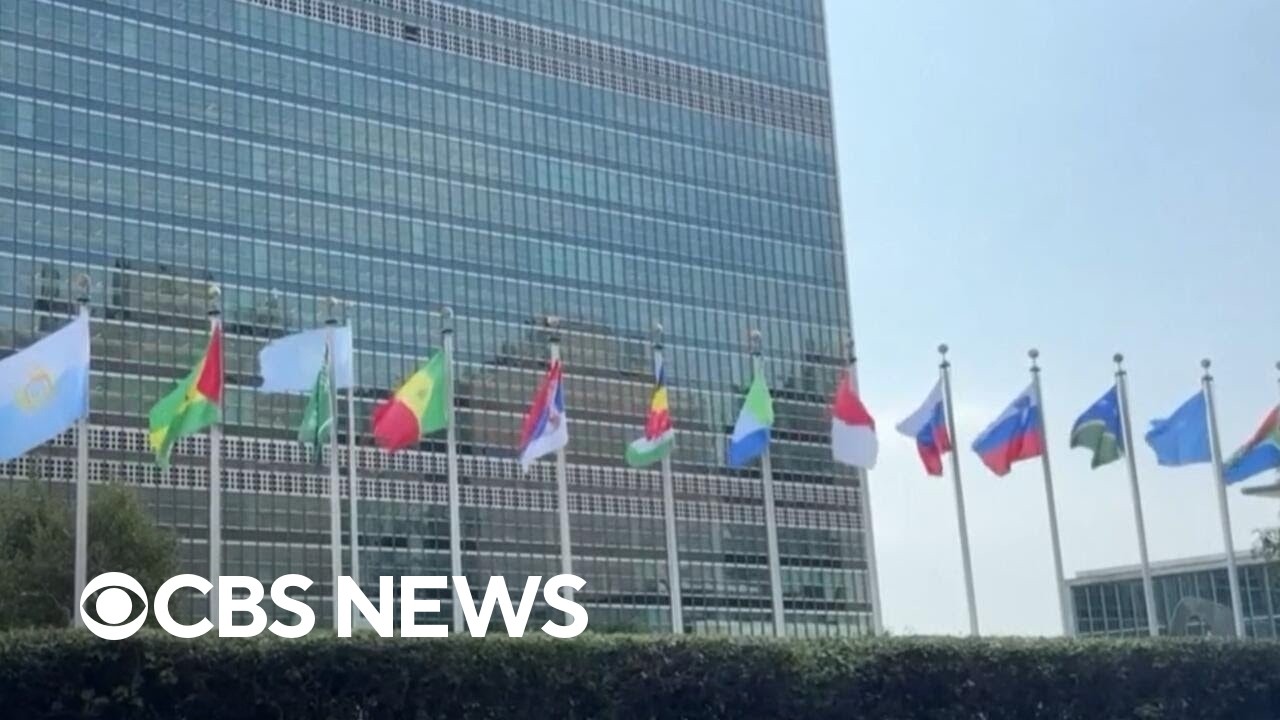
The Grand Theater of Global Irrelevance
Does a talking shop still matter when the people doing the talking can't agree on the rules? The gathering of over 100 leaders at the United Nations headquarters in New York looks like a summit, but it functions more like a high-end networking event. While the agenda is packed with existential dread—from AI to climate change—the organization is essentially a landlord struggling to pay the bills, barely avoiding a voting crisis thanks to a $725 million payment from the U.S.
This is the classic trap of international bodies. They are designed for a world that no longer exists, clinging to a power structure where a few hold the veto while the rest hold the grievances. When the formal mechanism for peace becomes a place where leaders simply wait for their turn to speak, the gap between the official podium and the actual exercise of power becomes a canyon.
Between Diplomatic Rituals and the American Orbit
The coverage splits neatly between those mourning the institution and those treating it as a backdrop for a popularity contest. PBS focuses on the systemic rot and the desperate need for reform, while NPR highlights the friction between formal diplomacy and the unilateral whims of the U.S. administration, such as the selective use of visas to curate who gets a seat at the table.
Then there is Fox News, which decides the actual event is boring and instead pivots to a ranking index. By focusing on which countries have the best 'footprint' in the U.S., they essentially argue that the UN is just a convenient venue for nations to audition for American favor. It is a fascinating divergence: one side sees a failing global government, the other sees a global beauty pageant where the U.S. is the only judge that matters.
Most outlets agree the UN is in crisis, but they treat the symptoms rather than the disease. They report on who is absent or who is paying the bills, yet they rarely question why we still pretend that a room full of people who refuse to compromise is the primary tool for global security. It is a lot of expensive travel just to confirm that nobody is listening.
Reports highlight UN humanitarian functions and AI's impact on climate goals
New coverage from 2 outlets
The conversation is drifting away from the high-level political deadlock toward the gritty reality of what the UN actually does when it isn't talking. By highlighting the delivery of water and aid in Gaza, some reports attempt to rescue the institution's image, suggesting that humanitarian utility is a valid substitute for political power.
At the same time, the agenda is being updated for the digital age. The focus has shifted toward the paradoxical role of AI, which is framed as both a climate disaster due to energy demands and a potential savior for green design.
This pivot reflects a common press habit: when the structural failure of an organization becomes too boring or obvious to report, the coverage moves toward tangible deliverables or trendy new variables. For the reader, this means the UN is being rebranded from a failing global government into a combination of a global charity and a tech-policy forum.
Fox News reports on U.S. efforts to leverage Middle East instability for Israel-Arab normalization
New coverage from 1 outlets
The conversation has moved from the UN's institutional decay to the calculated use of regional chaos. These reports treat the Middle East crisis not as a diplomatic failure to be solved, but as a strategic opening for the U.S. to secure new energy pipelines and push for Israel-Arab normalization.
Coverage now prioritizes the friction between public diplomatic protests over Gaza and the private pursuit of security guarantees. Fox News frames the UN gathering as a mere backdrop for these high-stakes bilateral deals, treating the formal assembly's calls for Palestinian statehood as noise that doesn't interfere with the actual business of power.
This reflects a recurring press pattern where the 'global' aspect of a summit is discarded the moment a national strategic interest provides a more concrete story. For the reader, the UN is no longer even a failing government or a charity; it is simply a convenient hotel lobby where the U.S. manages its regional portfolio.
Humanitarian groups seek private funding to offset cuts in government foreign aid
New coverage from 1 outlets
The conversation has shifted from the UN's political utility to its financial insolvency. These reports highlight a desperate scramble by humanitarian groups to replace dwindling government grants with money from private foundations and Gulf states.
By focusing on the rise of billionaire-funded initiatives and private family offices, the coverage suggests that global stability is being outsourced to the highest bidder. It is a move from discussing who holds the veto to discussing who holds the checkbook.
This reflects a press tendency to pivot toward the 'funding crisis' when the diplomatic deadlock becomes a static background noise. For the reader, the UN is no longer just a hotel lobby for power brokers, but a failing franchise looking for private equity to keep the lights on.