JUSTSUSS AI-powered press divergence analysis
Headline news 2026.10.09 17:51 created · 10.20 08:59 updated
← Card Feed
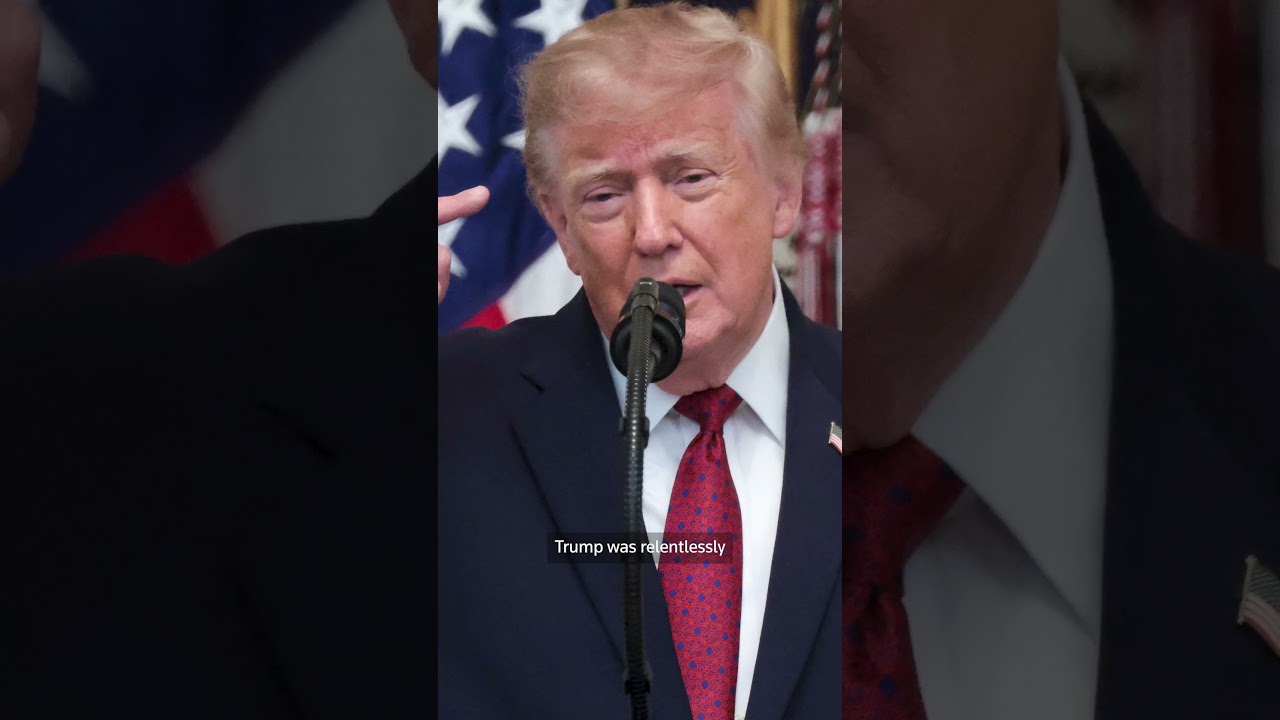
Reference video

United States Imposes Sanctions on the ICC

The US aims to dismantle the ICC to protect Americans.

Event Overview

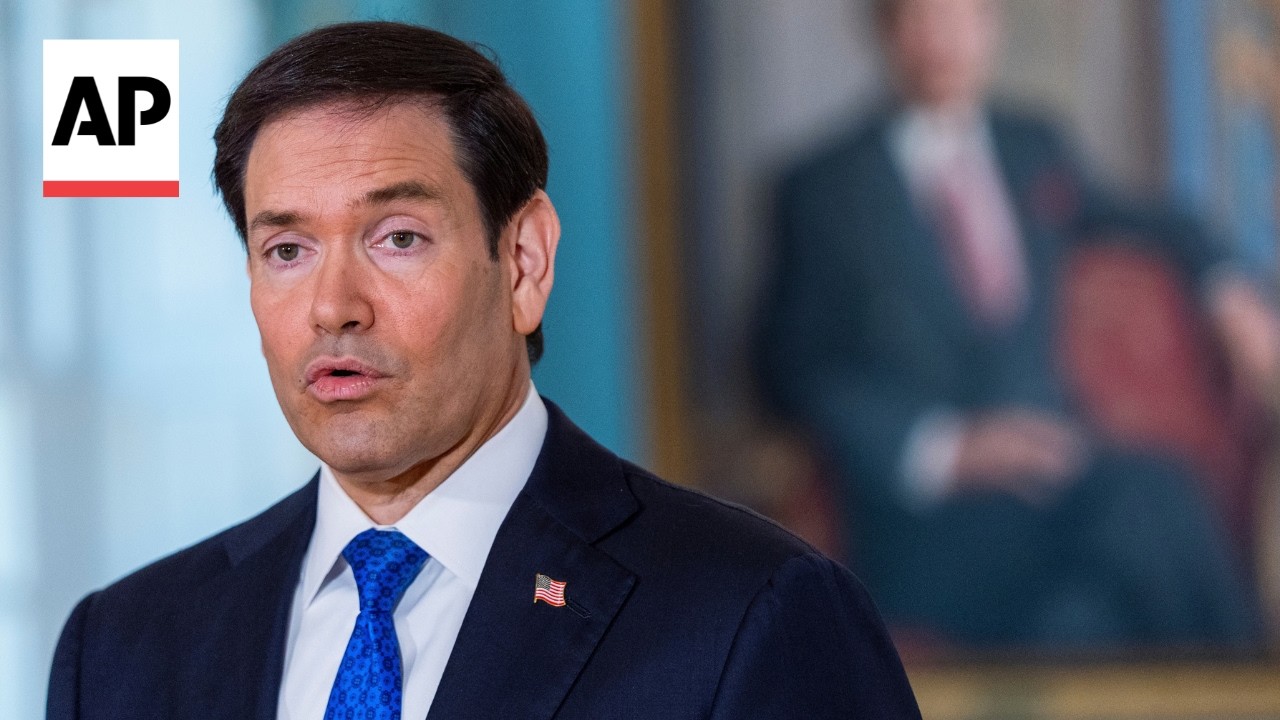
Secretary of State Marco Rubio announced that the Trump administration has imposed sweeping financial sanctions on the International Criminal Court (ICC). The administration intends to block the court's assets under U.S. jurisdiction and ban U.S. entities from transacting with the institution to cut off its resources and cripple its operations.

Rubio described the ICC as a "rogue" and "fake" court, stating the move is necessary to defend U.S. sovereignty and prevent the prosecution of U.S. service members and Border Patrol agents. The sanctions include a 180-day general license or grace period for operations.

Source facts (7)
1.

Secretary of State Marco Rubio announced the imposition of financial sanctions on the ICC.

Mediaite
2.

The sanctions block ICC assets under U.S. jurisdiction and bar U.S. entities from doing business with the court.

CBS News
3.

The sanctions include a 180-day general license/grace period for operations.

Fox News
4.

The U.S. previously imposed sanctions on 17 individuals before targeting the ICC as an institution.

Fox News
5.

The ICC, UN Secretary General Antonio Guterres, and allies including the UK and France condemned the move as an assault on the rule of law.

BBC
6.

ICC Judge Tomoko Akane urged the court's 125 member states to support the institution.

Mediaite
7.

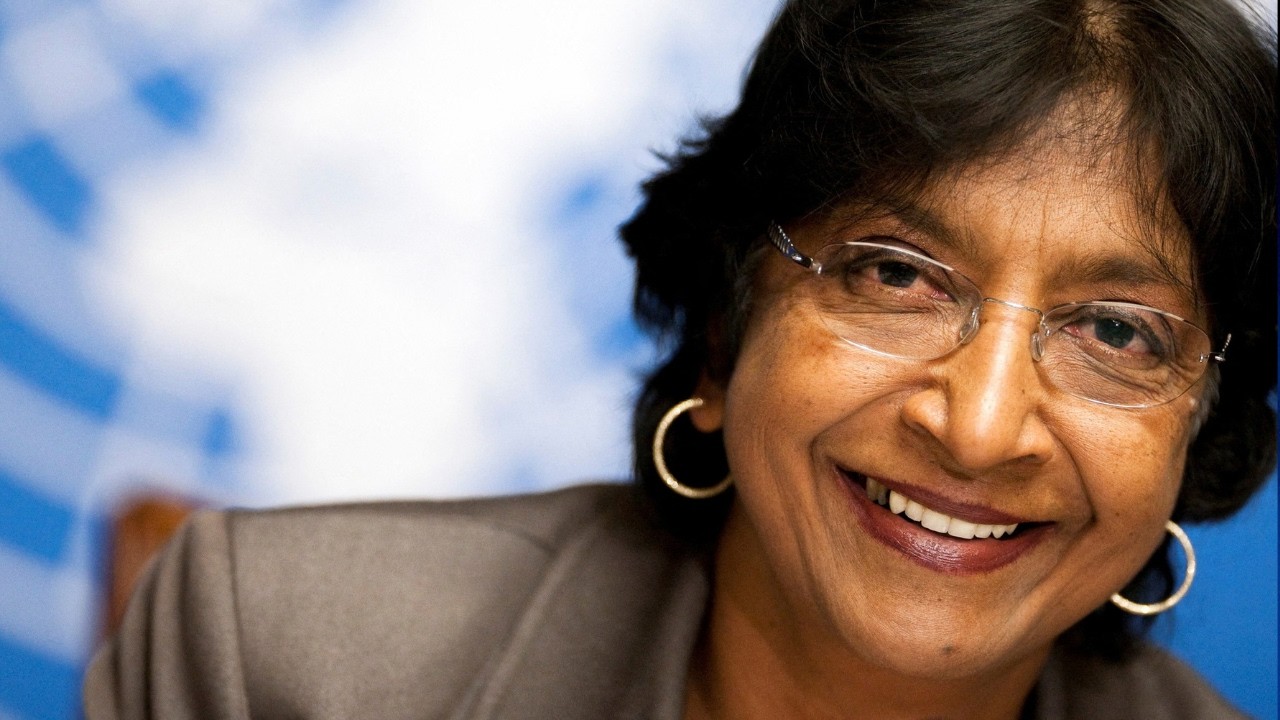
The sanctions follow the Nobel Peace Prize award to former ICC judge Navi Pillay, who led a U.N. inquiry finding that Israel committed genocide in Gaza.

CBS News

Message Distribution

legal aggression US actions framed as aggressive attacks on international law and global justice 88%
14 articles
● The Guardian — We can stop Trump’s assault on the international criminal court | Kenneth Roth
Message

Donald Trump's sanctions against the ICC are an attempt to ensure impunity for American and Israeli war criminals and must be countered by the EU and member states.

sovereignty protection Sanctions framed as necessary protection of US sovereignty against a rogue body 12%
2 articles

Editor's Analysis

The conflict between national sovereignty and international judicial authority

The core issue is whether the international legal order can survive the direct financial strangulation of its primary enforcement mechanism. By blocking assets and banning transactions, a state transforms a legal dispute over jurisdiction into a struggle for institutional survival. This move asserts that national sovereignty overrides the mandate of a global court, effectively treating the court as a political adversary rather than a legal entity.

This structure mirrors the tension seen in the Iraq War's aftermath regarding the use of military tribunals. In that instance, a state established its own legal frameworks to shield its personnel from foreign or international jurisdiction, asserting that only the home nation has the right to judge its soldiers. The current situation escalates this by targeting the financial infrastructure of the court itself to prevent any trial from occurring.

Focus on political friction while omitting the practical collapse of justice

Most outlets focused on the political clash between the Trump administration and the ICC, framing the event as a battle over sovereignty or an assault on the rule of law. Fox News highlighted the sanctions as a justified defense of U.S. personnel, while The Guardian and CBS News emphasized the coercive nature of the financial pressure. These reports largely treated the sanctions as a diplomatic tool or a political statement.

BBC provided the only analysis of the concrete operational consequences, noting that the loss of banking and software services could lead to the release of detainees due to the court's inability to conduct fair trials. This [★ 독자적 사실] reveals the essential danger: the sanctions do not just protect specific individuals from prosecution but may collapse the entire system of international custody and trial.

While several outlets mentioned the 180-day grace period, they failed to examine how a global court can realistically negotiate its independence when its basic operational resources are held hostage. The coverage remains centered on the rhetoric of the actors rather than the structural vulnerability of an institution that relies on the cooperation of the very powers it is tasked to investigate.

DW reports the withdrawal of Venezuela and Chad from the ICC following US pressure

New coverage from 1 outlets

DW expanded the scope of the conflict beyond the immediate sanctions to show a pattern of institutional attrition. By reporting that Venezuela and Chad recently withdrew from the court following US pressure [★ 독자적 사실], the coverage moves from a dispute over specific assets to a broader campaign to dismantle the court's membership. This reveals that financial strangulation is one part of a larger strategy to strip the court of its global legitimacy and jurisdictional reach.

However, DW failed to engage with the essential question of whether the court can maintain its independence while its members are coerced into leaving. The report focused on the diplomatic condemnation from US allies and the timing of the Nobel Peace Prize, treating the event as a clash of political wills. It omitted an analysis of how the loss of member states fundamentally alters the court's ability to enforce the international rule of law, regardless of its financial status.

PBS reports a surge in member withdrawals alongside accusations of neocolonialism

New coverage from 3 outlets

PBS deepened the analysis of institutional attrition by identifying a broader pattern of withdrawals. The report notes that Burkina Faso, Mali, and Niger joined Venezuela and Chad in leaving the court [★ 독자적 사실]. This coverage engages with the essential question of institutional survival by revealing that the court is facing a dual crisis. While the Trump administration uses sanctions to dismantle the court's influence, military juntas in Africa are exiting based on the claim that the court practices selective justice and neocolonialism.

Washington Post and Breitbart remained focused on the political clash. Washington Post highlighted the timing of the sanctions relative to the Nobel Peace Prize, while Breitbart described the court as a rogue organization. These reports omitted the structural reality of the membership collapse, treating the conflict as a binary struggle between the U.S. government and the court's legitimacy. This omission ignores how the court's viability is being eroded not only by external financial pressure but by a loss of trust among the populations it is tasked to protect.
Updates

Oct 20 · Sanctions potentially block ICC internet and telecommunications services Updated 08:59

The Guardian reports that sanctions potentially block the internet and telecommunications services of the ICC. The ICC claims jurisdiction over alleged crimes in Palestine and Afghanistan because those territories are member states. According to The Guardian, the ICC currently lacks a chief prosecutor.

The scope of financial strangulation has expanded from banking assets to basic digital infrastructure. The Guardian identifies that the sanctions could block internet and telecommunications services, suggesting the goal is not just financial pressure but the total operational paralysis of the court. This deepens the question of institutional survival by showing that a global court cannot function if its digital lifeline is controlled by a single state.

The Guardian also highlights a critical internal vulnerability: the ICC currently lacks a chief prosecutor. This leadership vacuum suggests the court is structurally incapacitated at the exact moment it faces an existential threat, limiting its ability to mount a legal or administrative defense against the Trump administration. [1]

While the coverage identifies the legal basis for jurisdiction over Palestine and Afghanistan, it leaves an open question regarding the practical efficacy of the European Union's blocking statutes. Whether these mechanisms can actually shield a third-party institution from U.S. financial hegemony remains to be seen.

Source facts (3)

The sanctions potentially block the ICC's internet and telecommunications services.

The Guardian

The ICC claims jurisdiction over alleged crimes in Palestine and Afghanistan because those territories are member states.

The Guardian

The ICC currently lacks a chief prosecutor.

The Guardian

Coverage flow

Coverage volume

09/11 · 1
10/09 · 10
10/10 · 4
10/20 · 1

Focus shift

09/11
Trump administration
1
10/09
Trump administration
5
Donald Trump
3
International Criminal Court
2
10/10
Trump administration
3
International Criminal Court
1
10/20
Donald Trump
1

Recommended Reads

News Story

Story: United States Imposes Sanctions on the ICC

Card 1 of 14 in this story

United States Imposes Sanctions on the ICC
Sep 12 · 11 outlets · Viewing now
Where it started
Donald Trump claims merit for Nobel Peace Prize
Oct 7 · 3 outlets
Navanethem Pillay Awarded 2026 Nobel Peace Prize
Oct 9 · 15 outlets
↳ Follows “Donald Trump claims merit for Nobel Peace Prize”
Navi Pillay's remarks after winning Nobel Peace Prize
Oct 9 · 3 outlets
↳ Follows “Navanethem Pillay Awarded 2026 Nobel Peace Prize”
Donald Trump Criticizes Nobel Committee and Norway
Oct 9 · 6 outlets · ⇄ Story: Republican Lawmakers Distance Themselves from Donald Trump
↳ Follows “Navanethem Pillay Awarded 2026 Nobel Peace Prize”
Donald Trump Criticizes Nobel Peace Prize Award to Navi Pillay
Oct 10 · 5 outlets · ⇄ Story: Republican Lawmakers Distance Themselves from Donald Trump
↳ Follows “Donald Trump Criticizes Nobel Committee and Norway”
Shane Gillis uses expletive during SNL sketch
Oct 10 · 4 outlets
↳ Follows “SNL mocks Donald Trump and Pete Hegseth”
Show 7 later
SNL mocks Donald Trump and Pete Hegseth
Oct 11 · 3 outlets
↳ Follows “Donald Trump Criticizes Nobel Committee and Norway”
Shane Gillis's SNL Monologue on Gym Attire
Oct 12 · 10 outlets
↳ Follows “Shane Gillis uses expletive during SNL sketch”
Archbishop Broglio Opposes Nidal Hasan Execution Livestream
Oct 12 · 8 outlets · ⇄ Story: Donald Trump approves execution of Nidal Malik Hasan
↳ Follows “SNL mocks Donald Trump and Pete Hegseth”
SNL UK mocks comedian Shane Gillis
Oct 18 · 2 outlets
↳ Follows “Shane Gillis uses expletive during SNL sketch”
Kenan Thompson addresses Shane Gillis monologue backlash
Oct 20 · 3 outlets
↳ Follows “Shane Gillis's SNL Monologue on Gym Attire”
Melania Trump Brokers Oleshky Humanitarian Ceasefire
Oct 23 · 19 outlets · ⇄ Story: Trump Envoys Visit Moscow and Kyiv for Peace Talks
↳ Follows “Donald Trump claims merit for Nobel Peace Prize”
Donald Trump Criticizes Norway at Michigan Rally
Oct 25 · 3 outlets
↳ Follows “Donald Trump Criticizes Nobel Committee and Norway”

News Story

Story: Marco Rubio campaigns to dismantle the ICC

Card 3 of 3 in this story

Marco Rubio campaigns to dismantle the ICC
Jul 14 · 2 outlets
Where it started
US Sanctions International Criminal Court Officials
Aug 18 · 5 outlets
United States Imposes Sanctions on the ICC
Sep 12 · 11 outlets · Viewing now
↳ Follows “Marco Rubio campaigns to dismantle the ICC”

🌏 Global Comparison

How Korean and US outlets report the same event differently, and propagation delay

🇰🇷 Korea Card
트럼프 대통령의 노벨평화상 결정 및 필레이 비난 게시물 공유
도널드 트럼프 미국 대통령이 2026년 10월 9일 소셜미디어 트루스소셜을 통해 **나비 필레이의 노벨평화상 수상을 비난**하는 데이비드 쇼언 변호사의 게시물을 공유했습니다. 해당 게시물은 필레이가 미국과 이스라엘을 증오하고 하마스를 옹호한다고 주장하는 반면, 아브라함 협정 등 트럼프 대통령의 외교적 성과가 노벨평화상 취지에 부합한다고 강조했습니다. 트럼프 행정부는 필레이의 수상 발표 직후 **ICC에 대한 자산 동결 등 고강도 제재 조치**를 발표했으며, 이에 대해 유럽 국가들은 우려를 표하며 ICC 보호 조치에 착수했습니다.
3 outlets · View →
🇺🇸 US Card
United States Imposes Sanctions on the ICC
Secretary of State Marco Rubio announced that the Trump administration has imposed **sweeping financial sanctions on the International Criminal Court (ICC)**. The administration intends to block the court's assets under U.S. jurisdiction and ban U.S. entities from transacting with the institution to
9 outlets · View →
Propagation delay
10.6h
(38295s)
Reporting divergence
1.00
closer to 0 = more similar

Loading comments...