JUSTSUSS AI-powered press divergence analysis
5 outlets covered 2026.10.05 18:01 created
← Card Feed
Reference video

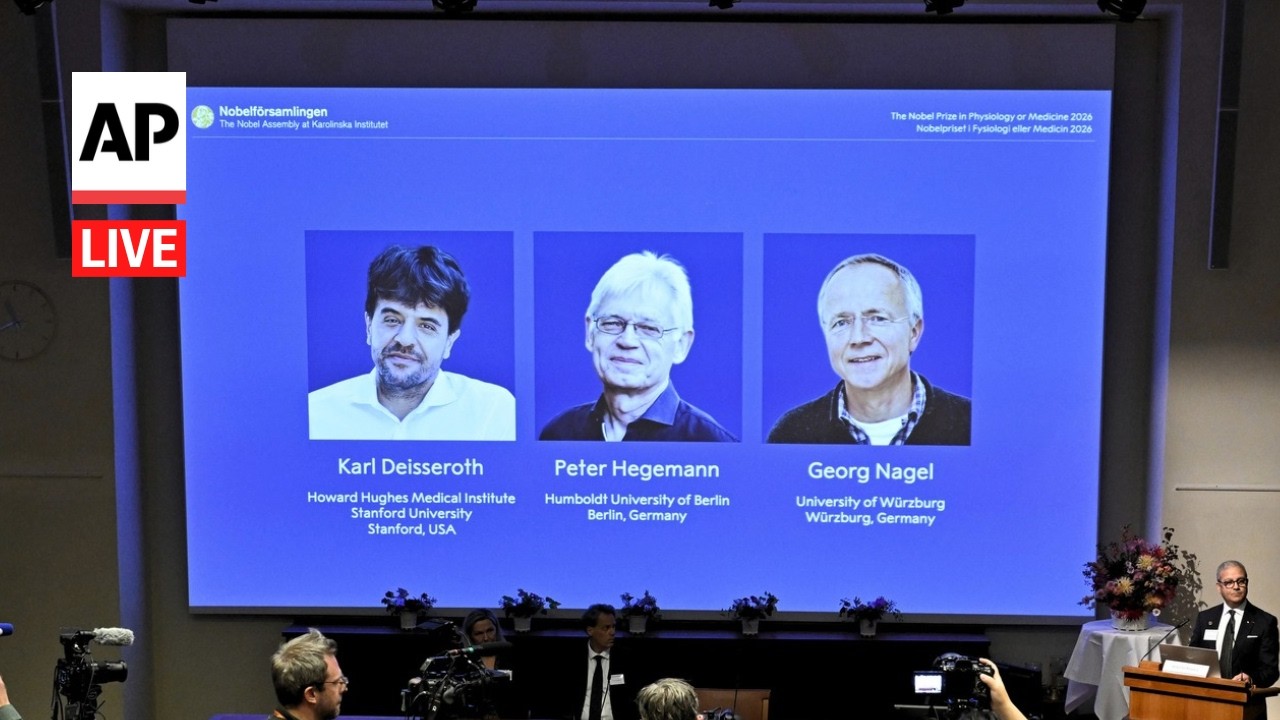
Nobel Committee announces 2026 Medicine Prize winners

Breakthroughs in optogenetics earn the 2026 Medicine Prize.

Event Overview

On October 5, the Nobel committees began announcing the 2026 prize winners, starting with the prize for physiology or medicine. The award was granted to Karl Deisseroth, Peter Hegemann, and Georg Nagel for their development of optogenetics, a technique using light-sensitive proteins from algae to control and map brain cells.

The laureates receive a diploma, a medal, and approximately $1.2 million. The discovery is recognized for enabling the mapping of the brain and providing insights into neurological and psychiatric disorders.

Source facts (7)
1.

The 2026 Nobel Prize in Physiology or Medicine was awarded to Karl Deisseroth, Peter Hegemann, and Georg Nagel.

TIME
2.

The winners were recognized for their work in optogenetics, which uses light to control and map brain cells.

TIME
3.

Optogenetics utilizes a light-sensitive protein from algae to control electrical activity in neural circuits.

BBC
4.

The prize includes a diploma, a medal, and approximately $1.2 million.

TIME
5.

The announcement for the physiology or medicine prize took place on Monday, October 5.

PBS
6.

Potential future applications of the awarded research include removing pain and restoring sight.

The Guardian
7.

The research may help address addiction and Alzheimer's disease.

The Guardian

Message Distribution

political controversy Critical framing of political controversy surrounding the Peace Prize 40%
2 articles
scientific breakthrough Optimistic and celebratory framing of scientific breakthroughs 40%
2 articles
factual primer Neutral notification and factual primers on the awards 20%
1 articles

Editor's Analysis

The precision of light in mapping the human brain

The core value of this discovery lies in the ability to control specific neural circuits with light-sensitive proteins. This precision allows researchers to switch brain functions on and off, moving beyond general stimulation to a detailed mapping of the brain.

Such a mechanism provides a direct path to treating psychiatric and neurological disorders by identifying the exact circuits responsible for specific behaviors. The application extends to clinical trials for restoring sight, demonstrating a transition from animal research to human medical intervention.

Scientific breakthrough overshadowed by political narratives

The coverage is split between the scientific merit of the prize and the political baggage of the awarding body. The Guardian and BBC focus on the medical potential of optogenetics, specifically its role in treating Alzheimer's and blindness. These outlets engage with the essential question by explaining how the technology transforms neuroscience.

In contrast, TIME and New York Times shift the focus toward political controversies and the non-transferability of the Peace Prize. By highlighting the involvement of a specific political figure and the rules regarding medal transfers, these outlets prioritize the prestige and drama of the institution over the scientific achievement. This pattern shows a tendency to treat the Nobel cycle as a political event rather than a scientific one.

Coverage flow

Coverage volume

10/04 · 1
10/05 · 4

Focus shift

10/05
Donald Trump
2
ISS
1
B
1

Story timeline

10/04 Nobel Committee announces medicine prize
10/05 Nobel Committee announces 2026 prizes

Recommended Reads

🌏 Global Comparison

How Korean and US outlets report the same event differently, and propagation delay

🇰🇷 Korea Card
노벨위원회가 광유전학 연구자 3인에게 노벨 생리의학상 수여
스웨덴 카롤린스카 연구소 노벨위원회는 **2026년 노벨 생리의학상**을 광유전학의 개척자인 칼 다이서로스, 페터 헤게만, 게오르크 나겔 교수에게 수여했습니다. 이들은 빛 반응 단백질인 '채널로돕신'을 발견하고 이를 신경세포에 적용해 **빛으로 뇌세포 활동을 정밀하게 제어**하는 기술을 개발했습니다. 이 성과는 뇌의 기억, 감정, 행동을 만드는 신경세포의 역할을 규명하고 뇌 과학의 패러다임을 바꾸는 계기가 되었습니다.
4 outlets · View →
🇺🇸 US Card
Nobel Committee announces 2026 Medicine Prize winners
On October 5, the Nobel committees began announcing the 2026 prize winners, starting with the prize for physiology or medicine. The award was granted to **Karl Deisseroth, Peter Hegemann, and Georg Nagel** for their development of **optogenetics**, a technique using light-sensitive proteins from alg
5 outlets · View →
Propagation delay
5.8h
(20794s)
Reporting divergence
1.00
closer to 0 = more similar

Loading comments...