JUSTSUSS AI-powered press divergence analysis
5 outlets covered 2026.10.14 10:14 created · 10.23 21:51 updated
← Card Feed
Reference video

China and North Korea to open New Yalu River Bridge

China seeks to reclaim influence amid Russia-NK ties.

Event Overview

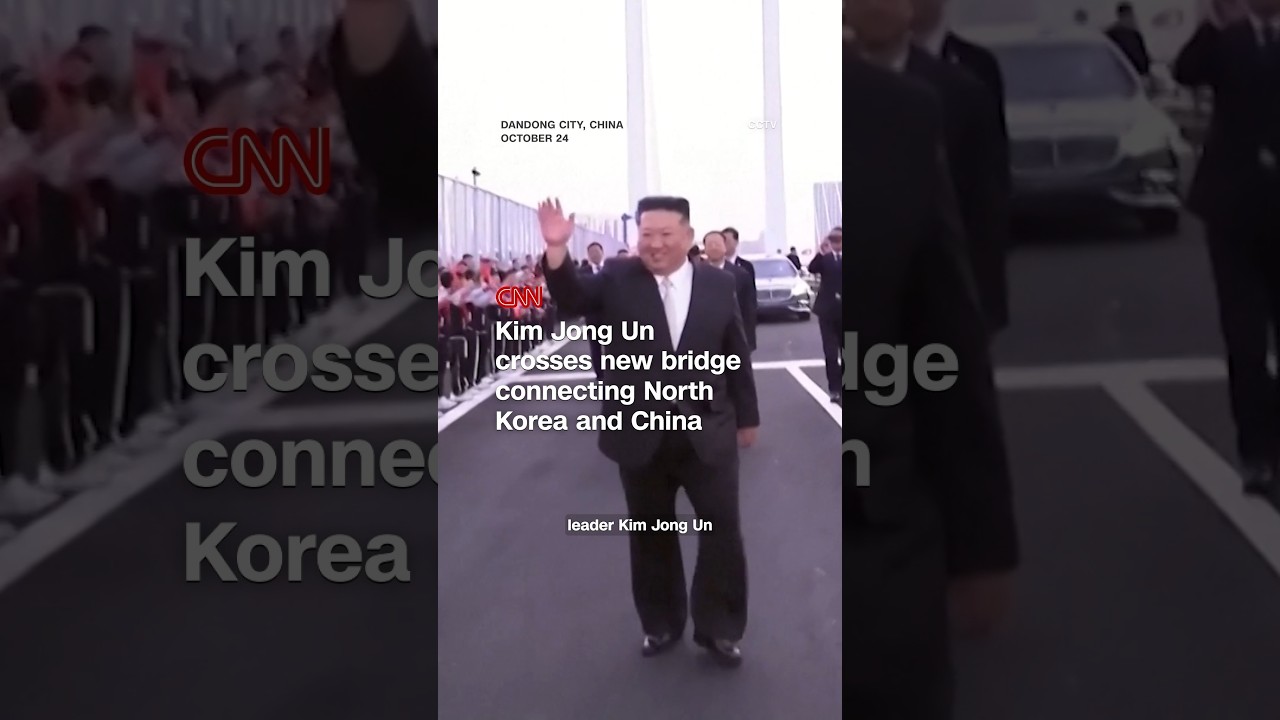
China and North Korea are scheduled to officially open the New Yalu River Bridge this Thursday. The four-lane, 1.8-mile bridge connects Dandong, China, and Sinuiju, North Korea, and is intended to replace an aging 1937 bridge that currently handles 70% of bilateral trade.

Although China completed its portion of the infrastructure by 2014, the project faced more than a decade of delays due to a lack of construction on the North Korean side. These delays were attributed to strained relations over UN sanctions and North Korean concerns regarding economic dependence.
Source facts (5)
1.

The bridge is a four-lane, 1.8-mile structure connecting Dandong, China, and Sinuiju, North Korea.

NY Post
2.

The bridge is scheduled to open on Thursday.

ABC News
3.

China completed its portion of the bridge in 2014.

Al Jazeera
4.

The existing 1937 bridge currently handles 70% of bilateral trade.

NY Post
5.

Chinese exports to North Korea reached a six-year high last year, rising to $2.3bn.

Al Jazeera

Message Distribution

Chinese hegemony China's strategic attempt to reclaim dominant influence over North Korea 83%
5 articles
Geopolitical balancing Signal of shifting geopolitical dynamics and North Korean balancing 17%
1 articles
The Guardian — North Korea has opened up bridges to Russia and China – in which direction will it go? - The Guardian
Message

The opening of new bridges to China and Russia reflects North Korea's strategy to diversify its dependencies and leverage its relationship with Moscow to gain advantages from Beijing.

Editor's Analysis

A bridge built for trade but opened for influence

The New Yalu River Bridge is more than a logistical upgrade to replace a structure from 1937. While it aims to facilitate the 70% of bilateral trade currently bottlenecked by aging infrastructure, its decade-long delay reveals the tension between economic necessity and political autonomy. The gap between China's completion of its section in 2014 and the current opening reflects a period where concerns over economic dependence and international sanctions outweighed the need for efficiency.

Whether this opening signifies a return to a China-centric relationship remains an open question. One view holds that the bridge is a strategic tool for China to reclaim its unique position as the primary partner. Another view suggests it is a pragmatic adjustment to trade flow that does not erase the growing military and political alignment between North Korea and Russia. The judgment depends on whether the bridge leads to a broader restoration of diplomatic exclusivity or remains a narrow channel for processed goods and cosmetics.

Geopolitical framing overshadows the logistical reality

NY Post and ABC News both frame the bridge as a strategic instrument for China to counter the influence of a third party. They treat the infrastructure as a symbol of a struggle for influence, focusing on the timing of the opening relative to recent summits. Al Jazeera diverges by placing the event within a broader economic trend, noting that Chinese exports have already reached a six-year high regardless of the bridge's status.

Most outlets agree that the delay was caused by North Korean hesitation, but they omit the specific internal mechanisms that typically govern such cross-border projects. In these structures, the party providing the capital often seeks leverage, while the recipient fears a loss of sovereignty. While the coverage captures the geopolitical tension, it fails to explore whether the bridge's operational terms—such as customs control or usage fees—actually shift the balance of power. Al Jazeera provides a necessary reality check by mentioning that tourism visas remain suspended, suggesting that physical connectivity does not automatically equal diplomatic openness.

Updates

Oct 24 · North Korea opens Yakov Novichenko Bridge to Russia Updated 21:51

North Korea has opened the Yakov Novichenko Bridge connecting it to Russia, according to The Guardian. Experts suggest these infrastructure developments allow Kim Jong-un to leverage his relationship with Moscow to gain more from Beijing while maintaining autonomy, according to The Guardian.

The opening of the Yakov Novichenko Bridge to Russia transforms the New Yalu River Bridge from a symbol of Chinese influence into a tool for North Korean leverage. The Guardian engages with the core question of influence by suggesting Kim Jong-un is using a dual-track infrastructure strategy to play Beijing and Moscow against each other [1].

This development suggests that the bridge is neither a restoration of China's exclusivity nor a simple trade adjustment. Instead, it appears to be part of a broader effort by Pyongyang to secure resources from multiple sources to avoid internal economic reforms [1].

Readers should now watch whether China responds to this Russian connectivity by offering more favorable operational terms on the New Yalu River Bridge, such as customs concessions or increased trade quotas, to maintain its status as the indispensable partner.

Source facts (2)

North Korea has also opened the Yakov Novichenko Bridge connecting it to Russia.

The Guardian

Experts suggest these infrastructure developments allow Kim Jong-un to leverage his relationship with Moscow to gain more from Beijing while maintaining autonomy.

The Guardian

Oct 17 · New Yalu River Bridge opens as 3km road link Updated 03:19

The New Yalu River Bridge, a 3km road link that serves as an alternative to the Sino-Korean Friendship Bridge, has opened following a 12-year delay. Direct flights and passenger trains have resumed, and President Xi Jinping conducted a state visit in June. Bilateral trade has recovered to pre-pandemic levels. Experts suggest trade growth will be gradual due to UN sanctions and Pyongyang's fear of excessive Chinese influence. Analysts suggest China is attempting to reassert influence over Pyongyang as North Korea grows closer to Russia through military and oil deals. China has become less critical of North Korea's nuclear program.

The bridge opening, combined with the resumption of flights and trains, suggests that the infrastructure is part of a broader diplomatic package rather than a standalone trade project. BBC engages with the core question of influence by linking the bridge to China's softer stance on North Korea's nuclear program and the strategic need to counter the Russia-North Korea military axis [1].

Whether this constitutes a restoration of influence remains an open question. The evidence of recovered trade levels suggests a pragmatic adjustment, but the expert warning that growth will be gradual due to Pyongyang's fear of Chinese influence indicates that the political distrust that caused the 12-year delay has not been fully resolved [1].

Readers should now watch for the specific operational terms of the bridge. As noted in the first analysis, the balance of power will be determined by who controls customs and fees, details which BBC omitted in favor of a high-level geopolitical narrative [1].

Source facts (9)

The New Yalu River Bridge is a 3km road link.

BBC

The bridge was delayed for 12 years.

BBC

The bridge serves as an alternative to the Sino-Korean Friendship Bridge.

BBC

Bilateral trade has recovered to pre-pandemic levels.

BBC

Experts suggest trade growth will be gradual due to UN sanctions and Pyongyang's fear of excessive Chinese influence.

BBC

China has become less critical of North Korea's nuclear program.

BBC

Analysts suggest China is attempting to reassert influence over Pyongyang as North Korea grows closer to Russia through military and oil deals.

BBC

Direct flights and passenger trains have resumed.

BBC

President Xi Jinping conducted a state visit in June.

BBC

Oct 16 · Premier Li Qiang and Mao Ning frame bridge opening as symbol of bilateral ties Updated 22:50

Premier Li Qiang and Foreign Ministry spokeswoman Mao Ning framed the opening of the bridge as a symbol of strengthening economic cooperation and bilateral ties, according to Breitbart. Breitbart reported that North Korean state media has not yet reported the opening and attributed the bridge's delay to diplomatic strain following the COVID-19 pandemic and North Korea's lack of road infrastructure.

The silence of North Korean state media creates a sharp contrast with the celebratory framing by Chinese officials. While Premier Li Qiang presents the bridge as a symbol of strengthening ties, the lack of a corresponding announcement from Pyongyang suggests that the bridge may be a Chinese diplomatic initiative rather than a mutual priority [1].

Breitbart engages with the core question of influence by weighing this infrastructure opening against North Korea's recent mutual defense pact with Russia. By noting that Kim Jong-un continues to prioritize Russia for defense technology, the coverage suggests the bridge is an attempt by China to repair a relationship that has drifted during the pandemic [1].

Whether this is a restoration of influence or a pragmatic trade adjustment remains an open question. The answer depends on whether North Korea eventually acknowledges the bridge as a political milestone or treats it as a mere logistical convenience for goods.

Source facts (3)

Premier Li Qiang and Foreign Ministry spokeswoman Mao Ning framed the bridge opening as a symbol of strengthening bilateral ties and economic cooperation.

Breitbart

North Korean state media has not yet reported the opening of the bridge.

Breitbart

The bridge's delay is attributed to North Korea's lack of road infrastructure and diplomatic strain following the COVID-19 pandemic.

Breitbart

Coverage flow

Coverage volume

10/14 · 3
10/15 · 2
10/23 · 1

Focus shift

10/14
China
2
10/15
China
1
North Korea
1

Recommended Reads

News Story

Story: China and North Korea to open New Yalu River Bridge

Card 1 of 2 in this story

China and North Korea to open New Yalu River Bridge
Oct 14 · 5 outlets · Viewing now
Where it started
Kim Jong Un's Visit to Dandong, China
Oct 24 · 4 outlets
↳ Follows “China and North Korea to open New Yalu River Bridge”

🌏 Global Comparison

How Korean and US outlets report the same event differently, and propagation delay

🇰🇷 Korea Card
신압록강대교 북한 쪽 입구에 오성홍기와 인공기 게양
중국 단둥과 북한 신의주를 잇는 **신압록강대교가 15일 정식 개통**됩니다. 양국은 합의에 따라 당일 공동 개통식을 개최할 예정입니다. 이 교량은 2014년에 이미 완공되었으나 북한 측의 연결도로와 세관 시설 미비, 코로나19 봉쇄 등으로 인해 **12년 동안 통행이 지연**되었습니다. 최근 시진핑 주석의 방북 이후 북한 내 시설 공사가 가속화되며 개통이 결정되었습니다.
8 outlets · View →
🇺🇸 US Card
China and North Korea to open New Yalu River Bridge
China and North Korea are scheduled to officially open the **New Yalu River Bridge** this Thursday. The four-lane, 1.8-mile bridge connects Dandong, China, and Sinuiju, North Korea, and is intended to replace an aging 1937 bridge that currently handles **70% of bilateral trade**. Although China com
3 outlets · View →
Propagation delay
8.4h
(30344s)
Reporting divergence
0.00
closer to 0 = more similar

Loading comments...