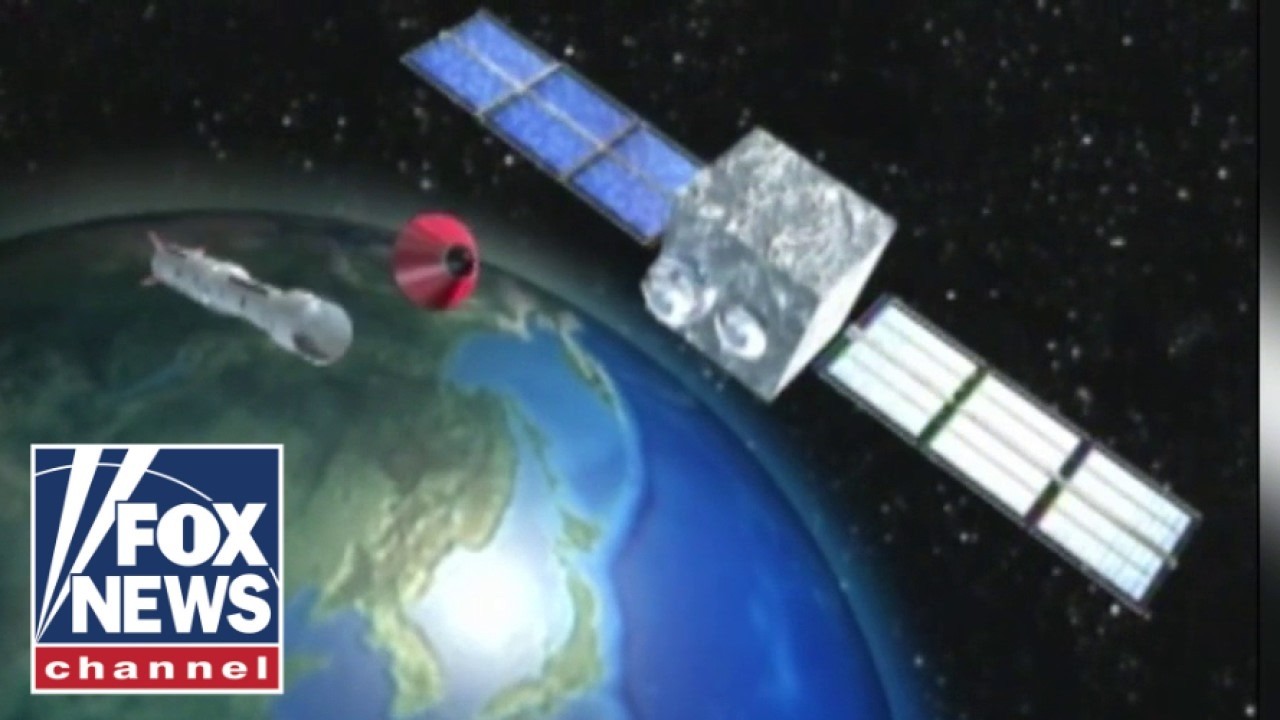
While Air Force Secretary Troy Meink frames the admission of orbital weapons as a necessary response to Russian and Chinese threats, the timing and vagueness suggest a dual purpose. By refusing to specify the nature or timing of these 'kinetic or non-kinetic' capabilities, the U.S. is leveraging ambiguity as a deterrent while simultaneously attempting to solidify the Space Force's identity as a 'warfighting branch.' The disclosure aligns with the Trump administration's 'Golden Dome' ambitions and an executive order expanding the Space Force's role to include attacking capabilities, effectively signaling space superiority just as the U.S. prepares for high-stakes diplomacy with China and a future election cycle. In the process, the U.S. has conveniently exploited a loophole in the 1967 Outer Space Treaty—which bans nukes but ignores conventional orbital weaponry—thereby legitimizing a high-risk arms race under the guise of defense.
The confirmation of 'on-orbit space control weapons' by Secretary Troy Meink transforms the debate from a theoretical risk to a deployed reality. While the U.S. maintains a defensive posture to protect the 'Joint Force,' the Space Force's own admission that these capabilities are both 'offensive and defensive' strips away the veneer of mere deterrence. The media's fascination with the 'regulatory vacuum' of the 1967 Outer Space Treaty highlights a calculated legal gamble: by deploying non-WMD weaponry, the U.S. isn't just responding to Chinese ISR expansion or Russian 'stalker' satellites—it is actively defining the rules of engagement for a domain it now explicitly labels a 'warfighting domain.' The core conflict is no longer whether deployment is provocative, but how the U.S. intends to manage the inevitable debris and economic fallout of a kinetic space conflict it has now officially invited.
The discourse has shifted from a debate over strategic necessity to a technical autopsy of the 'Kessler Effect.' While Time focuses on the apocalyptic potential of orbital debris clouds—the ultimate cost of a kinetic arms race—Fox leans into the tactical allure of 'speed and surprise' via jammers and lasers. This divergence reveals the true tension: the U.S. is gambling that the decisive military advantage of space denial outweighs the risk of rendering the orbital band permanently uninhabitable. The question is no longer just about provocation, but whether the Space Force is willing to burn the village to save it.
Does the admission of orbital weaponry signal a strategic pivot or merely a diplomatic liability? gnews_nation treats this as the latter, pivoting the frame toward a theater of international hypocrisy. By centering the narrative on Russian accusations at the UN, the coverage transforms a technical and strategic revelation into a predictable shouting match over treaty compliance. This is a textbook case of journalistic inertia: rather than interrogating the specific capabilities of the 'on-orbit space control weapons' or the systemic risks of the 'Golden Dome' architecture, the outlet retreats into the comfort of geopolitical bickering. The coverage doesn't advance the discourse; it simply dresses up a military disclosure in the drab clothing of a diplomatic spat, effectively ignoring the material reality of the weapons in favor of who is winning the argument at the UN.
Previous reports centered on the apocalyptic physics of the Kessler Effect and the shouting matches over treaty compliance at the UN.
Recent coverage now frames the deployment as a calculated political signal designed to address specific vulnerabilities. The BBC suggests the move is less about a leap in hardware and more about a strategic message to China.
For the reader, the narrative has shifted from fearing a physical catastrophe to decoding a diplomatic game of chicken. The press has decided that the weapon's actual function matters less than the mood it is intended to create.
From diplomatic signaling to the erasure of the civilian military divide
Recent coverage has shifted from the weapons themselves to the institutional absorption of civilian space into the military apparatus. The Guardian highlights the merging of NASA launch operations with Pentagon authority and the creation of a military-themed space academy.
For the reader, the story is no longer just about what is being launched, but who owns the launchpad. The narrative has evolved from a debate over a specific weapon to a critique of a broader policy that treats peaceful exploration as a subsidiary of warfighting.
The press is finally noticing that the 'Golden Dome' isn't just a shield, but a corporate merger of the stars.