Industrial ambition versus operational risk
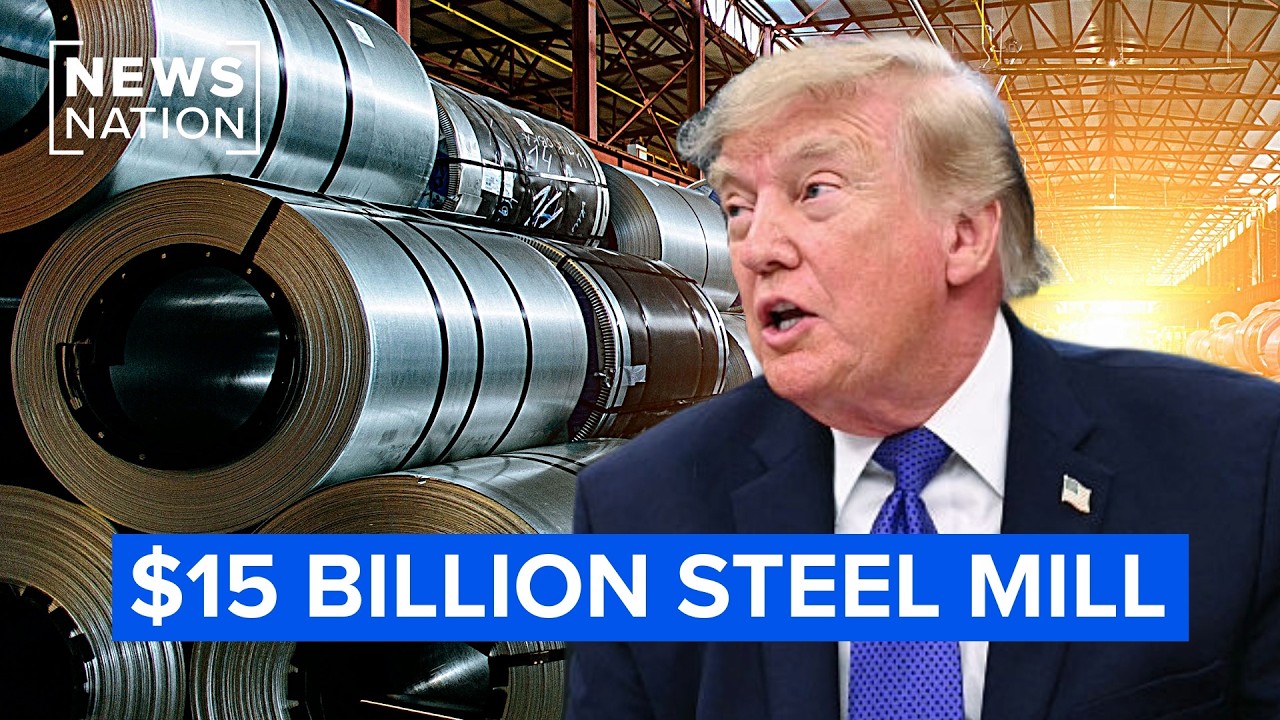
The core issue is whether a $15 billion project can realistically materialize given the developer's history of bankruptcy and failed attempts at similar goals. While the plan aims for a fully integrated domestic supply chain by 2030, the gap between the announcement and actual production creates a window of significant uncertainty.
In such industrial projects, the viability often depends on the stability of the developer's capital and the consistency of protective trade policies. When a government provides financing or political backing to a company with a record of insolvency, the risk shifts from the private entity to the public interest.
Political timing and corporate history
Most outlets focused on the timing of the announcement, with PBS, CNBC, CBS News, and WSJ highlighting the proximity to midterm elections in Iowa. They frame the event as a political tool to counter economic dissatisfaction or boost Republican candidates.
NBC News and Fox News emphasized the administration's narrative of industrial reshoring and the role of tariffs. However, ABC News and Fox News provided critical depth by noting the developer's past bankruptcy and previous failures, questioning the project's reliability.
Coverage largely missed the specific financial mechanism of the project, though NBC News noted the Export-Import Bank's role in providing $10 billion in financing. Readers should focus on whether the project's long timeline serves as a shield against immediate accountability for the developer's history.
kcci.com reports lobbying for state incentives despite claims of private funding
New coverage from 5 outlets
These reports introduce a tension between the administration's claim of a purely private investment and the actual pursuit of public funds. kcci.com identified that a lobbying firm sought a quick incentive package from the Iowa legislature, contradicting statements from Commerce Secretary Howard Lutnick that the project is not contingent on state tax breaks.
While kcci.com engaged with the essential question of operational risk by highlighting this lack of fiscal transparency, other outlets remained focused on political optics. The Guardian and Mediaite emphasized the event's role as a platform for Republican candidates and the performative nature of the gratitude expressed toward the president. Breitbart and Washington Examiner omitted the funding contradictions entirely, focusing instead on the administration's narrative of industrial victory or internal GOP scheduling.
This shift reveals that the project's financial risk may extend beyond federal loans to include undisclosed state-level taxpayer costs. Readers should monitor whether the project's viability is being artificially supported by local incentives that the administration publicly denies.
Al Jazeera reveals Essar Group's financial ties to Russian-led Nayara Energy
New coverage from 1 outlets
The scope of the project's risk has expanded from domestic financial viability to geopolitical inconsistency. Al Jazeera identified that the project's owner, the Indian Essar Group, maintains deep financial ties to Russia, specifically through the creation of Nayara Energy, a consortium currently under EU sanctions.
By linking the steel mill to a pattern of 'investment for leniency,' Al Jazeera engaged with the essential question of operational risk. The report suggests that the project may function as a mechanism to bypass sanctions or secure political favor, drawing a parallel to the dismissal of charges against Gautam Adani following investment promises.
This revelation introduces a new contradiction: the administration frames the project as a victory for U.S. tariffs and industrial independence while partnering with a firm linked to the very economy the U.S. seeks to isolate. Readers should now consider whether the project's viability is tied to geopolitical concessions rather than purely economic or industrial logic.