JUSTSUSS AI-powered press divergence analysis
4 outlets covered 2026.09.17 23:08 created · 09.20 00:03 updated
← Card Feed
Reference video

Washington Post-Schar School Poll Analyzes Michigan Senate Race

Poll shows narrow lead for El-Sayed in Michigan Senate race.

Event Overview

A Washington Post-Schar School poll analyzed the Michigan Senate race between Democrat Abdul El-Sayed and Republican Mike Rogers. The data indicates that El-Sayed holds a narrow lead, with 48% of voters supporting El-Sayed compared to 45% for Rogers.

During an episode of 'Inside Politics', CNN anchor Dana Bash described a poll finding that 45% of the Michigan electorate would not consider voting for a Muslim presidential candidate as 'just gross.'
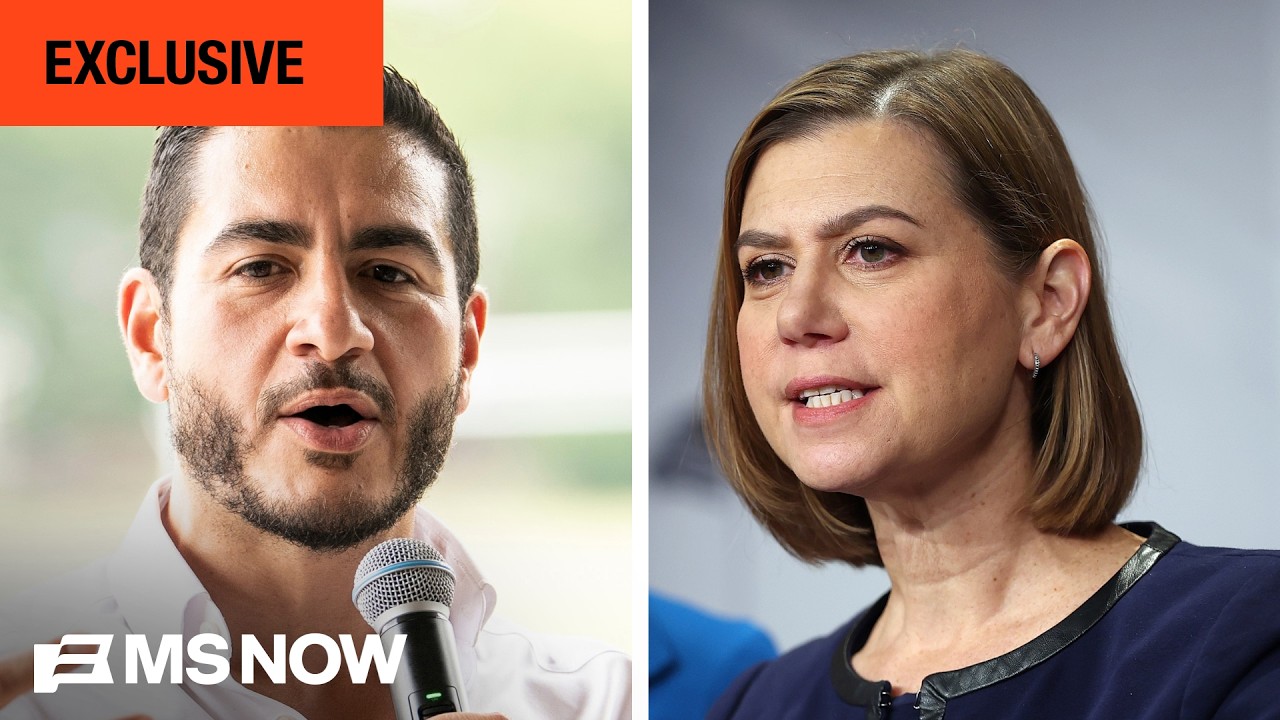
Source facts (7)
1.

Abdul El-Sayed holds a 3% lead over Mike Rogers, with 48% and 45% support respectively.

2.

The poll's margin of error is 3.9 points.

3.

53% of likely voters want Democrats to control the Senate.

4.

45% of the Michigan electorate would not consider voting for a Muslim presidential candidate.

5.

CNN anchor Dana Bash called the poll results regarding Muslim candidates 'just gross'.

6.

Democrat Jocelyn Benson leads GOP Rep. John James by 12 points in the gubernatorial race.

7.

Bloomberg columnist Nia Malika-Henderson compared the situation to challenges Barack Obama faced in 2008 regarding race and perceived religion.

Message Distribution

candidate underperformance Analysis of candidate underperformance relative to party support 50%
2 articles
media bias Criticism of media bias and elitism 25%
1 articles
moral condemnation The writer intends to highlight the moral condemnation of voter prejudice by framing Bash's reaction as a defense of a Muslim candidate, intending the reader to perceive the poll results as shocking and discriminatory. 25%
1 articles

Editor's Analysis

The core issue is the friction between institutional party loyalty and the visceral biases of the electorate. Political parties operate as broad brands that promise specific policy outcomes to a mass of voters. Many people vote for the brand to ensure a particular legislative direction without deeply vetting the individual wearing the badge. However, identity markers often trigger subconscious filters that override this brand loyalty. When a candidate possesses a religious or ethnic background that clashes with the ingrained prejudices of a segment of the population, the party brand ceases to be a sufficient shield. This creates a measurable gap where voters claim to want the party in power but hesitate to support the specific person representing that party. The point of contention is not the candidate's qualification but the voter's internal conflict between strategic interest and cultural aversion. Institutions typically resolve this by attempting to sanitize the candidate's image or by ignoring the bias until the final tally. It is a recurring cycle where the party machinery assumes a generic voter who does not actually exist. The party sells a product that the customer likes but refuses to touch.

The coverage splits between analyzing electoral math and policing the reactions of the media. The Washington Post and Washington Examiner focus on the 3% lead held by Abdul El-Sayed. They highlight the discrepancy between the 53 percent of voters who want Democratic control and the lower support for the specific candidate. They frame this as a failure to capitalize on a favorable environment. Breitbart ignores the strategic gap and instead targets the CNN anchor who called the poll results gross. This outlet frames the event as a matter of journalistic professionalism and bias against the views of the electorate. None of the outlets deeply explore the structural tension between party branding and identity bias. They treat the narrow lead as a statistical anomaly or a media talking point rather than a symptom of systemic prejudice. The press is more interested in whether a commentator was too emotional or whether a candidate is underperforming. They prefer to argue about the temperature of the water rather than why the pool is leaking. It is a masterclass in avoiding the actual problem to fight a culture war.

Coverage flow

Coverage volume

09/17 · 3
09/18 · 1

Focus shift

09/17
Abdul el Sayed
1
Abdul El-Sayed
1
Dana Bash
1
09/18
Voters
1

Recommended Reads

News Story

Story: Washington Post-Schar School Poll Analyzes Michigan Senate Race

Card 1 of 2 in this story

Washington Post-Schar School Poll Analyzes Michigan Senate Race
Sep 17 · 4 outlets · Viewing now
Where it started
MS NOW reports Trump voter support for Abdul El-Sayed
Oct 7 · 3 outlets · ⇄ Story: Donald Trump Visits California and Nevada
↳ Follows “Washington Post-Schar School Poll Analyzes Michigan Senate Race”

Loading comments...