JUSTSUSS AI-powered press divergence analysis
4 outlets covered 2026.10.20 21:11 created · 10.21 21:37 updated
← Card Feed
Reference video

U.S. Housing Market Deteriorates in September 2026

Rising mortgage rates drive home sales to record lows.

Event Overview

The U.S. housing market experienced a sharp decline in September 2026, characterized by a 7.3% drop in pending home sales from August. This downturn was primarily driven by skyrocketing mortgage rates and record-high median home prices, which severely impacted affordability.

This slump extended to new construction, with housing starts missing expectations and falling by 5.2%. These conditions have led to a significant decrease in homebuilder sentiment and a 'lock-in' effect for current homeowners.

Source facts (7)
1.

Pending home sales dropped 7.3% in September 2026 from August levels.

Newsweek
2.

Mortgage rates reached 7.6% by the end of September.

Newsweek
3.

Pending home sales hit an all-time low in September.

CNBC
4.

The Commerce Department reported a 5.2% drop in housing starts.

Breitbart
5.

Mortgage rates for 30-year fixed loans peaked around 7.40% in October.

Breitbart
6.

Home builder confidence fell to its lowest level in over 14 years.

Breitbart
7.

President Trump's campaign promise of 2% mortgage rates has not materialized.

Newsweek

Message Distribution

factual relay Rising mortgage rates have driven pending home sales to record lows and caused a significant slump in home construction and builder confidence. 62%
5 articles
● Yahoo Finance — US pending home sales tumble to record low in September - Yahoo Finance
Message

US pending home sales hit a record low in September due to rising mortgage rates driven by inflation and geopolitical conflict.

Breitbart — Housing Slump Worsens Amid Higher Rates
Message

Rising mortgage rates have driven pending home sales to record lows and caused a significant slump in home construction and builder confidence.

● ABC News — Americans are struggling to buy homes amid rising costs - ABC News - Breaking News, Latest News and Videos
Message

The U.S. housing market is experiencing a historic decline in pending sales and new construction due to rising mortgage rates and unaffordable home prices.

● Daily Kos — Existing home sales collapse to record low - Daily Kos
Message

Existing home sales have hit a record low and economic conditions are poor, proving that Donald Trump's economic promises were lies.

● Yahoo Finance — Home Sales Hit a Record Low, Warsh Might Have the Cure - Yahoo Finance
Message

The quickest way to lower record-high mortgage rates may be for the Fed to raise rates one more time to reassure bond investors about inflation.

analytical concern The Federal Reserve faces a policy dilemma as the housing market deteriorates due to high mortgage rates while broader inflation remains persistent. 25%
2 articles
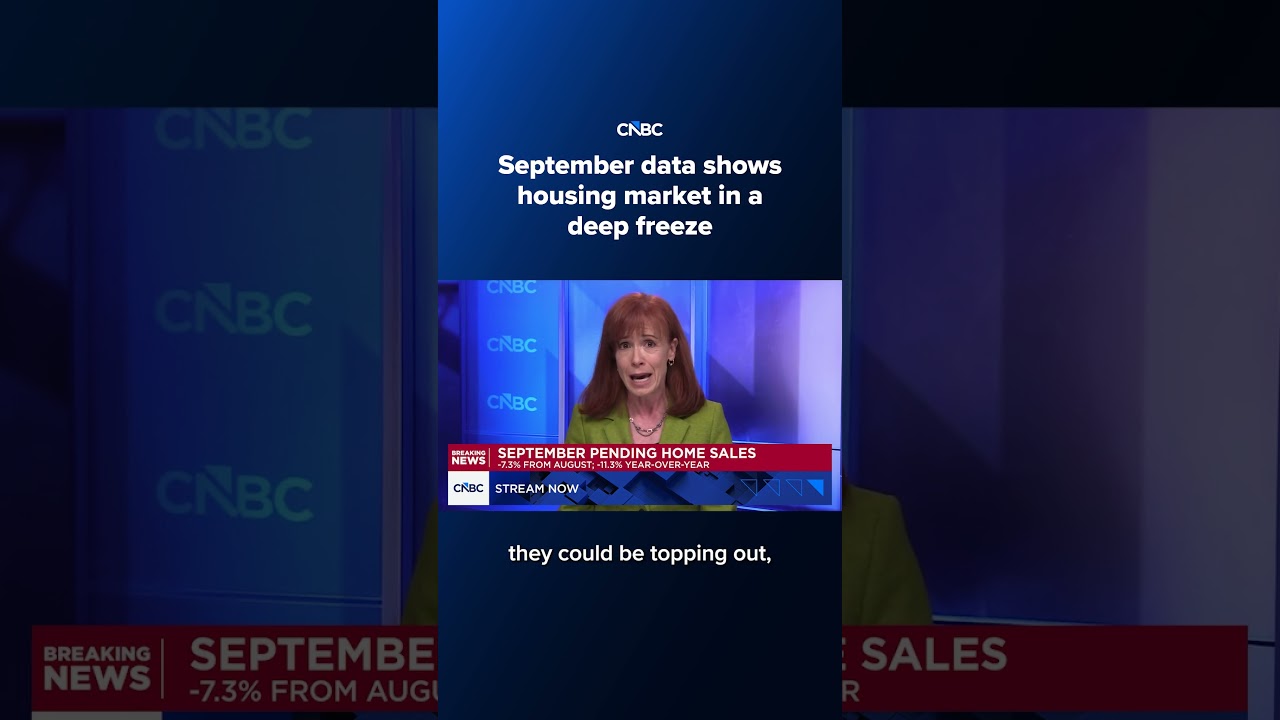
CNBC — September data shows housing market in a deep freeze - CNBC
Message

Rising mortgage rates in September caused a sharp decline in pending home sales and home construction activity.

CNBC — Housing is flashing warning signs just as the Fed weighs more interest rate hikes - CNBC
Message

The Federal Reserve faces a policy dilemma as the housing market deteriorates due to high mortgage rates while broader inflation remains persistent.

political critique Rising mortgage rates and high home prices are crippling the housing market and creating a political liability for President Trump and Republicans ahead of the midterm elections. 12%
1 articles
● Newsweek — Housing Market Gets Hit as Mortgage Rates Skyrocket Ahead of Midterm
Message

Rising mortgage rates and high home prices are crippling the housing market and creating a political liability for President Trump and Republicans ahead of the midterm elections.

Editor's Analysis

A market frozen by the collision of high costs and rigid pricing

The housing market has entered a state of paralysis where record-high prices and mortgage rates reaching 7.6% have stripped away affordability. This creates a lock-in effect where current homeowners refuse to sell to avoid losing low rates, while buyers are priced out. The slump extends to the supply side, with housing starts falling 5.2% as builder confidence hits a long-term low.

Whether this is a temporary dip or a deeper contraction depends on the Federal Reserve's next move. One view holds that the market will remain frozen as long as inflation forces rates to stay high. Another suggests that mortgage rates may have already peaked, and that growth in other sectors could eventually stabilize the economy. The outcome hinges on whether inflation cools enough to allow for rate cuts without triggering further price instability.

Between political liability and macroeconomic friction

Coverage splits between treating this as a political failure and a systemic economic clash. Newsweek frames the slump as a direct political risk, highlighting the gap between a campaign promise of 2% mortgage rates and the current reality. In contrast, CNBC and Breitbart focus on the structural friction between the Federal Reserve's inflation fight and the housing market's need for lower borrowing costs.

While Breitbart provides the most granular data on the decline in single-family permits, the coverage generally overlooks the specific mechanisms of how builders are attempting to offset the slump through incentives. The reporting captures the symptoms of the freeze but leaves a gap in explaining how a transition to a more affordable market can occur without a significant crash in home values.

Updates

Oct 22 · National Association of Realtors Pending Home Sales Index reaches level lower than 2008-09 crash Updated 21:37

Daily Kos reports that the National Association of Realtors Pending Home Sales Index of 66.0 is lower than levels recorded during the 2008-09 crash. Yahoo Finance reports that high mortgage rates have forced builders to reduce new construction and cut prices. An analysis by Yahoo Finance argues that inflation and geopolitical tensions are causing the bond market, rather than Kevin Warsh, to drive high rates. The author of that analysis suggests the Federal Reserve implement a quarter-point hike in late October to signal strength to bond investors as a means to eventually lower mortgage rates, while noting that rising crude oil prices could undermine such action.

The revelation that the pending home sales index has fallen below levels seen during the 2008-09 crash suggests the current paralysis is more severe than a typical market correction. This comparison shifts the context from a temporary affordability crisis to a potential systemic failure on a scale not seen in nearly two decades.

Yahoo Finance offers a counterintuitive path to resolution by arguing that a quarter-point rate hike is the fastest way to lower mortgage rates. This logic suggests that signaling strength to bond investors is the only way to stop them from pricing in higher inflation, which is the actual driver of high borrowing costs. This moves the debate beyond a simple choice between hiking or cutting rates to a strategic question of market psychology and bond yield control [1].

Daily Kos uses the historical low to frame the slump as a political failure, contrasting the data with campaign promises of 2% mortgage rates. While this provides a sharp political critique, it focuses on the gap between rhetoric and reality rather than the structural economic mechanisms that could resolve the freeze [1].

Reporting continues to ignore how homebuilders are attempting to offset the slump through specific incentives. The focus remains on the depth of the decline and the political fallout, leaving the question of a non-crash transition to a more affordable market unanswered.

Source facts (5)

The National Association of Realtors Pending Home Sales Index of 66.0 is lower than the levels recorded during the 2008-09 crash.

Daily Kos

High mortgage rates have forced builders to cut prices and reduce new construction.

Yahoo Finance

The author of the Yahoo Finance analysis argues that the bond market, rather than Kevin Warsh, is driving high rates due to inflation and geopolitical tensions.

Yahoo Finance

The author of the Yahoo Finance analysis suggests the Fed implement a quarter-point hike in late October to signal strength to bond investors as a way to eventually lower mortgage rates.

Yahoo Finance

The author of the Yahoo Finance analysis notes that rising crude oil prices could undermine Fed action.

Yahoo Finance

Oct 21 · Pending home sales index dropped 7.3% to 66.0 in September Updated 10:16

Yahoo Finance reports the pending home sales index dropped 7.3% to 66.0 in September, the lowest since the series began in 2001, while economists had forecasted a 0.5% slip. CNBC reports pending home sales fell 11.3% year-over-year, with the sharpest declines in the South and West. The National Association of Realtors reported that contracts declined across all four US regions. CNBC reports building permits fell more than analysts expected and mortgage rates for 30-year fixed loans rose from approximately 6.8% to 7.6% during September. Yahoo Finance reports borrowing costs are tracking Treasury yields, which are influenced by inflation driven by the US-Israeli war with Iran. ABC News reports mortgage rates are currently averaging 7.43% and monthly payments on median-priced homes consume approximately 40% of average after-tax income. ABC News reports the Census Bureau reported a 5.2% decline in housing starts from August. Experts cited by ABC News attribute the housing slump to mortgage rate spikes, energy prices, and a reluctance among current homeowners to give up low rates.

The drop in pending home sales to the lowest level since 2001 confirms the market is in a state of historic paralysis. The gap between the forecasted 0.5% slip and the actual 7.3% plunge suggests economists underestimated how quickly affordability would vanish as rates hit 7.6%.

Yahoo Finance provides a critical link between the housing freeze and global instability. By noting that borrowing costs track Treasury yields influenced by inflation from the US-Israeli war with Iran, it suggests the Federal Reserve's ability to lower rates may be constrained by external shocks beyond domestic policy.

ABC News quantifies the affordability crisis by reporting that monthly payments on median-priced homes now consume approximately 40% of average after-tax income. This provides a concrete baseline for why buyers are priced out.

CNBC and Yahoo Finance focus on the symptoms of the crash, such as record-low indices and regional declines. However, these reports continue to omit the specific mechanisms builders are using to offset the slump, leaving the question of how the market transitions without a price crash unanswered.

Source facts (12)

Pending home sales fell 11.3% year-over-year.

CNBC

The sharpest declines in pending home sales occurred in the South and West.

CNBC

Mortgage rates for 30-year fixed loans rose from approximately 6.8% to 7.6% during September.

CNBC

Building permits fell more than analysts expected.

CNBC

The pending home sales index dropped 7.3% to 66.0 in September, the lowest since the series began in 2001.

Yahoo Finance

Economists had forecasted a 0.5% slip in pending home sales.

Yahoo Finance

The National Association of Realtors reported that contracts declined across all four US regions.

Yahoo Finance

Borrowing costs are tracking Treasury yields, which are influenced by inflation driven by the US-Israeli war with Iran.

Yahoo Finance

Mortgage rates are currently averaging 7.43%.

ABC News

Monthly payments on median-priced homes now consume approximately 40% of average after-tax income.

ABC News

The Census Bureau reported the 5.2% decline in housing starts from August.

ABC News

Experts attribute the housing slump to mortgage rate spikes, energy prices, and a reluctance among current homeowners to give up low rates.

ABC News

Coverage flow

Coverage volume

10/20 · 8

Focus shift

10/20
Donald Trump
2
Kevin Warsh
1

Recommended Reads

News Story

Story: 10-year Treasury yield reaches highest level since 2002

Card 6 of 7 in this story

10-year Treasury yield reaches highest level since 2002
Sep 30 · 4 outlets
Where it started
U.S. Mortgage Rates Reach Highest Point Since Late 2023
Oct 1 · 7 outlets
US 30-Year Mortgage Rates Reach 3-Year High
Oct 7 · 3 outlets
↳ Follows “U.S. Mortgage Rates Reach Highest Point Since Late 2023”
Global Bond Sell-off and Surge in Treasury Yields
Oct 7 · 2 outlets
↳ Follows “U.S. Mortgage Rates Reach Highest Point Since Late 2023”
NAHB/Wells Fargo Housing Market Index falls to 29 in October
Oct 19 · 3 outlets
↳ Follows “U.S. Mortgage Rates Reach Highest Point Since Late 2023”
U.S. Housing Market Deteriorates in September 2026
Oct 20 · 4 outlets · Viewing now
↳ Follows “U.S. Mortgage Rates Reach Highest Point Since Late 2023”
U.S. Treasury yields fall amid flight to safety
Oct 22 · 1 outlets

Loading comments...