JUSTSUSS AI-powered press divergence analysis
Headline news 2026.10.19 15:22 created · 10.28 01:35 updated
← Card Feed
Reference video

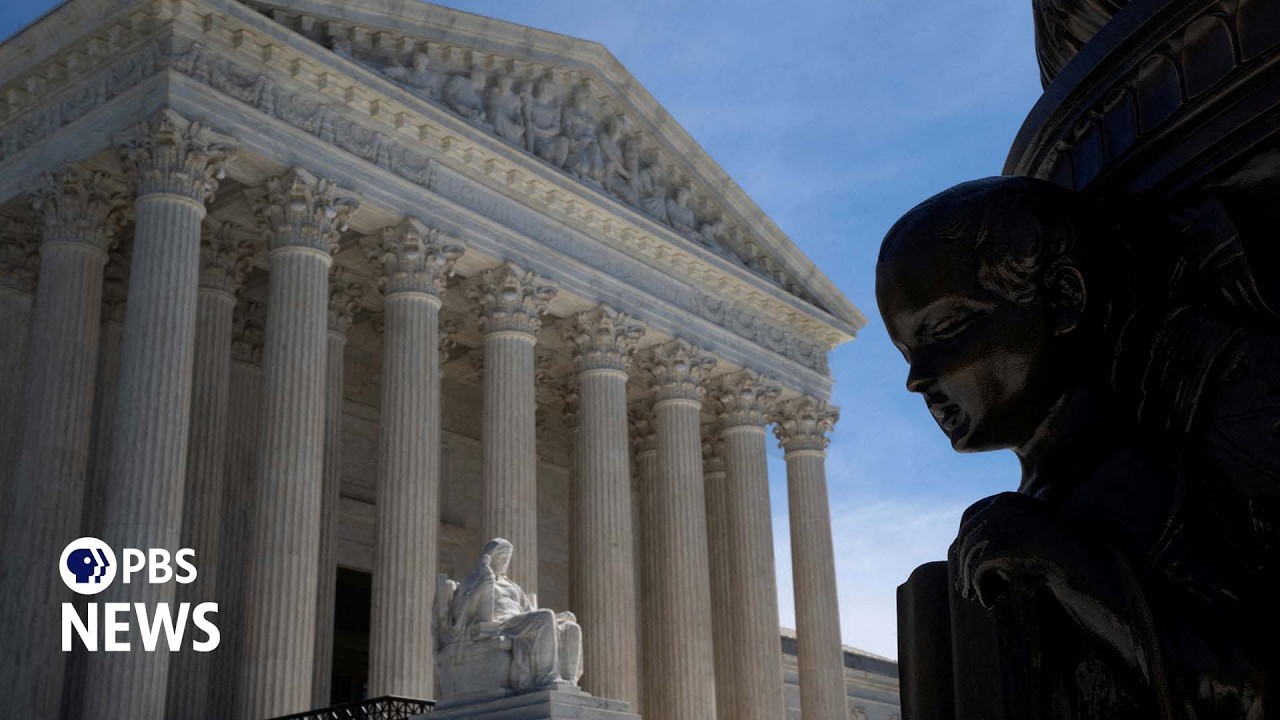
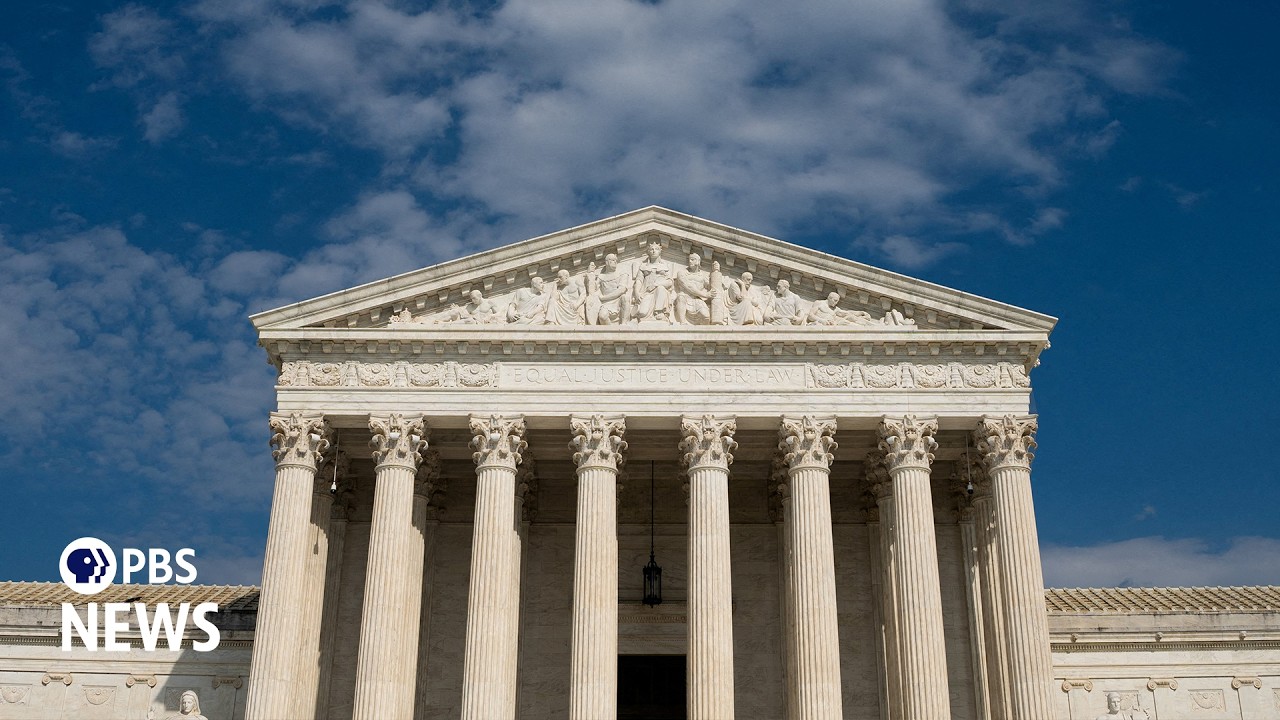
Supreme Court to review federal home distilling ban

The Court will decide if a federal ban exceeds taxing power.

Event Overview

The Supreme Court has agreed to hear Department of Justice v. McNutt, a case challenging the constitutionality of a federal law that prohibits distilling liquor at home for personal use. The law, which has been in place since 1868, was originally enacted to prevent commercial distillers from evading taxes.

The case follows a circuit split between the Fifth Circuit, which found the ban unconstitutional, and the Sixth Circuit, which ruled in favor of the law. The Court must now determine if the ban is a valid exercise of congressional power under the federal tax power and the Necessary and Proper Clause.

Source facts (6)
1.

The federal law banning home distilling was enacted in 1868.

CBS News
2.

The Hobby Distillers Association challenged the ban.

NBC News
3.

The ban carries penalties including fines, prison time, and property forfeiture.

CBS News
4.

The Fifth Circuit Court of Appeals ruled the law is not 'proper' or 'necessary'.

Reason
5.

The Sixth Circuit Court of Appeals ruled in favor of the law.

Reason
6.

Home brewing of beer and wine remains legal.

NBC News

Message Distribution

critical advocacy The Supreme Court will decide if a federal ban on home distilleries is constitutional under the Necessary and Proper Clause, a case the author believes should result in the law being struck down. 56%
5 articles
Reason — Supreme Court Will Hear Necessary and Proper Clause Case on Federal Law Banning Home Distilleries
Message

The Supreme Court will decide if a federal ban on home distilleries is constitutional under the Necessary and Proper Clause, a case the author believes should result in the law being struck down.

Reason — Trump Administration Urges SCOTUS To Uphold Federal Ban on Distilling Liquor at Home
Message

The Supreme Court will decide if the federal ban on home distilling is unconstitutional after the Trump administration appealed a 5th Circuit ruling that struck it down.

● Washington Examiner — Beer in my garage is legal. Whiskey could cost me five years
Message

The author argues that the federal government should not be able to criminalize the home production of whiskey, a matter currently before the Supreme Court in Department of Justice v. McNutt.

Fox News — Making whiskey at home could land you in prison, but Supreme Court may change that
Message

The Supreme Court will decide if a 150-year-old federal law banning home distilling is an unconstitutional overreach of congressional taxing power.

Reason — A Supreme Court Case Underlines the Absurdity of the Federal Ban on Home Distilling
Message

The federal ban on home distilling is an absurd and morally indefensible policy that treats a hobby as a felony.

factual relay The Supreme Court will determine if a federal ban on home distilling spirits is constitutional. 44%
4 articles
BBC — Home distillers rejoice as US Supreme Court considers whether to finally legalise moonshine
Message

The US Supreme Court is reviewing whether a 19th-century ban on home distilling is unconstitutional, a move cheered by hobbyists but cautioned against by industry safety experts.

CBS News — Supreme Court to decide legality of federal ban on distilling liquor at home - CBS News
Message

The Supreme Court will determine if a 160-year-old federal ban on home distilling liquor is constitutional.

NBC News — High spirits: Supreme Court to decide fate of federal ban on home distilling - NBC News
Message

The Supreme Court will resolve a circuit split to determine if the 150-year-old federal ban on home distilling spirits is constitutional.

HuffPost — Supreme Court Agrees To Review Reconstruction-era Ban On Home Distilleries
Message

The Supreme Court will decide if a 150-year-old federal ban on home distilling is constitutional or an overreach of congressional taxing power.

Editor's Analysis

The boundary between tax enforcement and independent federal power

The dispute centers on whether a law prohibiting home distilling for personal use is a legitimate tool for tax enforcement or an unauthorized expansion of federal authority. The government argues the ban is necessary to prevent tax evasion because home production is easier to conceal from inspectors. This position suggests the ban is an ancillary measure tied to the federal tax power.

Opponents argue the ban exceeds enumerated powers because it criminalizes conduct that generates no revenue. They contend that if a law creates a broad prohibition rather than a tax mechanism, it becomes an independent power that the legislature cannot exercise under the Necessary and Proper Clause. The final judgment depends on whether the court views the ban as a supporting tool for taxation or as a standalone regulation of private behavior.

This structure mirrors the legal tension in NFIB v. Sebelius. In that case, the court examined whether a mandate could be justified under the taxing power. The court eventually ruled that while the tax was valid, the government could not use that power to compel individuals into a regulatory scheme. The current case asks a similar question about whether the goal of tax collection justifies a total ban on the activity itself.

Focus on legal conflict over the nuance of legislative power

Coverage from CBS News and NBC News focuses on the practical conflict between the Hobby Distillers Association and the Department of Justice. Both outlets highlight the criminal penalties and the historical origin of the law to establish the stakes for the individual. They correctly identify the circuit split as the trigger for the Supreme Court's intervention.

However, the reporting remains at the surface of the legal argument. While they mention the taxing power, they omit the deeper constitutional distinction between ancillary and independent powers. The analysis provided in the strip reports goes further by connecting the case to specific precedents regarding the Necessary and Proper Clause, a detail the general news outlets gloss over. Readers are left with the 'what' of the dispute but lack the 'how' regarding the specific legal test the court will apply.

Updates

Oct 28 · Plaintiffs in the case identified as Scott McNutt and Thomas Cowdrey Updated 01:34

Plaintiffs in the case include Scott McNutt and Thomas Cowdrey. The 5th Circuit Court of Appeals ruled that the ban cannot be justified as an exercise of federal tax power because it prevents revenue from being generated. Retailers such as Amazon openly sell home stills.

Reason engages with the core constitutional conflict by highlighting the Fifth Circuit's logic: a law cannot be justified as an exercise of taxing power if it prevents revenue from being generated. This directly addresses the distinction between a tax mechanism and a broad regulatory ban, which previous coverage had largely omitted [1].

The observation that retailers like Amazon openly sell home stills introduces a practical contradiction to the government's argument. If the equipment is legally available in the open market, the claim that home distilling is an inherently concealable activity requiring a total ban becomes harder to sustain [1].

Source facts (3)

Plaintiffs in the case include Scott McNutt and Thomas Cowdrey.

Reason

The 5th Circuit Court of Appeals ruled that the ban cannot be justified as an exercise of federal tax power because it prevents revenue from being generated.

Reason

Retailers such as Amazon openly sell home stills.

Reason

Oct 27 · Federal law allows adults to brew 100 gallons of beer annually Updated 09:02

The Washington Examiner reports that federal law allows adults to brew up to 100 gallons of beer annually for personal use without tax. The publication also reports that distilling whiskey can lead to fines of $10,000 and up to five years in prison.

Washington Examiner highlights a legal disparity by contrasting the federal permission for home-brewing beer with the criminal penalties for distilling whiskey [1]. This comparison sharpens the core question of whether the federal government is using its taxing power as a pretext for a broad regulatory ban on specific private behaviors.

However, the reporting focuses on the perceived unfairness of this disparity rather than the constitutional mechanism. It omits the distinction between ancillary and independent powers, which is the actual legal test the Supreme Court must apply to determine if the ban is an overreach.

Source facts (2)

Federal law allows adults to brew up to 100 gallons of beer annually for personal use without tax.

Washington Examiner

Distilling whiskey can lead to fines of $10,000 and up to five years in prison.

Washington Examiner

Oct 24 · Plaintiffs in the case include a Wyoming mechanic and an Ohio engineer Updated 14:52

Plaintiffs in the case include a Wyoming mechanic and an Ohio engineer, according to the BBC. Historian Daniel Pierce stated that the origins of the 1868 law are in revenue collection and linked the law to Prohibition and NASCAR. The Distilled Spirits Council of the US warned that home distilling poses safety risks, including health hazards and explosions. Some states have passed laws allowing limited home production of spirits. The BBC reports that the Supreme Court is expected to rule by summer 2027.

The narrative is expanding from a legal dispute over federal power into a broader debate over public safety and cultural tradition. BBC introduces a new tension by contrasting the hobbyists' view of distilling as a creative pastime with the Distilled Spirits Council of the US's warnings about explosions and health hazards [1].

This shift toward safety risks provides the government with a potential non-tax justification for the ban. If the Court views the law as a necessary safety measure rather than a tax tool, the legal test shifts from the taxing power to the federal government's authority to regulate public health.

BBC provides historical context by linking the 1868 law to Prohibition and NASCAR [1]. However, the coverage remains focused on the cultural and safety aspects. It omits the critical constitutional distinction between ancillary and independent powers, leaving the reader without the specific legal framework the Court will use to decide if the ban is an overreach.

Source facts (5)

Plaintiffs in the case include a Wyoming mechanic and an Ohio engineer.

BBC

Historian Daniel Pierce stated the 1868 law's origins are in revenue collection and linked it to Prohibition and NASCAR.

BBC

The Distilled Spirits Council of the US warns that home distilling poses safety risks, including explosions and health hazards.

BBC

Some states have passed laws allowing limited home production of spirits.

BBC

The Supreme Court is expected to rule by summer 2027.

BBC

Oct 22 · John Ream identified as party in case Updated 21:25

The case involves John Ream, an Ohio brewery owner, who is represented by the Buckeye Institute.

Fox News identifies the specific individual at the center of the case, John Ream, and his legal representation by the Buckeye Institute [1]. This adds a concrete face to the legal challenge, moving the narrative from an abstract constitutional debate to a specific dispute involving a business owner.

However, the coverage remains focused on the surface-level conflict between tax evasion and personal freedom. Fox News mentions the conflicting rulings of the appeals courts but omits the deeper constitutional distinction between ancillary and independent powers, as well as the encroachment on state police power, which are the actual tests the Supreme Court will apply.

Source facts (2)

The case involves John Ream, an Ohio brewery owner.

Fox News

John Ream is represented by the Buckeye Institute.

Fox News

Oct 21 · Supreme Court to review Fifth Circuit decision Updated 11:43

The Supreme Court will review the decision made by the Fifth Circuit.

The Supreme Court's decision to review the Fifth Circuit's ruling confirms that the legal battle has moved beyond a simple dispute over tax evasion. The core question remains whether a total ban on a non-revenue-generating activity is a valid tool for tax enforcement or an unconstitutional expansion of federal power.

HuffPost provides a basic summary of the conflict and the circuit split [1]. However, it treats the case as a clash between an 'antiquated relic' and the need to prevent tax evasion. By focusing on the age of the law and the government's preference for the review, the coverage omits the deeper constitutional tension regarding the Necessary and Proper Clause and state police power identified in previous analyses.

Source facts (1)

The Supreme Court will specifically review the Fifth Circuit's decision.

HuffPost

Oct 20 · Trump administration appeals Fifth Circuit Court of Appeals decision Updated 08:57

The Fifth Circuit Court of Appeals argued that the ban exceeded congressional taxing power and improperly invaded state police power. The Trump administration is appealing this decision, arguing that the judiciary should defer to legislative judgment and that the ban is 'necessary and proper' for carrying out enumerated powers.

The dispute has evolved from a debate over tax evasion into a broader conflict over state police power. The Fifth Circuit's ruling introduces a new constitutional layer by arguing that the federal ban improperly encroaches on the states' authority to regulate health and safety within their borders.

Reason identifies a potential ideological rift within the conservative wing of the Court. By citing the 2010 disagreement between Justices Roberts, Alito, and Thomas, the report highlights that the outcome may depend less on the specifics of distilling and more on whether the Court favors a broad or restrictive reading of the Necessary and Proper Clause [1].

Source facts (2)

The Fifth Circuit Court of Appeals argued the ban exceeded congressional taxing power and improperly invaded state police power.

Reason

The Trump administration is appealing the Fifth Circuit's decision, arguing that the judiciary should defer to legislative judgment and that the ban is 'necessary and proper' for carrying out enumerated powers.

Reason

Coverage flow

Coverage volume

10/19 · 4
10/20 · 1
10/21 · 1
10/23 · 1
10/27 · 1
10/28 · 1

Focus shift

10/19
ING
1
10/20
Trump administration
1
10/21
ING
1
10/23
ING
1
10/27
U.S. Congress
1
10/28
ING
1

Recommended Reads

News Story

Story: Justice Samuel Alito Denies Retirement Speculation

Card 6 of 11 in this story

Show 2 earlier
Justice Samuel Alito Denies Retirement Speculation
Aug 7 · 4 outlets
Where it started
Samuel Alito Discusses Supreme Court Retirement
Oct 2 · 6 outlets
Supreme Court begins new term
Oct 2 · 7 outlets
↳ Follows “Supreme Court begins new term with Trump-related cases”
Supreme Court begins new term with Trump-related cases
Oct 4 · 7 outlets
Neil Gorsuch cautions Supreme Court on underperformance standard
Oct 6 · 3 outlets
↳ Follows “Supreme Court begins new term”
Supreme Court to review federal home distilling ban
Oct 19 · 7 outlets · Viewing now
↳ Follows “Supreme Court begins new term”
Supreme Court to hear Maryland school admissions case
Oct 19 · 8 outlets
↳ Follows “Supreme Court to review federal home distilling ban”
Four Supreme Court Justices Recuse from Copyright Case
Oct 19 · 3 outlets
↳ Follows “Supreme Court to review federal home distilling ban”
Supreme Court to hear St. Mary Catholic Parish v. Roy
Oct 30 · 7 outlets
↳ Follows “Supreme Court begins new term”
Show 2 later
DOJ Asks Supreme Court to Segregate California Ballots
Nov 2 · 8 outlets · ⇄ Story: DOJ Warns State Election Officials of Criminal Charges +1 more
↳ Follows “Supreme Court begins new term with Trump-related cases”
Supreme Court hears St. Mary Catholic Parish v. Roy
Nov 3 · 10 outlets
↳ Follows “Supreme Court to hear St. Mary Catholic Parish v. Roy”

Loading comments...