JUSTSUSS AI-powered press divergence analysis
Headline news 2026.10.13 18:04 created · 10.15 02:07 updated
← Card Feed
Reference video

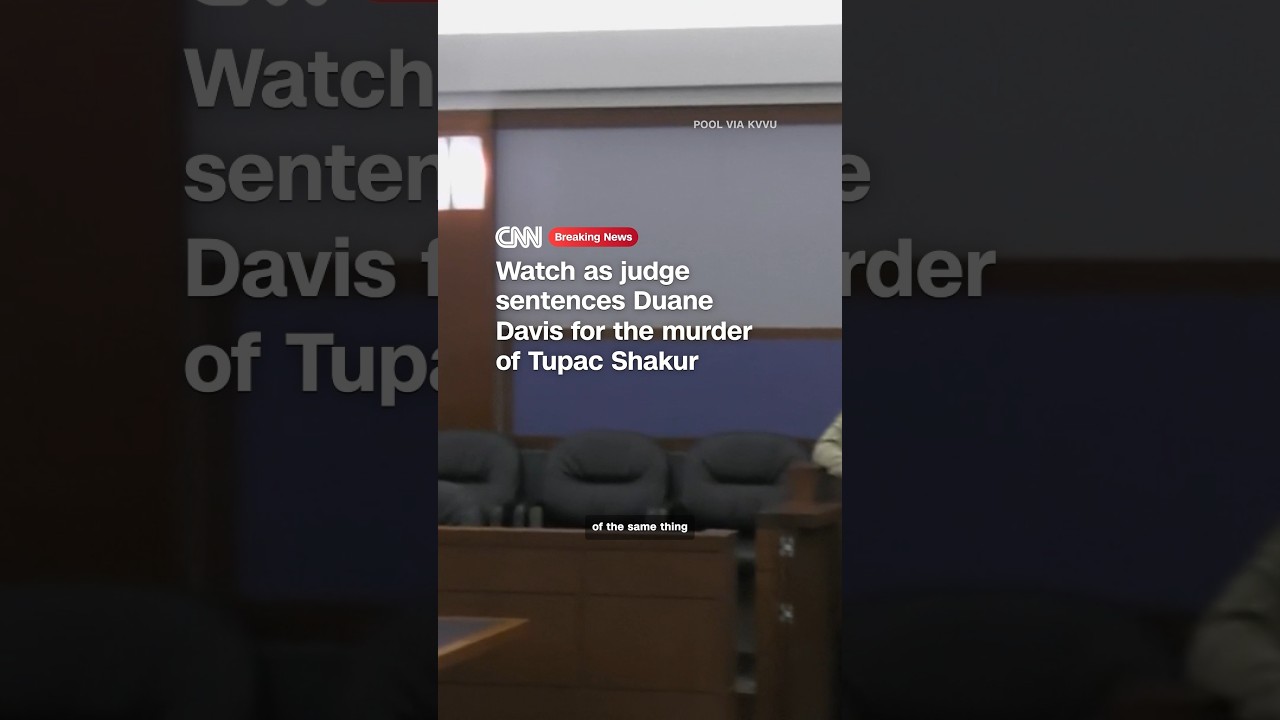
Duane Davis sentenced for orchestrating Tupac Shakur murder

Legal resolution of a legendary music history cold case.

Event Overview

Former gang leader Duane "Keffe D" Davis was sentenced in Las Vegas to 40 years to life in prison for orchestrating the 1996 murder of rapper Tupac Shakur. A jury found Davis guilty of murder with a deadly weapon, concluding that he acted as the ringleader who supplied the weapon, although he did not fire the fatal shot.

The conviction was driven by Davis's own public admissions in a 2019 memoir and a 2008 police interview, which voided a previous immunity agreement. Prosecutors argued the killing was retaliation for an assault on Davis's nephew.

Source facts (12)
1.

Duane "Keffe D" Davis was sentenced to 40 years to life in prison.

Washington Post
2.

The murder of Tupac Shakur occurred in 1996 near the Las Vegas Strip.

Washington Post
3.

Davis was a former leader of the South Side Compton Crips.

Daily Caller
4.

The jury found Davis guilty of murder with a deadly weapon.

BBC
5.

Evidence included Davis's 2019 memoir and a 2008 police interview.

BBC
6.

Judge Carli Kierny delivered the sentence.

The Guardian
7.

The sentence included a 20-year mandatory enhancement because Davis profited from the crime.

NBC News
8.

The sentence consists of 20 years to life for first-degree murder and 20 years to life for a deadly weapon enhancement.

Variety
9.

Sekyiwa and Maurice Shakur, siblings of the victim, provided impact statements.

Variety
10.

The prosecution stated the murder was revenge for an assault on Davis's nephew, Orlan.

Deadline
11.

Davis is the only person convicted in the case.

The Guardian
12.

Davis announced his intent to appeal the conviction.

Deadline

Message Distribution

justified conviction Framing the conviction as a just resolution based on the defendant's own admissions 41%
7 articles
neutral report Neutral reporting on the legal conclusion of a high-profile cold case 35%
6 articles
emotional closure Emphasizing moral justice and emotional closure for the victim's family 24%
4 articles

Editor's Analysis

A conviction built on the defendant's own words

A jury found Duane Davis guilty of orchestrating the murder of Tupac Shakur, leading to a sentence of 40 years to life. The prosecution established that Davis acted as the ringleader who provided the weapon, even though he did not pull the trigger. The case rested primarily on Davis's own public admissions in a memoir and a prior police interview, which the court ruled voided his previous immunity agreement.

The defense argues the conviction lacks physical evidence and that the admissions were fictional exaggerations designed to sell books. The prosecution maintains these statements were credible confessions of a shot-caller seeking retaliation for an assault on his nephew. The finality of this resolution depends on whether the appellate court views these public boasts as factual evidence or as profit-driven fabrications.

Focus on legal closure while omitting the limits of the evidence

Most outlets, including BBC, Washington Post, and ABC News, frame this sentencing as a definitive legal conclusion to a legendary cold case. They consistently highlight the irony of a defendant providing the evidence for his own downfall through a memoir and media appearances. The coverage generally aligns with the prosecution's narrative of accountability, emphasizing the emotional impact on the victim's family as reported by The Guardian and Variety.

However, the coverage largely glosses over the evidentiary gap. While CBS News and PBS mention the lack of tangible evidence like phone logs or surveillance, these points are treated as secondary to the narrative of closure. PBS provides a necessary nuance by noting that other suspected accomplices are deceased and that prosecutors currently lack evidence to charge other figures mentioned in the memoir. The reporting focuses on the act of sentencing rather than questioning if a conviction based solely on self-incriminating narratives is a complete resolution of the crime.

Updates

Oct 15 · Davis's defense argues lack of proof of presence in Las Vegas Updated 02:07

Davis's defense argued that there was no proof he was in Las Vegas at the time of the murder and that his previous admissions were fabricated to avoid drug charges. Davis claims his civil rights were violated.

Rolling Stone engaged with the central question of whether this conviction is a definitive resolution by detailing the defense's claim that admissions were fabricated to avoid drug charges. This adds a specific motive to the defense's earlier argument that the memoir was merely a tool for profit, suggesting the self-incriminating statements were made under duress rather than for fame.

The defense's assertion that there is no proof Davis was even in Las Vegas at the time of the murder highlights the continued absence of physical evidence. The legal resolution now depends on whether the appellate court views these admissions as voluntary confessions or as coerced statements used to escape other criminal liabilities.

Source facts (3)

Davis's defense argued that his previous admissions were fabricated to avoid drug charges.

Rolling Stone

Davis's defense argued there was no proof he was in Las Vegas at the time of the murder.

Rolling Stone

Davis claims his civil rights were violated.

Rolling Stone

Oct 14 · Davis convicted in killing of Tupac Shakur Updated 10:04

Davis was convicted in August according to the Washington Examiner, while bbc_us reported the conviction occurred in September. The Washington Examiner stated that the jury reached a guilty verdict in less than three hours following a two-week trial and that Davis had five prior convictions. Clark County Chief Deputy District Attorney Binu Palal requested the maximum sentence. Al Jazeera reported that the sentencing concludes a 30-year cold case in Las Vegas, identified Davis's nephew as Orlando Anderson, and stated that the judge and prosecutors criticized Davis's arrogance and his attempts to profit from the killing. The BBC reported that the 1996 killing of Tupac Shakur was a drive-by shooting. According to the LA Times, the 2008 police interview recordings were part of a federal task force investigation, and Davis's defense argued that the prosecution relied on hearsay and that the memoir was a fabrication to sell books.

The jury's decision to reach a verdict in less than three hours suggests the prosecution's narrative of self-incrimination was highly persuasive. This speed reinforces the tendency of many reports to treat the sentencing as a definitive legal conclusion.

LA Times engaged with the tension between legal closure and evidentiary gaps by detailing the defense's argument that the conviction relied on hearsay and fabrications meant to sell books. This reporting directly addresses whether a conviction based on public boasts without physical evidence constitutes a complete resolution.

Al Jazeera focused on the moral dimensions of the case. It highlighted the judge's criticism of Davis's arrogance and his attempts to profit from the crime, framing the sentence as a correction of his public behavior.

Resolution remains open until the appeal process determines if the 2008 police recordings and the memoir constitute admissible evidence or unreliable hearsay.

Source facts (11)

The 2008 police interview recordings were part of a federal task force investigation.

LA Times

Davis's defense argued that the prosecution relied on hearsay and that the memoir was a fabrication to sell books.

LA Times

Davis was convicted in August.

Washington Examiner

The jury reached a guilty verdict in less than three hours following a two-week trial.

Washington Examiner

Davis had five prior convictions.

Washington Examiner

Clark County Chief Deputy District Attorney Binu Palal requested the maximum sentence.

Washington Examiner

The sentencing concludes a 30-year cold case in Las Vegas.

Rolling Stone

Davis's nephew is identified as Orlando Anderson.

Rolling Stone

The judge and prosecutors criticized Davis's arrogance and his attempts to profit from the killing.

Rolling Stone

bbc_us reported that Davis was convicted in September.

BBC

The 1996 killing of Tupac Shakur was a drive-by shooting.

BBC

Coverage flow

Coverage volume

10/13 · 17

Focus shift

10/13
Duane “Keffe D” Davis
5
Duane "Keffe D" Davis
4
Duane 'Keffe D' Davis
4
A
2
Duane Davis
1

Recommended Reads

News Story

Story: Duane Davis Trial for Tupac Shakur Murder

Card 3 of 4 in this story

Duane Davis Trial for Tupac Shakur Murder
Aug 9 · 15 outlets
Where it started
Duane Davis Convicted of Tupac Shakur Murder
Aug 31 · 15 outlets
Duane Davis sentenced for orchestrating Tupac Shakur murder
Oct 13 · 13 outlets · Viewing now
↳ Follows “Duane Davis Convicted of Tupac Shakur Murder”
Defense Attorney Michael Sanft Found Dead
Nov 6 · 3 outlets
↳ Follows “Duane Davis sentenced for orchestrating Tupac Shakur murder”

Loading comments...