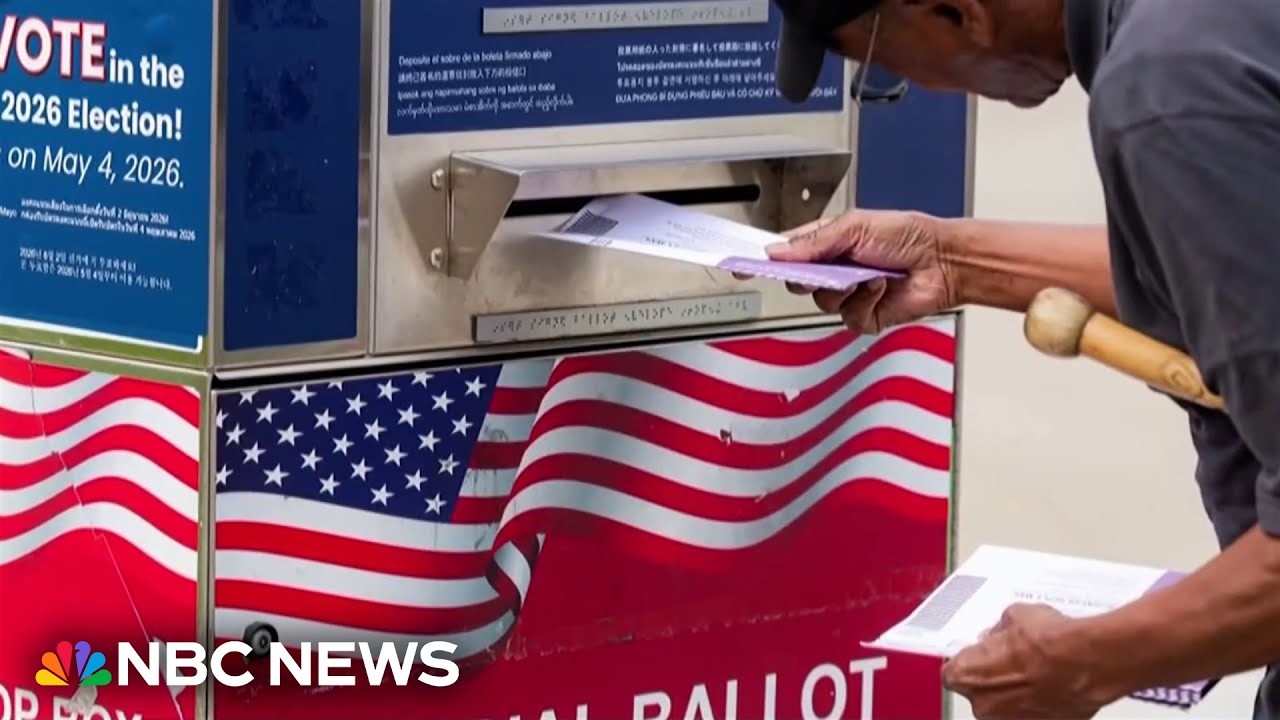
With former press secretary Karoline Leavitt gone and no replacement named, Attorney General Todd Blanche has stepped into the Rose Garden to fill a structural void, joining JD Vance in a rotating door of makeshift spokespeople. Blanche used this opportunistic platform to dismiss AI existential risks as a 'Democratic ploy' for the midterms and to insist the DOJ will prosecute AI crimes without actually regulating the tech. While he spent time defending Trump's attacks on a Supreme Court ruling regarding mail-in ballots and joking about reporters sweating in the heat, he remained pointedly silent on the resignation of prosecutor Joseph diGenova from an investigation into the president's political opponents.
Blanche has now codified the administration's AI stance: a total surrender to corporate self-regulation. By explicitly stating the government will not regulate the tech, he transforms his previous dismissal of 'existential risks' from a mere political jab into a formal policy of non-intervention.
The narrative of a 'total surrender' to corporate AI interests is suddenly sidelined as the media pivots to a more immediate crisis: the Supreme Court's blockade of the administration's mail-in ballot overhaul. While the AI frame persists as a background hum of 'hoaxes' and 'conspiracies' in newsletters, the dominant coverage has shifted toward a clash of institutional loyalties. Outlets like Fox and Breitbart frame the ruling as a betrayal by the Court, echoing Trump's claim that his appointees are no longer the people he interviewed, while The Atlantic and Vox sharpen the frame into one of intentional administrative sabotage, citing the absurdity of a 0.014-inch margin for envelope rejection. The most cynical—and insightful—framing emerges from The Federalist, which ignores the merits of the rule entirely to speculate that liberal justices 'slow-walked' the decision to run out the clock. This shift transforms the story from a policy debate over election integrity into a psychological study of Trump's relationship with his own judiciary, leaving the AI non-intervention policy to linger as a secondary, unresolved tension.
Does the conflict over mail-in ballots remain a high-level judicial spat, or has it evolved into a tactical war of attrition on the ground? The media's focus is rapidly migrating from the Supreme Court's legal reasoning to the administration's actual machinery of interference. While previous coverage obsessed over the 'betrayal' of Trump's appointees, the current frame is shifting toward a logistical panic, highlighting a preemptive defensive crouch by state officials. This transition is a necessary correction; focusing on the psychological drama of the Court was a distraction from the tangible risk of federal overreach. By pivoting to the administrative preparations for 'ballot seizures,' the coverage finally moves past the courtroom theater to address the actual operational threat to the midterms.
gnews_nation introduces a critical operational dimension: over a dozen state and local election officials are now hiring outside counsel specifically to fend off federal demands for sensitive voting records and equipment. This transforms the story from a theoretical legal debate about USPS rules into a concrete conflict of authority, revealing that the administration's strategy involves leveraging federal power to pressure local officials for data, regardless of the Supreme Court's blockade.
NBC exemplifies the 'rehash' school of journalism, offering a sterile transcript-style summary that adds zero analytical value. By simply listing a menu of unrelated Supreme Court rulings—from birthright citizenship to transgender athletes—it treats the mail-in ballot crisis as just another item on a checklist, stripping the event of its urgency and failing to provide any new insight into the administration's current tactics.
The notion that the media has successfully pivoted from courtroom theater to operational reality is premature. gnews_nation drags the narrative back into the judicial weeds, framing the Supreme Court's unsigned order not as a definitive blockade, but as a strategic ambiguity. By highlighting the lack of legal reasoning and the lingering openness of Justice Kavanaugh, the coverage shifts the frame from 'federal overreach' back to 'judicial instability.' This regression is a failure of analytical nerve; rather than tracking the administration's actual machinery of interference, the media is once again seduced by the mystery of the Court's internal dynamics, treating a brief order as a Rorschach test for future electoral disputes.
gnews_nation provides the critical detail that the Supreme Court's rejection of the USPS ballot screening plan came via a brief, unsigned order devoid of legal reasoning. This is a pivotal distinction because it transforms a legal defeat for the administration into a tactical stalemate. Without a formal opinion, the administration is left with a vacuum of precedent, allowing the DOJ to maintain its aggressive posture while leaving the door open for future challenges based on the vague signals sent by Justices Kavanaugh, Alito, and Thomas.
Coverage previously centered on the Supreme Court's unsigned order and the administration's tactical pressure on state officials. The focus now shifts to the internal failure of the USPS machinery. gnews_nation reports that a whistleblower described the mail-in system as secretive, rushed, and fundamentally flawed. This move shifts the reader's attention from a high-level legal stalemate to the actual incompetence of the agency tasked with the rollout. The press has finally stopped guessing at the justices' moods to report on the chaos in the mailroom.
Coverage previously centered on the operational chaos within the USPS and the legal ambiguity of the Supreme Court's blockade. The focus has now shifted to the selective nature of the reporting itself. The Guardian reports that Fox News systematically ignored or minimized the Court's rejection of the mail-in ballot restrictions to protect its audience from negative news about the president. Meanwhile, Fox News continues to frame the judicial situation as a struggle against a biased, radical-left establishment in its morning newsletter. This move shifts the reader's attention from the facts of the ballot dispute to the ideological bubbles that determine who even hears about it. The press has stopped debating the law to debate who is lying about the law.
Coverage previously centered on how different outlets filtered the news and the operational chaos within the USPS. The focus now shifts to the future legal pathway for the administration's ballot restrictions. Fox reports that Justice Kavanaugh's concurring opinion provides a legal lifeline for the rules to be implemented by the 2028 election. This move shifts the reader's attention from the immediate failure of the 2026 rollout to a strategic outlook on statutory authority. The press has stopped mourning the current defeat to start mapping out the next victory.
Recent coverage previously focused on the long-term legal pathways for ballot restrictions and how different outlets filtered the news.
The focus has now shifted to the concrete cessation of the administration's technical efforts to restrict voting.
Washington Examiner reports that the USPS has stopped work on the computer system intended to verify mail-in ballots. PBS confirms this termination and adds that an internal memo explicitly rules out the enforcement of these rules for the 2026 federal election.
This move shifts the reader's attention from theoretical legal lifelines to a hard operational dead end. The press has stopped speculating on how the rules might eventually work to report that they have simply been unplugged. It is a rare moment of clarity where the reporting matches the reality of a failed project.
Washington Monthly frames ballot restrictions as a voter suppression psy-op
The narrative has moved from the technical death of the USPS project to a broader theory of psychological warfare. These reports suggest the administration never intended to actually implement the rules, but instead used the proposal as a 'psy-op' to erode public trust and suppress turnout. This shift expands the scope of the story from a failed administrative rollout to a deliberate strategy of chaos, further amplified by mentions of federal agents being sent to polling places.
This pivot reflects a common press habit of searching for a 'hidden hand' once a concrete policy fails. By reframing a legal defeat as a tactical success in voter intimidation, the coverage ensures the story remains an urgent threat rather than a closed chapter of bureaucratic incompetence. For the reader, the story is no longer about whether the software works, but about the intent to disrupt the act of voting itself.
The Guardian highlights Supreme Court's timing-based reprieve on USPS restrictions
New coverage from 1 outlets
Coverage has regressed from the operational death of the project back to the judicial weeds. These reports frame the Supreme Court's upholding of the restraining order not as a substantive defeat for the administration, but as a temporary reprieve based on timing. The focus has shifted toward the ideological inconsistency of the conservative majority, specifically how certain justices selectively apply agency autonomy to favor the president.
This pivot reflects a press habit of retreating to legal theory once the immediate operational drama cools. By treating a procedural win as a fragile shield, the coverage transforms a concrete administrative failure back into a theoretical legal stalemate. For the reader, the story is no longer about a project that was unplugged, but about whether the court will eventually provide a legal loophole to plug it back in.
Whistleblower reveals DHS employees misrepresented themselves to access voter data
New coverage from 1 outlets
Coverage has shifted from the courtroom's timing to the administration's actual machinery of interference. These reports highlight a pivot toward using the DOJ and DHS to exert federal control, moving the conflict from a legal debate over rules to a direct assault on state authority.
ABC News provides the critical detail that a whistleblower has exposed the 'Unlawful Voter Initiative,' alleging that DHS employees misrepresented themselves on voter lookup tools in potential violation of state laws. This transforms the narrative from a failed policy rollout into a series of potentially illegal covert operations.
This move reflects a press habit of escalating the stakes once a legal blockade is established. By focusing on the 'hidden' actions of federal agents and the seizure of documents in Georgia and Michigan, the reporting ensures the story remains an active crisis rather than a settled judicial matter. For the reader, the core question is no longer about whether the USPS has the authority to change ballot designs, but whether the administration is actively breaking the law to achieve the same result.
Legal experts warn Supreme Court ruling on mail-in ballots is based on timing not legality
New coverage from 1 outlets
Coverage has regressed from the administration's active field operations back to the judicial weeds. These reports frame the Supreme Court's rejection of mail-in restrictions not as a substantive victory for voting rights, but as a superficial win based on the timing of the rollout.
By highlighting the argument that the ruling avoids the core question of legality, the reporting shifts the focus toward a judiciary that is merely pausing the administration's agenda. This reflects a press habit of retreating to legal theory once the immediate drama of federal agents in the field cools, transforming a concrete blockade back into a fragile, temporary reprieve.
For the reader, the story is no longer about whether the administration is breaking the law today, but whether the Court is quietly clearing a path for them to do it tomorrow.
PBS poll shows declining public confidence in USPS mail-in ballot delivery
New coverage from 1 outlets
Coverage has pivoted from the legality of ballot restrictions to the psychological fallout of the administration's rhetoric. By highlighting a poll that shows a double-digit drop in confidence regarding USPS reliability, these reports frame the issue not as a legal dispute, but as a successful campaign to poison the well of public trust.
This move reflects a press habit of retreating to sociological data when the legal drama hits a stalemate. Rather than analyzing the administration's actual power to change rules, the reporting now focuses on how the mere suggestion of fraud creates a self-fulfilling prophecy of distrust.
For the reader, the story is no longer about whether the government can legally block a ballot, but whether the voter's fear of the mailroom will do the work for them.