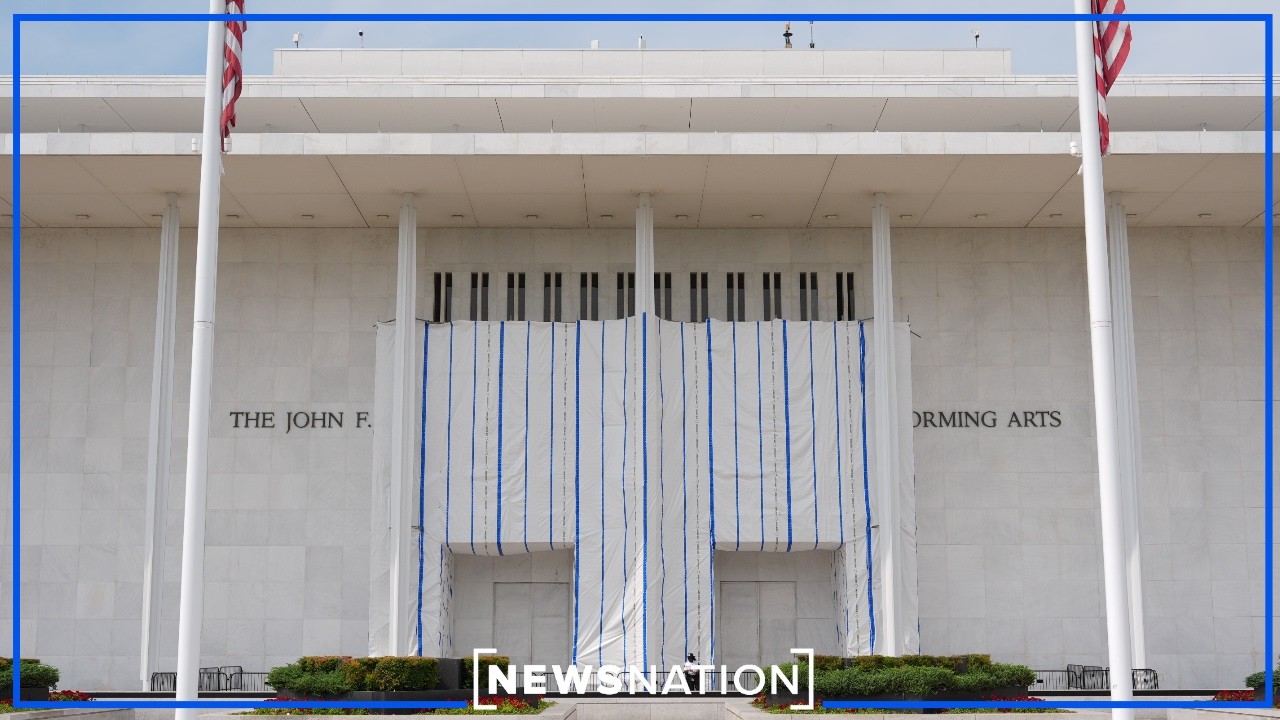
President Donald Trump is blocking a renovation of the Kennedy Center unless his name is added to the building, while federal courts have ruled that only Congress has the authority to rename the memorial. In response to a ruling by Judge Christopher Cooper, a Trump-backed board voted to close the facility for repairs, citing safety hazards and financial instability. Critics, including Kerry Kennedy and Representative Joyce Beatty, argue the closure is a retaliatory move to force a name change despite existing congressional funding.
Editor's Analysis
While the Trump-appointed board and the President himself cite structural dangers—including a partial ceiling collapse—and imminent bankruptcy to justify an immediate closure, the timing suggests a vanity-driven vendetta. The vote followed Judge Christopher Cooper's ruling that only Congress can rename the memorial, prompting Trump to explicitly condition the start of renovations on the restoration of his name to the facade. Critics, led by Rep. Joyce Beatty, argue the 'safety' claims are misrepresented and that the center's actual financial distress is a self-inflicted wound caused by a talent exodus and declining ticket sales following Trump's takeover. With the administration suggesting the building might be demolished if the 'Trump Kennedy Center' branding isn't approved, the closure appears less like a maintenance project and more like a strategic blockade designed to pressure the judiciary into granting a personal memorial.
The 'safety' narrative has fully devolved into a hostage situation. While the board points to a collapsing ceiling to justify the shutdown, Trump has stripped away the pretense on Truth Social, explicitly tying the building's survival to the overturning of the renaming ban. The financial 'decay' cited as a catalyst is increasingly framed not as an organic failure, but as a manufactured crisis; reports indicate a $100 million shortfall driven by a collapse in ticket sales and fundraising specifically following Trump's branding attempts. With $256 million in federal repair funds available yet withheld, the closure is no longer a debate over maintenance, but a transparent attempt to leverage a crumbling foyer into a personal monument.
Does the 'structural failure' narrative even function as a legal reality, or has it become a mere rhetorical shield for a transactional standoff? The coverage now pivots from debating the *motives* of the closure to questioning the *existence* of the closure itself, as Rep. Joyce Beatty’s claims of a presidential 'tantrum' suggest a disconnect between Trump's public declarations of a shutdown and the building's actual operational status. While NBC sharpens the 'recognition' frame by reporting Trump's explicit refusal to lead rescue efforts without a branding payoff, the legal reality introduced by GNews—that the center cannot legally close while Judge Cooper's block remains—exposes the administration's 'safety' warnings as a theatrical performance rather than an administrative action. The media's shift toward tracking these contradictions is a necessary correction; the story is no longer about whether the building is crumbling, but whether the administration is pretending it has already fallen to bypass a court order.
"Dumb" and "incompetent"—the vocabulary of the board meeting, according to Representative Joyce Beatty, has now superseded the vocabulary of structural engineering. Mediaite's focus on this interpersonal clash shifts the coverage frame from a systemic legal battle over branding to a visceral, personality-driven feud. By centering the narrative on Trump's insults and Beatty's counter-attacks regarding his bankruptcies, the media is pivoting toward a 'character study' frame that risks obscuring the actual mechanism of the closure. While the previous focus was on whether the 'safety' narrative was a legal shield, the current coverage treats the conflict as a schoolyard spat. This shift is a dangerous simplification; by framing the standoff as a clash of egos rather than a calculated attempt to bypass judicial authority through administrative sabotage, the outlets are effectively sanitizing a constitutional crisis into a tabloid drama.
The current batch of coverage is a stagnant loop of recycled talking points. Outlets are simply rotating the same three elements—the judge's ruling, the $250 million fund, and Trump's naming demands—without introducing a single new development or analytical angle. This repetitive cycle transforms the reporting into a background hum of partisan grievances rather than an active investigation into the administrative legality of the closure. By merely echoing the 'hostage-taking' rhetoric and the board's voting sequence, the media has ceased to track the evolution of the crisis and has instead settled into a comfortable, low-effort cadence of re-summarization.
Reason provides a masterclass in editorial incoherence, attempting to pivot from the Kennedy Center dispute to New York FOIL requests and the collapse of Venezuela in a single breath. By treating the center's reliance on public funding as an unrelated ideological grievance rather than analyzing the specific legal standoff at hand, the outlet reduces a complex constitutional clash to a mere footnote in a rambling political manifesto.